Rogers' Fastball-Heavy Gem Signals Return to Form for Orioles Ace
By PropBetEdge Editorial Team ·
Trevor Rogers throttled the Dodgers with a one-hit shutout, relying on power fastballs rather than his full arsenal—a mechanical shift that may define his second-half trajectory.
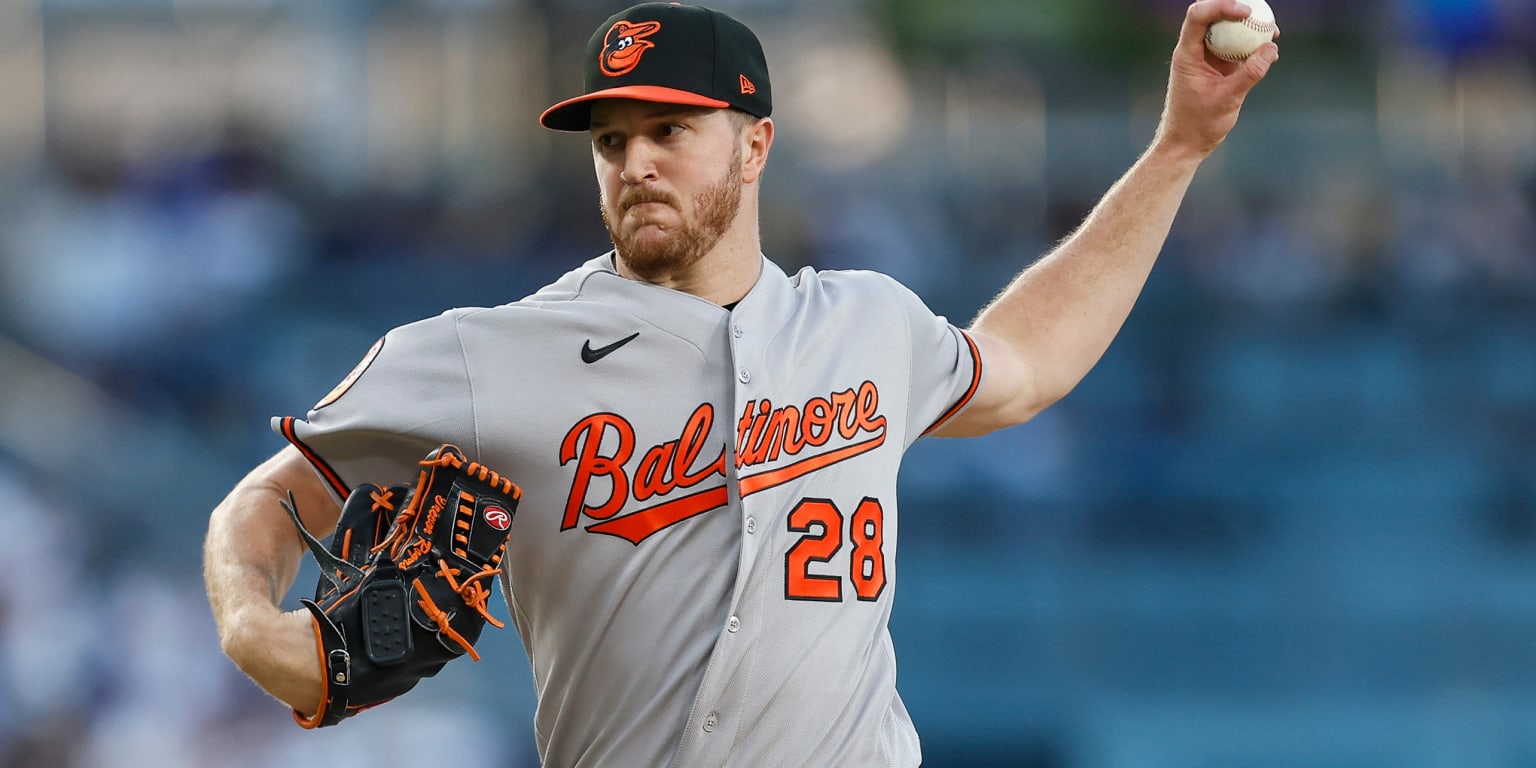
Trevor Rogers carved up Los Angeles on Saturday with a seven-inning, one-hit masterpiece, leading Baltimore to a 3-2 victory at Dodger Stadium. The 28-year-old left-hander retired 20 of 23 batters he faced, striking out seven while walking none in a 96-pitch outing that looked nothing like the pitcher who posted a 10.01 ERA across seven starts from mid-April through the end of May. Rogers' success hinged on a deliberate strategic choice: he attacked with his fastball, throwing 51 four-seamers against a Dodgers lineup that had no answer. Seven of his 13 strikeouts came via the heater; his other reliable secondary offerings—changeup and sweeper—combined for just 28 pitches and only four whiffs.
The mechanical shift matters because Rogers' mid-season swoon wasn't random variance. From April 14 through May 29, every start he made resulted in an Orioles loss. That stretch suggests the problem wasn't luck—it was execution. Rogers began the season as Baltimore's Opening Day starter with a respectable 1.89 ERA over three quality starts, then seemingly lost command of his best weapon. This weekend's outing—his fourth start of June—shows the adjustments are taking hold. His June ERA sits at 2.22, a dramatic departure from the April-May disaster. The fact that he reverted to a fastball-dominated mix to find success raises a question: is Rogers rediscovering his identity, or is he abandoning the secondary arsenal that made him the Orioles' Most Valuable Player last year (1.81 ERA, 18 starts)?
The answer matters for both team trajectory and prop positioning. If Rogers' resurgence depends on leaning into power fastballs—a sustainable mechanical adjustment—then his strikeout ceiling is genuine; he whiffed seven in seven innings without pushing beyond normal workload. If this was a one-night tactical response to the Dodgers' specific lineup tendencies, the strikeout volume will regress toward his season average of 7.3 per nine innings once he re-introduces his full pitch mix. Dodgers batter Yoshinobu Yamamoto came close to a no-hitter against Baltimore last September; Rogers flipped that script entirely, allowing Tommy Edman's fifth-inning single and little else. That kind of dominance is not repeatable week-to-week in MLB, but the underlying fastball velocity and location control he displayed on Saturday—evidenced by his 60 strikes on 96 pitches, a 62.5% strike rate—suggests he's past the mechanical breakdown that plagued April and May.
For bettors, Rogers' prop lines will adjust upward on strikeout totals following this performance, but the market may overcorrect. A seven-strikeout night in seven innings (1 per inning) in a pitcher-friendly Dodger Stadium setting is elevated even for a bounce-back outing. His baseline K/9 of 7.3 translates to roughly 5.4 strikeouts per six-inning start—well below Saturday's pace. The edge isn't betting his strikeouts higher; it's understanding that books will overweight the Saturday performance and price in an expectation of dominance that requires sustained mechanical excellence he hasn't yet demonstrated across a full month. The safer play is fading strikeout overs on Rogers' next two to three starts as the market corrects back toward his season baseline, or hunting his unders once the Vegas adjustment settles.