Holliday's May Power Surge Signals Prospect Tier Elevation in Colorado System
By PropBetEdge Editorial Team ·
The Rockies' 2025 first-overall pick is posting elite minor-league power metrics that suggest a path to the majors faster than organizational timeline typically permits.
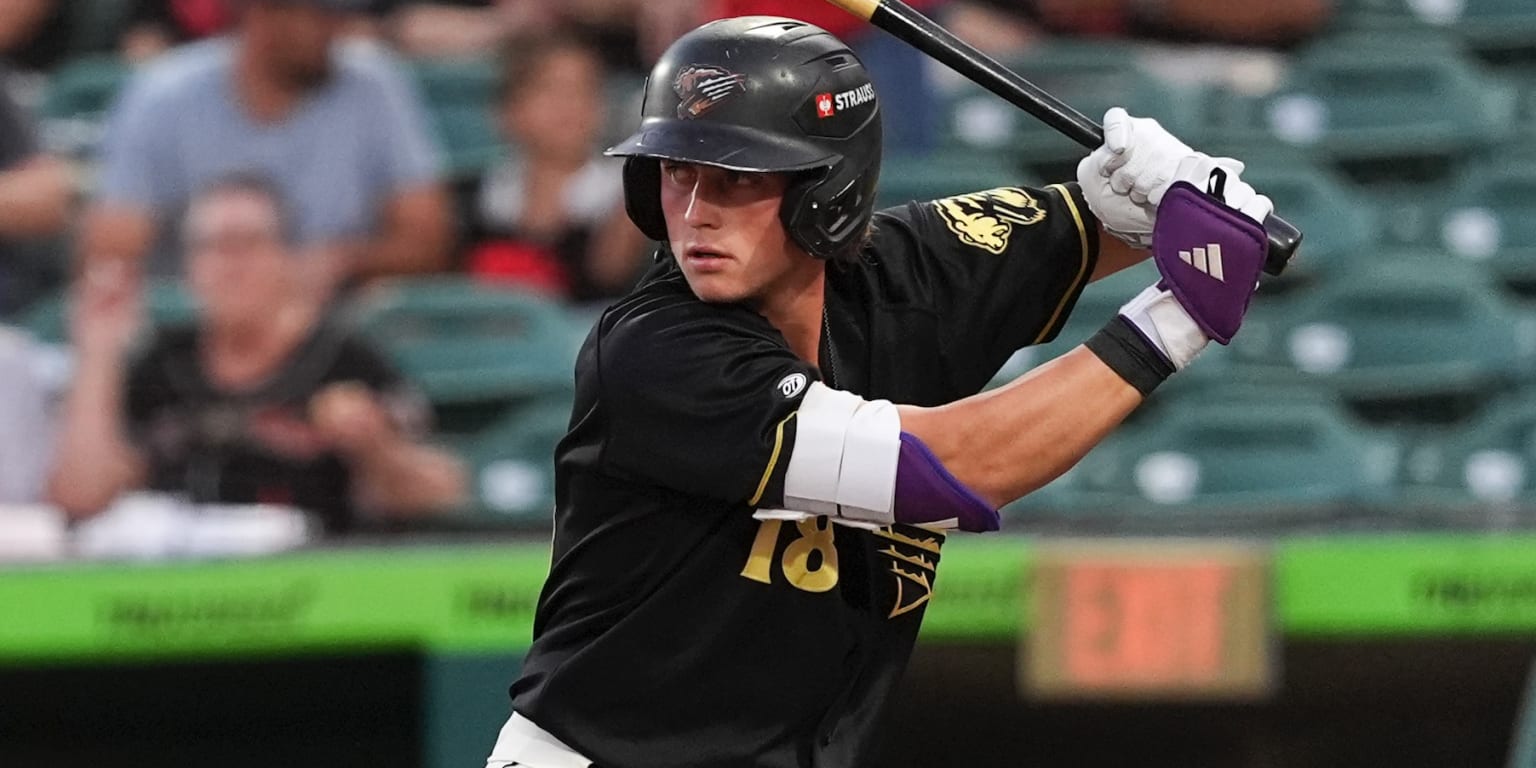
Ethan Holliday has hit seven home runs through 10 games in May, a pace that doesn't happen by variance alone. The 19-year-old, selected fourth overall in 2025, drove his fourth blast of the month Thursday in Single-A Fresno, part of a 2-for-4 night that extended his May OPS to 1.103. That production isn't noise—it's a measurable shift in approach or environment that warrants tracking as he climbs the Rockies' system.
Holliday carries elite bloodline credentials (son of Hall of Famer Matt, brother of top prospect Jackson), but genetics don't explain a 1.103 OPS in a 10-game window. What does: he's hunting fastballs in a zone where Single-A arms are unable to execute. His first full professional season sits at .934 OPS overall—solid for his age and tier, but not prospect-shocking. May's spike reveals he's adapted faster than his earlier-season performance suggested. That's a development flag for the system, not a referendum on his long-term ceiling, but it does compress the timeline for advancement. When a consensus top-20 prospect enters a visible acceleration phase mid-season, organizations typically respond by pushing him up rather than letting him pad stats at the same level.
Colorado's minor-league infrastructure has shown success with the Holliday brothers, and the supporting cast matters. Roldy Brito, the organization's No. 3 prospect (No. 82 overall per Pipeline), went 4-for-5 with a .936 OPS this season and is hitting .336. Brito's ability to set the table—he reached base four times Thursday and scored twice—creates favorable matchups for Holliday in the lineup. That sequencing advantage won't exist once Holliday reaches Double or Triple-A, where pitcher quality tightens. The current pairing inflates both prospects' counting stats relative to what they'll post against advanced arms.
For bettors tracking prospect advancement and organizational spending patterns, Holliday's May surge carries one practical angle: watch for Fresno roster moves or promotions in June. If he sustains a .950+ OPS through 20 games, Colorado will face internal pressure to promote him to High-A, reducing his immediate availability for counting-stat props in Single-A leagues that some offshore books feature. More immediately, if you're tracking Colorado's player-development velocity—a proxy for farm-system strength and organizational confidence—Holliday's compressed development timeline signals the front office believes this prospect class has earlier-impact potential than pre-season depth charts suggested. That's a signal worth monitoring for future Colorado draft capital and trade-deadline positioning; teams that advance prospects faster tend to contend sooner, changing how they value deadline acquisitions.
The May stretch itself is not a predictive anomaly requiring regression correction. It's an adaptation window. Holliday is solving Single-A pitching at an acceptable pace for a prospect of his draft slot. The question is whether that efficiency carries to the next tier—and the Rockies' decision about when to test him will tell you whether they've internally moved up their ETA for a productive big-league contributor.