Colorado's Infield Shuffle Signals Depth Crisis, Not Opportunity
By Ty Whitney ·
The Rockies' promotion of utility man Chad Stevens masks a deeper problem: none of their established infielders are performing at league average, and adding a replacement-level arm won't fix the math.
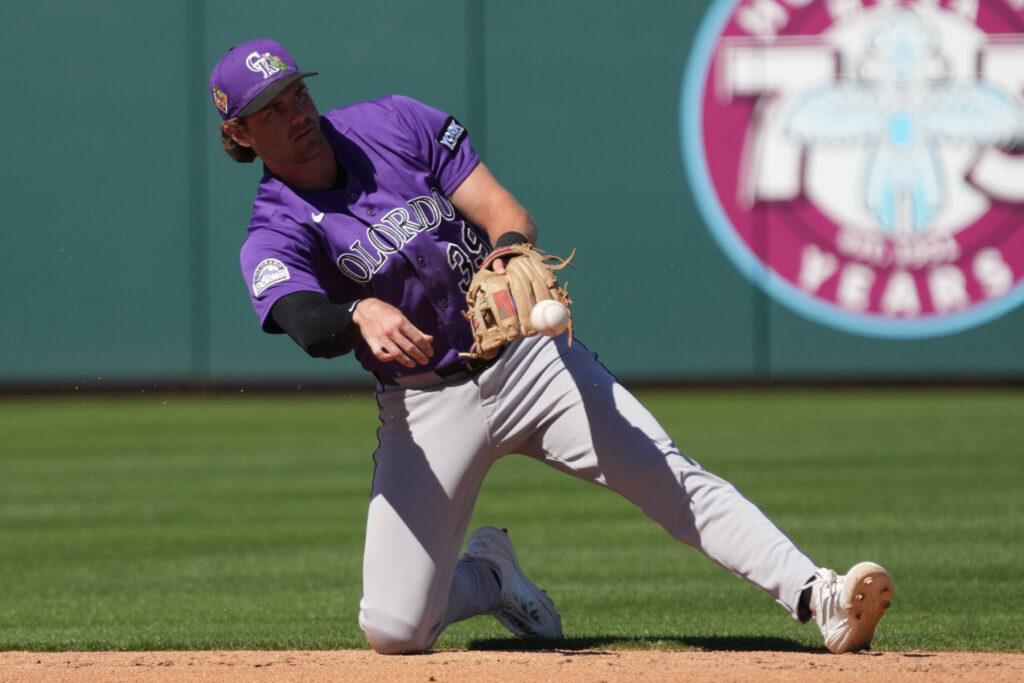
Colorado promoted infielder Chad Stevens from Triple-A Albuquerque on May 20, opening a roster spot after placing outfielder Brenton Doyle on the injured list with a left oblique strain. The move also brought right-hander Blas Castaño to the majors while optioning reliever Sammy Peralta and designating left-hander Carson Palmquist for assignment. On the surface, it's routine roster management. Below it sits an uncomfortable truth: the Rockies are cycling through infielders not because they've found a solution, but because their current options aren't working.
Stevens is a utility player without prospect pedigree—a career minor leaguer trotted out because Colorado's established quartet of Castro, Tovar, Julien, and Karros hasn't delivered. None of them qualify as catastrophic performers individually, but collectively they've underperformed their baseline expectations. The Rockies didn't identify a skill gap Stevens fills; they cycled through a roster slot to address an IL situation. That's roster triage, not roster building.
The real issue surfaces when you map Colorado's offensive architecture. This is a team that should be leaning hard on its positional players to offset Coors Field's historical pitcher-friendly shift in recent years. Instead, the infield core has drifted below replacement level as a unit, forcing management into reactive moves like Stevens's call-up. In a market that prizes certainty, this kind of organizational drift—shuffling bodies rather than upgrading talent—typically precedes a longer descent.
For bettors, this matters most at the team-total level. Colorado's offensive ceiling depends on timely contributions from a quartet of infielders playing at or near league average; if that group continues to underperform while the team cycles in non-prospect depth, the Rockies' run-production floor shrinks. The Doyle injury removes a productive bat from the equation, and his replacement—Stevens—doesn't materially improve the offensive output. Games where Stevens plays and Doyle sits should be treated as slightly lower-ceiling contests for a team already struggling to generate consistent offensive pressure.
Watch Colorado's team totals over the next two weeks with particular scrutiny. Sportsbooks will likely price them according to baseline Rockies standards; if the infield's underperformance persists and the organization continues cycling in non-impact depth, those team totals become vulnerable to slight regression. The edge isn't dramatic—Stevens won't single-handedly tank a game—but it's real: a team in transition always prices lower than one with internal faith in its core.