Snelling's Tommy John Surgery Erases Marlins Rotation Depth for 2026
By Erik Schwartz ·
Miami's young left-hander is headed to the operating table, creating a 14-month absence that forces the Marlins to lean harder on aging arms and trade deadline desperation.
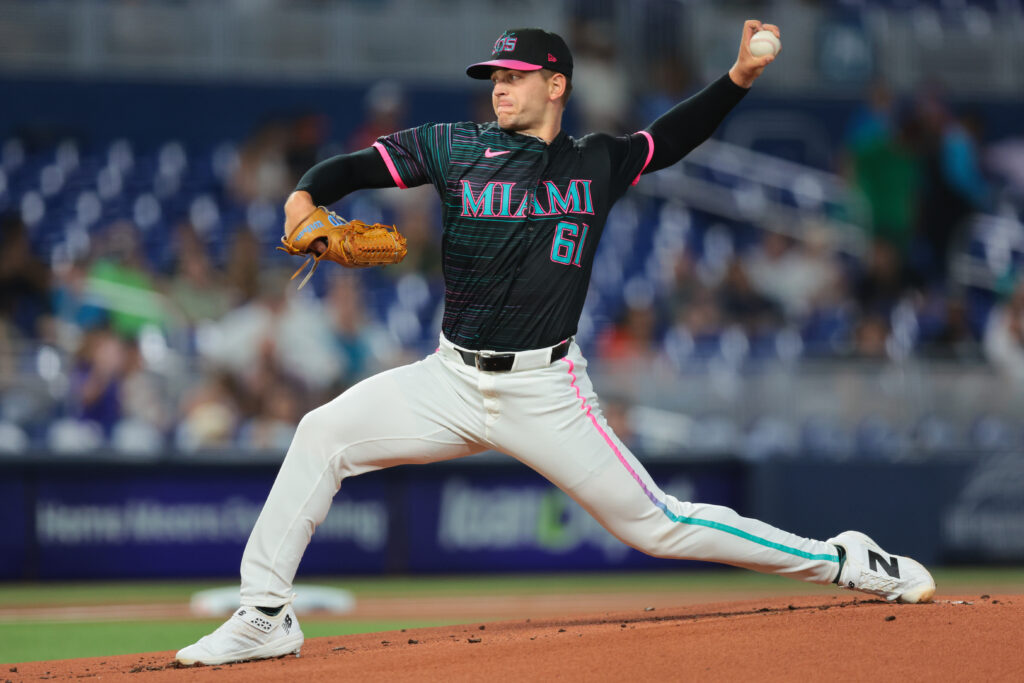
Robby Snelling will undergo Tommy John surgery, the Marlins announced, landing him on the 60-day injured list with an expected return timeline around the 2027 All-Star break. The procedure represents a massive setback for a franchise that invested prospect capital into the 25-year-old left-hander and needed depth in its rotation heading into what was supposed to be a developmental 2026 season.
Snelling arrived in Miami as part of a multi-prospect haul from San Diego in late 2024, tabbed as a future mid-rotation pillar with a mid-90s fastball and improving secondary stuff. He'd logged only 38 innings at the Triple-A level before his injury—a limited runway that now stretches into 2027. The timing compounds Miami's problem: the Marlins were already thin on proven starters, and losing a 14-month window of Snelling's prime development years means the organization will have to address rotation needs either via trade (burning prospect capital again) or internal stop-gaps through the 2026 and 2027 seasons.
For bettors tracking Marlins total wins and team-total outcomes, this surgery tilts the math toward fewer victories. A franchise short on rotation depth enters 2026 forced to elevate younger, unproven arms into the rotation or cycled in veterans on prove-it deals. That structural disadvantage doesn't disappear overnight—it compounds across a 162-game schedule. The Marlins' offseason pivot now centers on plugging a hole they'd hoped Snelling would fill internally, a task that rarely ends with cheap, reliable depth.
Marketmakers will adjust Marlins team totals downward as pitching depth concerns migrate into public conversation. The edge here lies in fading Marlins over-total bets in the 75–80 win range for the 2026 season. The surgical loss of Snelling, combined with Miami's pre-existing rotation fragility, creates a structural headwind that persists across all 162 games. This isn't a single-outlier game effect; it's a season-long capacity problem. The market may initially price the Marlins based on their pre-surgery roster assumptions. As depth concerns percolate, team totals will compress. Early overs become more vulnerable.