Rutschman's Catching Mechanics Overhaul Unlocks Arm Talent—Early Defensive Metrics Confirm the Shift
By Erik Schwartz ·
Baltimore's catcher has swapped his entire stance in 2026, moving to a right-knee-down setup that's already lifted his caught-stealing rate to rookie-season levels.
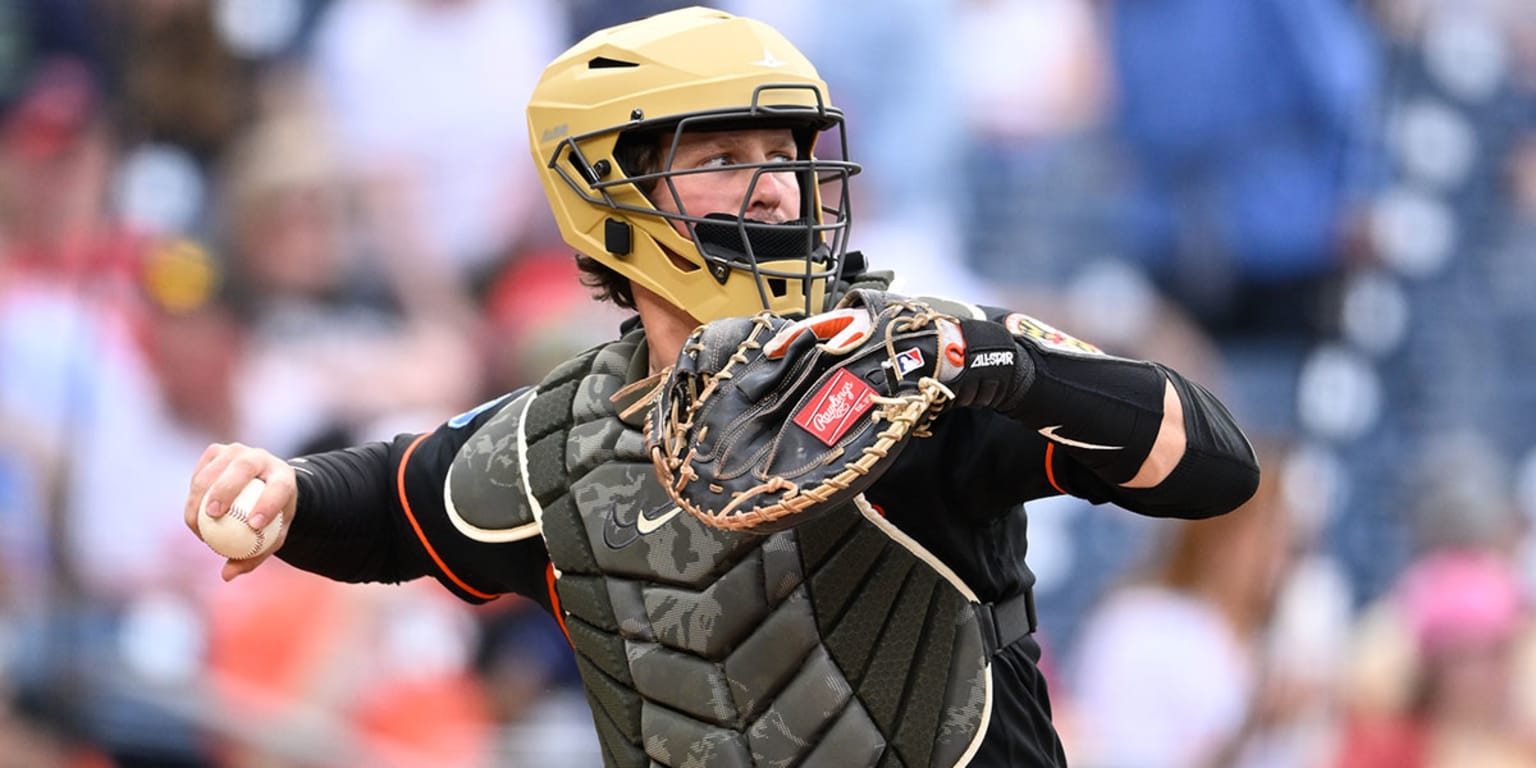
Adley Rutschman has fundamentally restructured how he catches. Through the first weeks of 2026, the Orioles catcher is setting up with his right knee down on 82% of pitches—a near-complete reversal from his left-knee-down preference the past two seasons and a stance he virtually never used before joining Baltimore's overhauled coaching staff. The mechanical shift is not accidental. New catching coach Joe Singley and manager Craig Albernaz, both steeped in catcher development, prescribed the change during spring training to restore Rutschman to the defensive standard he set as a 2022 rookie.
The mechanics are straightforward. With his right knee planted, Rutschman tilts his torso in a way that shortens his path to throw and generates cleaner footwork on exchanges. His release point stabilizes. The throwing lane to second base widens. He loses no leverage on receiving pitches—in fact, the forward cant of his body gives him more control when framing borderline strikes. These are not marginal refinements. They're foundational shifts in how the 28-year-old positions his body for the two primary demands of the position: blocking and throwing.
The numbers validate the adjustment almost immediately. Rutschman entered this week with nine caught-stealing outs—tied for third in MLB—and a 31% CS% rate that matches his 2022 rookie season (30.6%) and far exceeds his 18.8% mark in 2024 or 24% last year. He's not throwing more; he's throwing faster and more accurately. Cleaner exchanges and footwork mean quicker time-to-second. Improved throwing accuracy means fewer high throws that allow baserunners to advance on the tag. Both metrics compress the decision window for baserunners attempting steals.
For prop purposes, the timing matters. This is not a single-game variance spike or a lucky week. Rutschman has now logged hundreds of pitches from this new stance, and the mechanical advantage is persisting. Opposing teams are seeing the same defensive improvement, which means any market adjustment to his caught-stealing line or pitcher strikeout totals will likely lag behind the underlying skill gain. The coaching staff explicitly designed this change to free up his athleticism—language that suggests there's more optimization runway ahead. A catcher posting a 31% CS% rate is suppressing stolen-base attempts across the Orioles' rotation and relief corps, which ripples into pitcher strikeout projections when runners can't steal to reach scoring position.
The prop edge resides in the durability of the mechanical change and its team-level impact. Stolen-base lines for Orioles pitchers, particularly starters, have likely been set with last year's 24% CS% or 2024's 18.8% baked in. If the 31% rate holds—and all early evidence suggests it will—then unders on stolen-base props for Baltimore's opponents represent a tactical advantage over the next 4-6 weeks while the market prices in the full scope of Rutschman's defensive upgrade.