MLB
Nola's Postseason Lifeline: Why Phillies Now Ride on His Shoulder Instead of Luzardo's
Aaron Nola's eight-start dominance has transformed him from mid-season liability into the Phillies' de facto ace heading into a Wild Card that may not include their best pitcher.
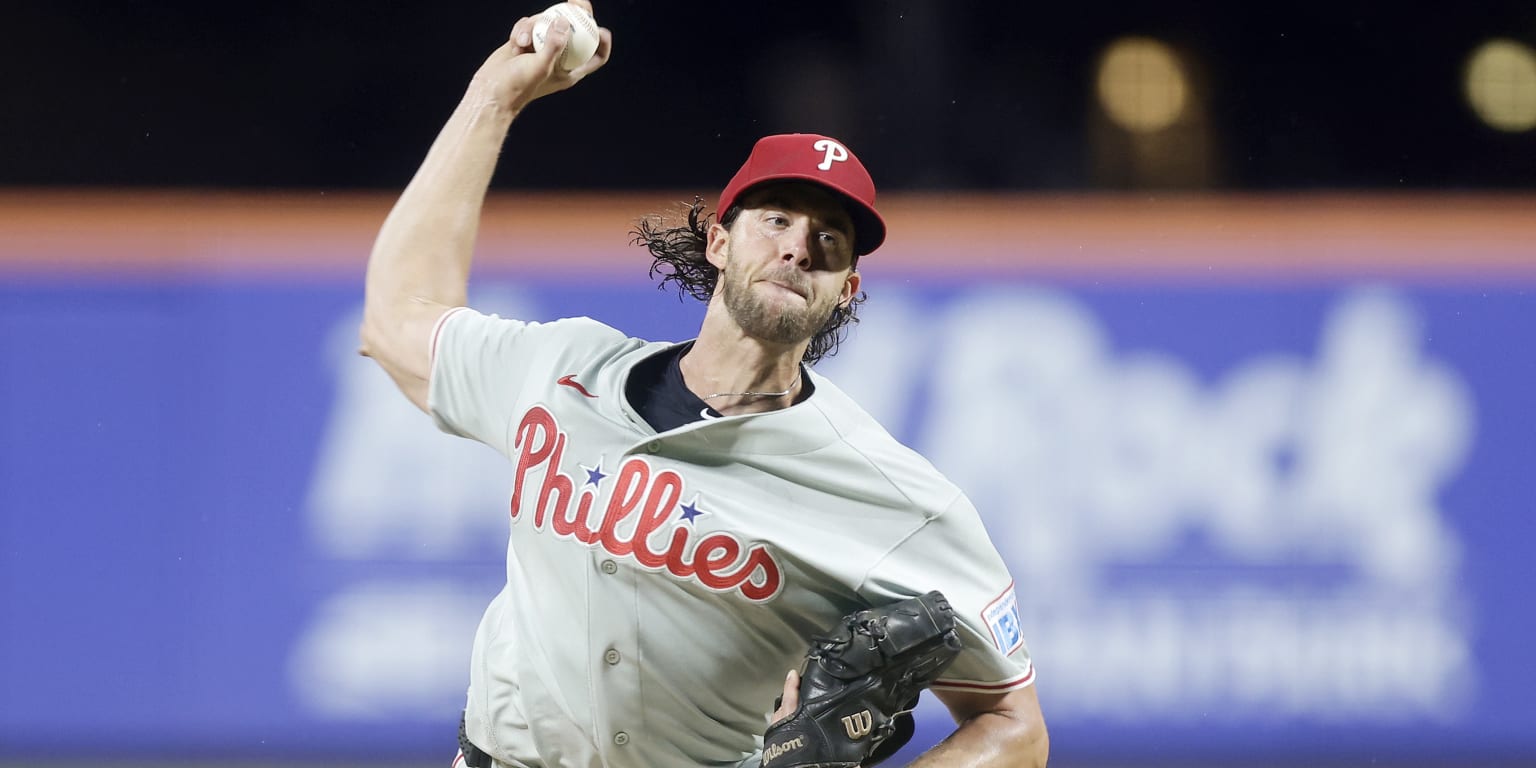
Aaron Nola threw seven scoreless innings against the Mets on Thursday, carrying a no-hitter into the sixth inning and punching the Phillies' ticket even tighter into the National League Wild Card conversation. But the real story isn't Nola's gem—it's the organizational contingency it represents. Jesús Luzardo, the pitcher who has carried the Phillies' rotation for months, sits on the 15-day injured list with left shoulder inflammation with just 12 days before the Wild Card Series begins on September 29. The team has no certainty he'll be available, let alone ready to pitch meaningful innings. If Luzardo remains sidelined, Philadelphia's postseason survival funnels through a right-hander who, barely 11 weeks ago, looked finished.
The arc is stark. On June 29, Nola allowed eight runs in 4⅓ innings against Pittsburgh and left the mound with a 3-5 record and 6.04 ERA. That number was no outlier—he carried an 8-15 mark with a 6.02 ERA through 34 starts dating back to the start of 2025. Eight runs per nine innings suggested a pitcher whose arm had absorbed too much wear. Between 2018 and 2024, Nola logged 1,264⅔ innings, the heaviest workload in baseball over that span. Age, mileage, and the Phillies' reliance on him as a cornerstone had converged into decline. Then came July 5 in Kansas City—three runs in seven innings—and the inflection point.
Over his past 14 starts, Nola owns a 2.92 ERA. More tellingly, he's strung together eight consecutive starts allowing two earned runs or fewer, posting a 1.86 ERA over that span. That eight-start mark represents his lowest ERA in any similar window since July 14–August 28, 2018, when he was in his prime as a Cy Young-caliber starter. This isn't variance compression or noise; Nola has fundamentally altered his mechanics and workload management. The Phillies are 9-5 in his past 14 decisions. What looked like a mid-season unraveling has instead become the rare example of a veteran pitcher rediscovering form through intentional adjustment rather than luck.
For bettors, Nola's resurgence matters most in two frames: Phillies team totals and Nola's individual pitching props heading into their remaining nine regular-season games and the Wild Card. If Luzardo remains unavailable—and the silence on his timeline suggests genuine uncertainty—Philadelphia will pencil Nola into the Wild Card opener or Game 2. His recent trajectory (1.86 ERA over 56 innings, 0.97 WHIP) is durable, not a three-game fluke. The mechanism is reproducible: he's throwing fewer pitches earlier in at-bats, elevating his fastball more consistently, and benefiting from sharper secondary stuff that doesn't require him to chase at 100 pitches by the fifth. Oddsmakers priced Phillies team totals and Nola's ERA props based on his pre-July performance. The recalibration hasn't fully caught up to the data. His next three starts before the postseason are against weaker offenses; betting his under on ERA prop or the Phillies' over on team runs carries hidden value if books haven't fully repriced his eight-start trajectory.
The Luzardo injury is a crisis that Nola may have already solved. The Phillies will lean on him harder than ever. That dependence, however uncomfortable it feels for the organization, is built on measurable improvement, not desperation.