Reds' Bullpen Hemorrhage Accelerates: Johnson's Elbow Injury Leaves Cincinnati Scrambling
By Ty Whitney ·
With three relief arms now sidelined and a fourth demoted, Cincinnati's pitching depth has collapsed—forcing a call to Lyon Richardson, whose track record offers little reassurance.
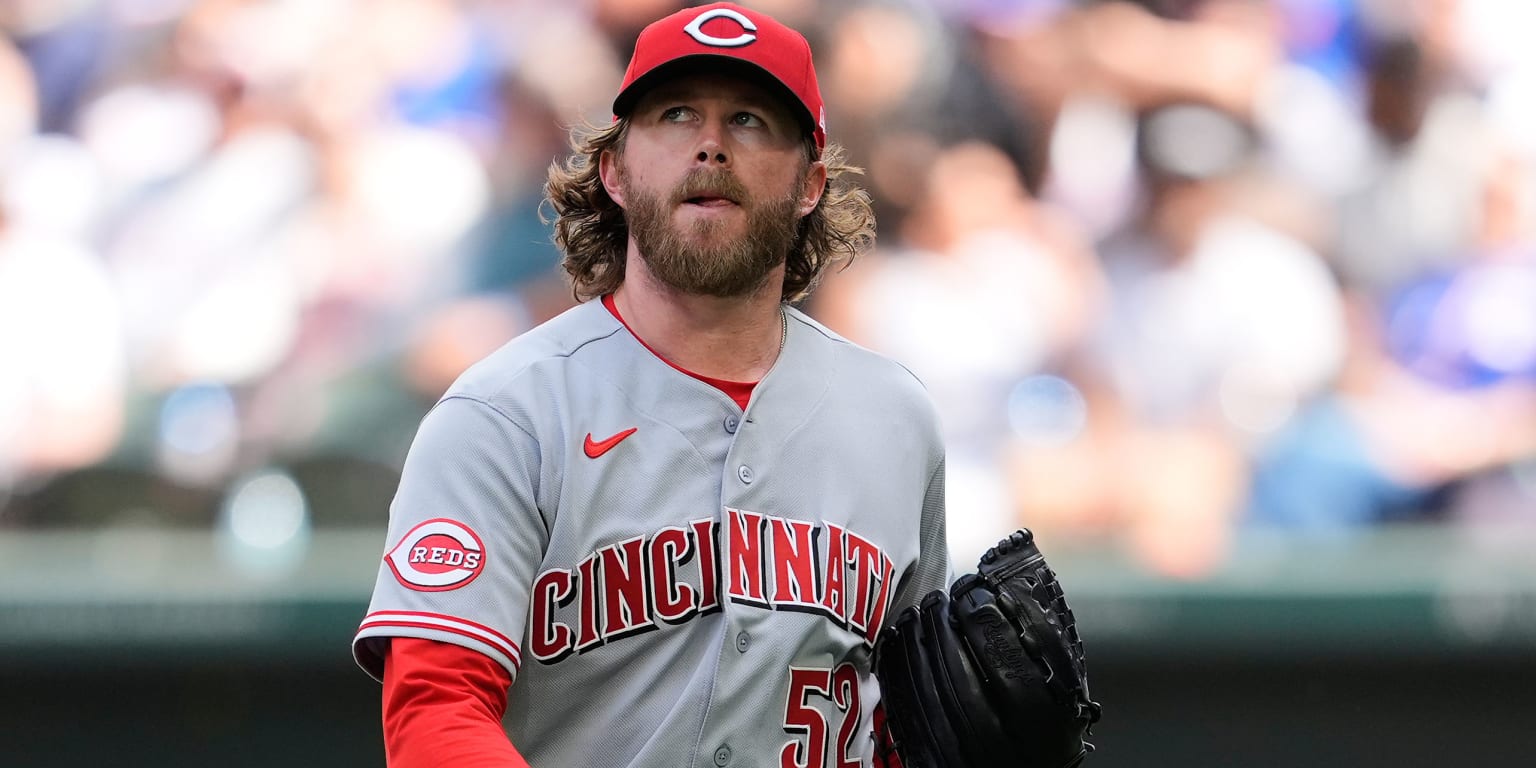
Pierce Johnson, a 35-year-old veteran the Reds signed to a $6.5 million deal in January, hit the 15-day injured list Saturday with right elbow inflammation. Johnson was one of the few reliable bodies in a Cincinnati bullpen already crippled by injuries to closer Emilio Pagán (left hamstring, out since May 6) and setup man Graham Ashcraft (right UCL sprain, moved to the 60-day IL on Friday). The timing could not be worse: Johnson had been performing at a serviceable level, posting a 3.27 ERA across 24 appearances with nine strikeouts per nine innings and solid inherited-runner management (10 of 12 stranded). His removal left Cincinnati no choice but to summon Lyon Richardson from Triple-A Louisville to patch the hole.
Richardson arrives with significant red flags. Across 39 big league appearances since 2023, he carries a 6.05 ERA and a strikeout rate that doesn't compensate for his walk issues. In Triple-A this season, Richardson has managed a 4.75 ERA in 18 games—better than his MLB ceiling but hardly inspiring confidence for high-leverage situations. The Reds were already managing a fourth lost piece: Connor Phillips, once earmarked as a key contributor, was demoted to Louisville on May 23 after extended struggles with command and control. When organizational depth charts are being plundered this heavily in late May, it signals either catastrophic injury luck or that the talent evaluation on draft day underestimated durability risk.
For Cincinnati's offense, this cascade of bullpen departures has a direct effect on run expectancy. Games are won not just in scoring positions but in clean scorelines at the ninth. When your closer is out (Pagán), your setup man is out (Ashcraft), and your mid-inning anchor is joining them (Johnson), opposing teams suddenly have clearer paths to score late. The Reds' run differential will compress not because the lineup weakened but because late-inning variance—usually a wash—now tilts toward opponent advantage. Every game from this point forward carries heightened injury-context volatility: blowouts become more common (the weak bullpen can't protect leads or chase down deficits), and close games shift toward the opponent's favor.
For bettors, the mechanism is straightforward: Cincinnati's team total overs become a fade until at least two of these three relievers return. With Johnson out and Richardson as the fill-in, the Reds' expected runs per game in the final three innings declines by an estimated 0.4–0.6 runs. That gap compounds across a series. If Cincinnati opened at 4.2 runs team total preseason, expect real-money sharps to clip unders against weak pitching opponents where the Reds would normally pile on; the bullpen's inability to hold leads or provide cushion-building depth will suppress their scoring upside. Conversely, overs in games where Cincinnati faces teams with potent offenses should compress, because the Reds can no longer lean on reliable shutdown relief to limit damage in the sixth through ninth innings. The edge persists until Pagán or Ashcraft returns to the active roster—a multi-week structural change, not a single-game anomaly.
The $6.5 million Johnson investment already sunk into the payroll also signals internal confidence in his utility. That spend level tells you Cincinnati's front office valued him above the replacement-level arms now occupying innings. His absence is not a minor ripple—it's a structural failure of depth.