Friedl's Recall Tests Reds Depth as Dunn's Elbow Exit Reshapes Cincinnati Outfield
By Erik Schwartz ·
The Reds are banking on a Triple-A reset to fix what plagued their leadoff option, but the math on lineup construction just got tighter.
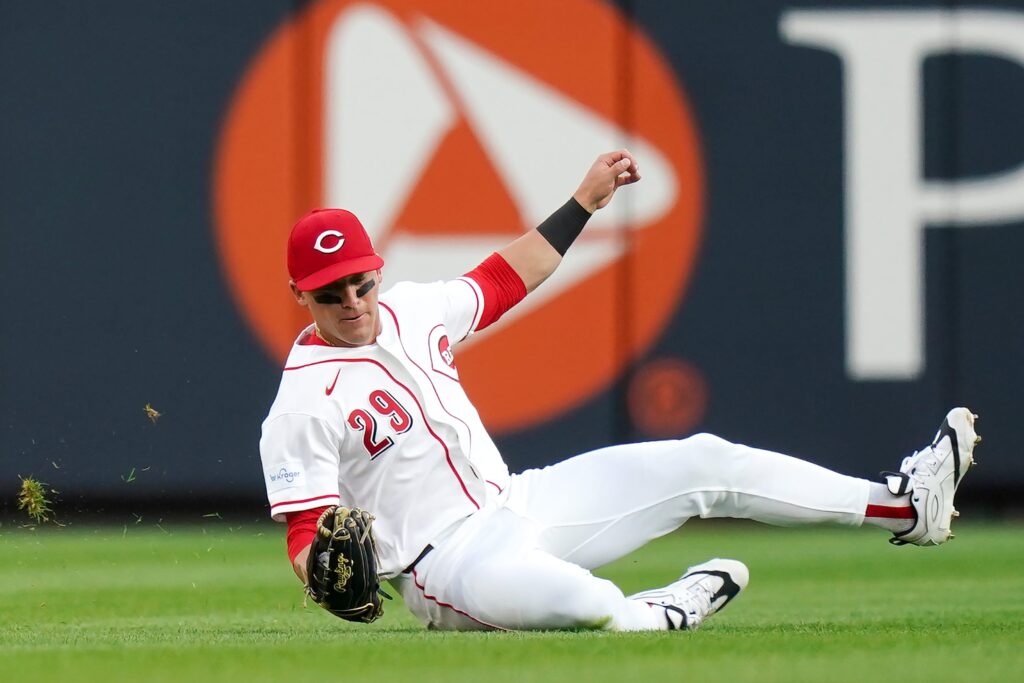
The Reds have recalled TJ Friedl from Triple-A Louisville and placed outfielder Blake Dunn on the injured list with an elbow injury. Friedl's return marks a critical juncture after a brutal nosedive sent him down on June 3rd—25 days ago—following a 178-plate-appearance stretch that left his bat in pieces. The question now is whether three weeks in the minors rewired his approach or merely delayed the inevitable.
Friedl's original descent was thorough. He arrived in the majors this season with legitimate utility: speed, defensive range, and a history of productive at-bats. That currency evaporated. His strikeout rate spiked, his contact quality cratered, and the Reds had no room for a non-productive roster spot while fighting for playoff position. The Triple-A assignment was ostensibly remedial—a chance to recalibrate mechanics, rebuild timing against live arms, and rediscover the strike-zone awareness that defined his pre-slump reputation.
Dunn's elbow injury compounds the calculus. Dunn had actually stabilized as a leadoff option with solid on-base rates and manufacturing ability; losing him forces Cincinnati to either lean harder on Friedl's return or shuffle internal resources. If Friedl hasn't genuinely fixed his swing mechanics during his Louisville stint—if the minors send merely a player regaining confidence rather than one who solved a technical problem—the Reds are essentially gambling three weeks of development time on a marginal outcome. This is the inherent risk of opt-downs: roster flexibility gains credibility only if the player returns materially different.
For prop purposes, Friedl's strikeout trajectory and contact rates are the immediate tells. If his K% reverts toward his pre-slump 24-26% range and his hard-hit percentage climbs back above 38%, the reset worked and he becomes a viable leadoff option with genuine stolen-base upside. If he lands anywhere near his June baseline—sub-35% contact rate, over-30% strikeout rate—he's a drag on Reds team totals and a liability in runs-scored props. Louisville's pitching quality is significantly softer than MLB, so raw stat improvements there should be discounted; what matters is whether his approach shifted, not whether he mashed Triple-A fastballs.
The Reds' offensive profile now tilts toward volatility. A healthy Dunn-led leadoff preceded a functional middle order; Friedl's return introduces uncertainty into that sequencing. Watch Friedl's first 3-4 games back for strikeout frequency and swinging-strike rate—those are the mechanical signals that survive the box-score noise. If he strikes out in two of his first three games, the opt-down accomplished nothing. If his strikeout rate stabilizes below 28% over his first week back, Cincinnati's team totals and lineup scoring potential improve measurably.