Cal Raleigh's Grand Slam Exposes the Limits of Matchup Theory
By Erik Schwartz ·
Cincinnati's intentional walk to face a .163 hitter backfired spectacularly Monday night, and it's a reminder that desperation-based tactical math doesn't survive contact with an athlete looking to prove something.
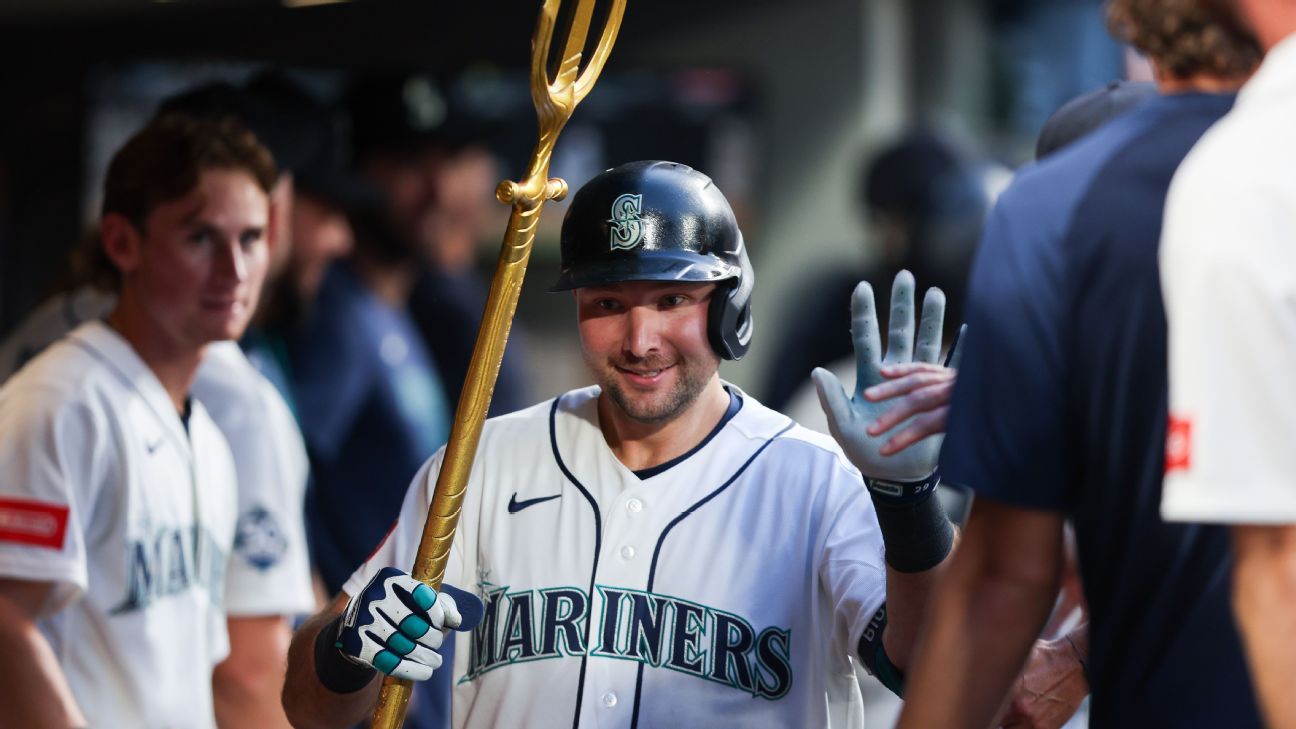
Cal Raleigh, hitting .163 and carrying the weight of a 60-home-run season gone wrong, turned on the first pitch he saw Monday and sent a hanging breaking ball 408 feet into the left-field bleachers for a grand slam. The Cincinnati Reds, trailing 3-0 in the seventh, had intentionally walked left-handed hitter Dominic Canzone to load the bases and create a double-play opportunity against Raleigh. Terry Francona made the call knowing the numbers: Raleigh was one of the worst hitters in baseball this season. The move failed categorically in an 8-0 Mariners rout.
On paper—and Francona himself acknowledged this—the strategy held logic. Canzone owned a .993 OPS against left-handed pitchers, albeit in a small 24-at-bat sample. Raleigh had managed only 10 home runs and 17 extra-base hits all season, a crater-like collapse from last year's 60-homer campaign and AL MVP runner-up finish. A groundball with the bases loaded was mathematically preferable to a fly ball in play. Except the margin between theoretical and actual compressed the moment Raleigh's bat met the ball.
What the Reds' calculus couldn't price in—and what no pre-game alignment of desperation and arithmetic can account for—is the psychology of a professional athlete mid-slump. Raleigh had gone 0-for-10 in Seattle's first series after the All-Star break. He felt confident in his process heading into Monday, and he was looking for a pitch to prove it. When Caleb Ferguson left a breaking ball elevated, Raleigh didn't recalibrate; he executed. The grand slam carried tangible weight for a player fighting to salvage his season, and it landed at a moment when the Mariners needed him to be exactly what he once was.
For betting purposes, this game is a cautionary tale about over-weighting recent performance metrics without context. Raleigh's .163 average is real and alarming, but it exists alongside career power stroke that hasn't evaporated—just dormant. The bases-loaded at-bat is among the highest-leverage situations in baseball, and hitters with his swing profile (power-oriented, willing to hunt fastballs) can produce outsized damage even during down seasons. When a pitcher leaves a mistake middle-in during a plate appearance Raleigh was specifically hunting, the expected outcome flips. Markets price season-long batting averages heavily; they tend to underweight leverage, pitch location, and emotional state on a single swing.
Moving forward, Raleigh's plate appearance rate and quality of contact warrant close monitoring. One grand slam doesn't erase a .163 average or transform his 2026 into a recovery story. But it's a data point worth isolating: a slumping power hitter facing a walking pitcher with bases loaded is not the same as a slumping power hitter in a neutral situation. The Reds learned that the hard way.