Lowder's Shoulder Rehab Accelerates: Minor League Start Next, Full Return Soon
By Erik Schwartz ·
Cincinnati's 24-year-old starter advanced to simulated competition Wednesday, signaling a rapid pathway back to rotation duty—and reshaping bullpen workload assumptions for the next two weeks.
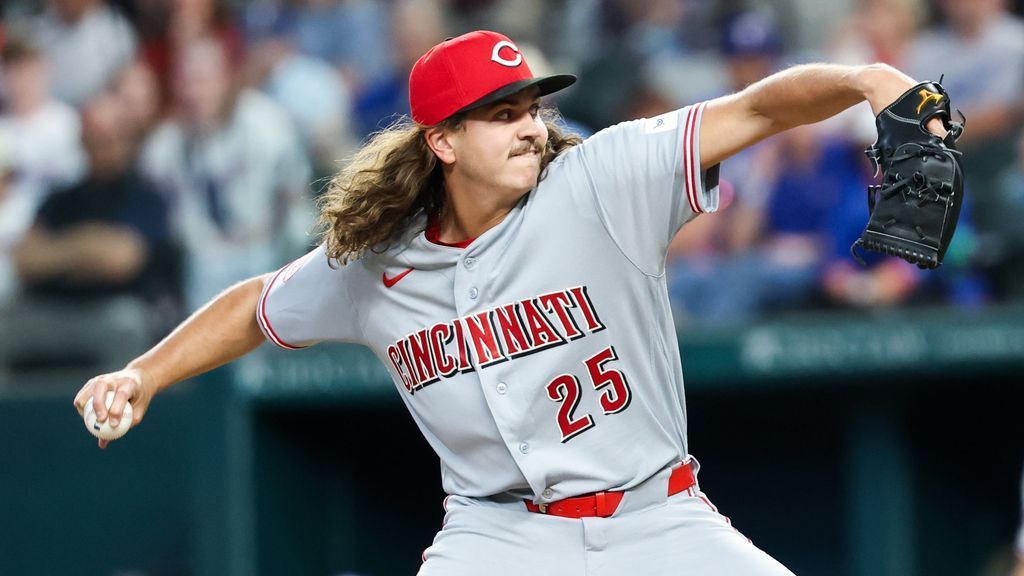
Rhett Lowder threw 45 pitches across three simulated innings Wednesday at Citi Field, marking the next phase of his recovery from right shoulder pain that sidelined him May 10. The Reds' 2023 seventh overall pick exited his May 7 start against Chicago in the fourth inning and landed on the injured list eight days later. Per manager Terry Francona, Lowder's injury never threatened his structural integrity—the medical team has spent the past two weeks focused on range-of-motion work and shoulder stabilization retraining rather than rebuilding arm strength from scratch.
The speed of Lowder's progression matters. He missed only two or three days before resuming controlled throwing, which tells you the diagnosis was mechanical irritation, not capsular damage or rotator cuff involvement. That distinction is the difference between a two-week rehab arc and a two-month one. Francona explicitly stated Lowder wasn't rebuilding—he was re-training, a subtle but critical reframing that suggests confidence in the structural work already done. If Lowder clears the next 48-72 hours symptom-free, he'll throw approximately 70 pitches Tuesday in a Triple-A start against Memphis, a Cardinals affiliate. One minor league outing could be sufficient before full rotation reinstatement; Francona didn't rule out a return after that single Triple-A appearance.
Lowder's surface numbers this season (3-3, 5.40 ERA in eight starts) disguise his actual performance tier. His 3.52 career ERA across 14 major league appearances, combined with his 1.17 ERA as a rookie in 2024, signals a pitcher whose stuff is ahead of his execution curve. The 5.40 mark reflects early-season command volatility typical of a 24-year-old still calibrating big-league movement profiles—not a harbinger of decline. His 2024 breakout (six starts, 30 2/3 innings, 1.17 ERA) established he can perform at the major league level when healthy.
For Cincinnati's betting profile, Lowder's accelerated return compresses the timeline for bullpen stabilization and changes rotation depth assumptions. The Reds currently navigate without their most reliable young starter in the rotation, which has cascaded into elevated bullpen usage in high-leverage spots. Once Lowder returns—likely by early June, possibly sooner—Cincinnati can recalibrate its pen allocation and reduce reliance on exhausted relievers. This has direct implications for team total movement: the Reds' runs-per-game projection has been artificially depressed by starter instability. Lowder's reinstatement normalizes their run production environment, particularly in games where he starts. Bettors should monitor Cincinnati's rotation schedule over the next week; games Lowder is slated for will carry different leverage profiles than recent outings, with measurably lower bullpen fatigue entering lineups.
The rehab timeline also signals confidence in Lowder's durability for the stretch run. If the Reds' front office believed the shoulder damage was chronic or recurring, they would adopt a conservative multi-week minor league arc. Instead, Francona's tone and the accelerated progression suggest organizational conviction that this was an acute flare, not a chronic deficiency. Bettors favoring Cincinnati in June matchups should factor in the return of a sub-3.50 ERA arm capable of eating innings—a material improvement over the current rotation construction.