Greene's Accelerated Return Timeline Reshapes Reds Ceiling for Second Half
By Erik Schwartz ·
Hunter Greene threw live batting practice Saturday with an All-Star break return now in play—a four-week compression that reframes Cincinnati's playoff rotation and changes how to price team totals down the stretch.
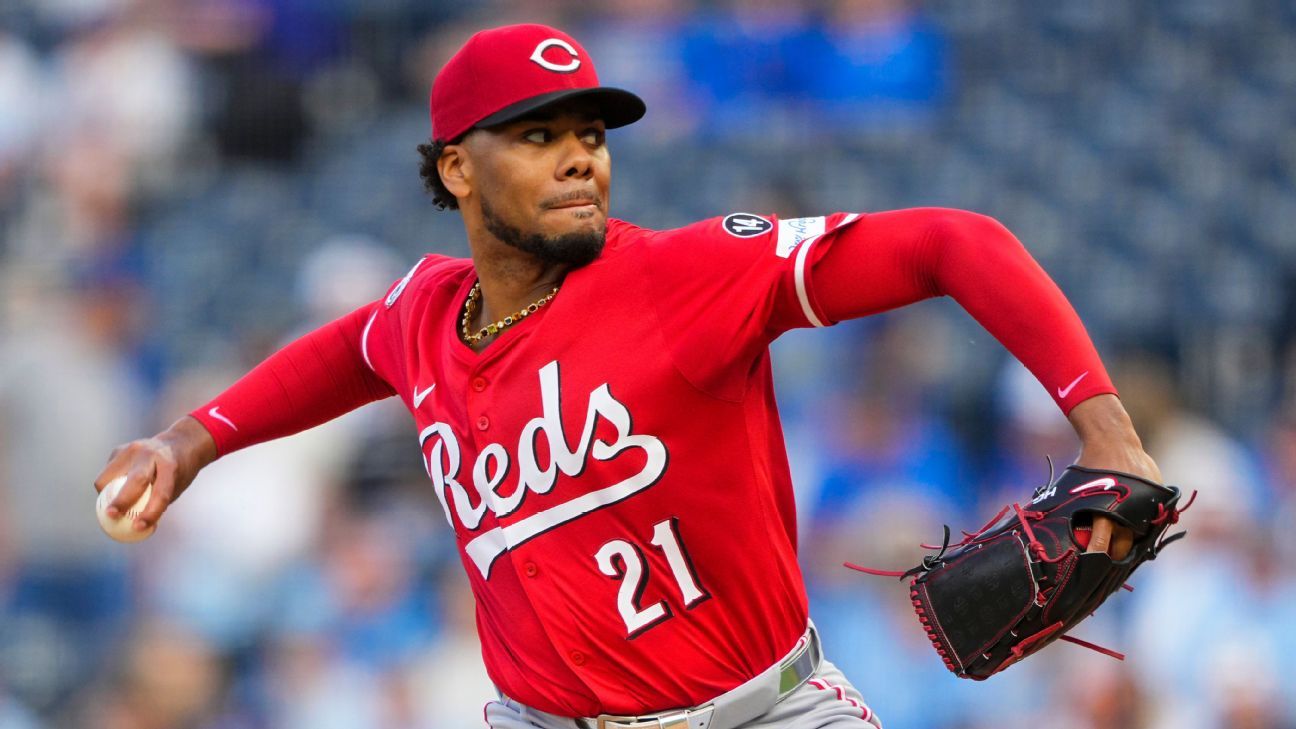
The Cincinnati Reds moved up Hunter Greene's recovery window Saturday, with manager Terry Francona confirming the ace will throw live batting practice Monday and could enter a minor league rehab assignment in the coming weeks. Greene's original timeline—14 to 16 weeks from his March 11 bone chip removal surgery—would have sidelined him well into July. The accelerated path now targets a return before the All-Star break, compressing his absence into roughly 18 weeks from the procedure date (June 6, 2026).
What makes this adjustment material is Greene's actual value to Cincinnati's second-half profile. The 26-year-old led MLB with a 99.5 mph average fastball velocity last season while appearing in only 19 starts due to injury. His 2.76 ERA and 7-4 record across 107⅔ innings came despite playing through two IL stints. Before that, he posted a 2.75 ERA with 169 strikeouts in 150⅓ innings across 26 starts in 2024. He is not a depth piece waiting to rejoin the rotation—he is the Reds' most dominant strikeout weapon and the Opening Day anchor they've relied on twice in the last three years.
Cincinnati's pitching market price has been baking in his absence for months, but the updated timetable changes the calculus for late July and August. If Greene clears rehab without setback (a meaningful if), the Reds regain a sub-2.80 ERA arm in live competition during the stretch run. That's not incremental depth; that's the difference between a rotation that can survive a playoff series and one that tilts heavily toward Sonny Gray while relying on mid-rotation depth. The speed of recovery—achieved partly through enhanced lower-body conditioning work Greene added this offseason—suggests the organization's confidence, not just wishful thinking.
For betting purposes, this timeline shift creates a bifurcation in exposure. Team totals and win totals for the Reds have been priced under the assumption of Greene's mid-to-late August return at earliest. An early July availability does not immediately change June and early July run rates, but it elevates the expected win percentage in August and September, which typically carry 20-25% of a 162-game season's variance in outcome. If Greene pitches healthy across four to six starts in the final quarter, Cincinnati's playoff odds shift measurably upward from current books' estimates. The prop-bettable window here is narrower than it appears—the edge exists only if you can find stale pricing on August/September Reds spreads or division leader odds that haven't yet absorbed this news, which major books typically correct within 12-24 hours of manager confirmation.
Elly De La Cruz's MRI moving three days earlier (to June 12) is secondary noise compared to Greene's return acceleration, but it signals a broader Reds organization confidence in medical timelines this year. The hamstring injury remains fluid with a two-to-four-week window, meaning De La Cruz could be available mid-to-late June depending on imaging. A healthy De La Cruz at shortstop plus Greene back in the rotation by early July would position Cincinnati's second-half ceiling substantially higher than preseason projections suggested.