Reds Clear Roster Space for Paddack, Demote Higgins Amid Lowder Injury
By Erik Schwartz ·
Cincinnati's catching depth just shifted as P.J. Higgins exits and Chris Paddack joins the rotation, with Rhett Lowder's IL stint opening the path.
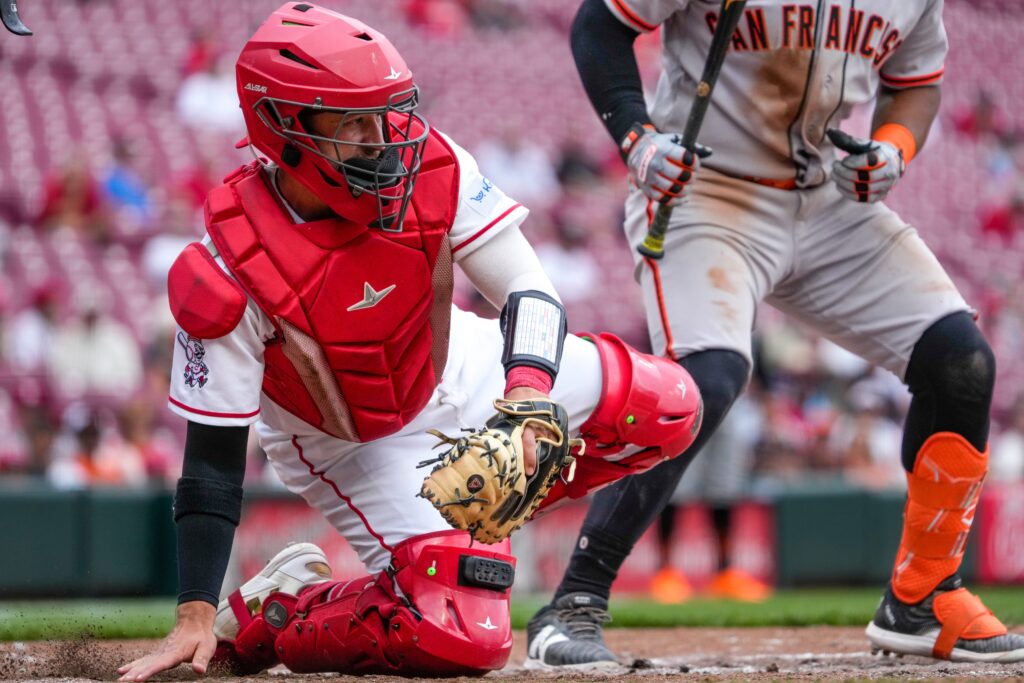
The Reds designated catcher P.J. Higgins for assignment on Monday, freeing a spot on the 40-man roster for Chris Paddack, whose agreement with Cincinnati is now official. Rhett Lowder's placement on the 15-day injured list created the active roster opening the team needed to absorb the veteran right-hander. The moves signal a clear pivot in how Cincinnati intends to compete down the stretch—swapping a backup catcher for pitching depth while managing a rotation injury.
Higgins has been a depth piece for the Reds since 2022, appearing in 38 games last season with a .238 batting average and minimal offensive production. His designation marks a straightforward organizational decision: with Salvador Perez established as the primary catcher and other catching options on the roster, Higgins no longer fits the current payroll and playing-time calculus. The move carries no surprise weight; he's been a reserve-level performer in a buyer's market for catching talent.
Paddack's signing carries more organizational consequence. The 28-year-old right-hander brings major-league experience and a track record of mid-rotation durability—exactly what Cincinnati needs with Lowder sidelined. His addition to the staff represents an admission that the Reds view their rotation as undersized or injury-exposed enough to justify adding a veteran arm mid-season. Lowder's 15-day IL stint (not the 60-day track that claimed other Reds players recently) suggests a shorter-term injury outlook, but the team is betting Paddack provides insurance rather than hoping for a quick Lowder return.
For betting purposes, the catching situation bears brief examination. Perez's workload may tick up slightly with Higgins gone—fewer rotation days between games—but the impact is marginal for prop markets. The more direct angle flows through pitching volume and quality starts. Paddack's arrival on a 15-day IL opening means Cincinnati is committing to a larger rotation footprint, which typically inflates strikeout totals and pitcher-usage lines across the staff. If Paddack makes four or five starts before Lowder returns, Reds pitching strikeout props and individual pitcher K-rates should receive moderate volume support, though his own ERA and strikeout rate (career 8.1 K/9) sit below the league's premium arms. The IL stint's brevity also suggests the Reds expect Lowder back soon, limiting the window for Paddack's impact to roughly two to three weeks—a temporary relief valve rather than a season-long correction.
The absence of a move to the 60-day IL (as recently happened with other Cincinnati players) points to organizational optimism about rotation health, even if Paddack's addition contradicts that narrative. Bettors should monitor Lowder's official return timeline; when he clears the IL, Paddack's role likely contracts or exits entirely, resetting the pitcher usage and game environment for Reds totals.