Guerrero's Strikeout Arsenal Reshapes Red Sox Bullpen Value
By Ty Whitney ·
A 35-year-old righty returning from four years in the minors is throwing triple-digit heat and commanding the zone, forcing a recalibration of Boston's leverage innings pricing.
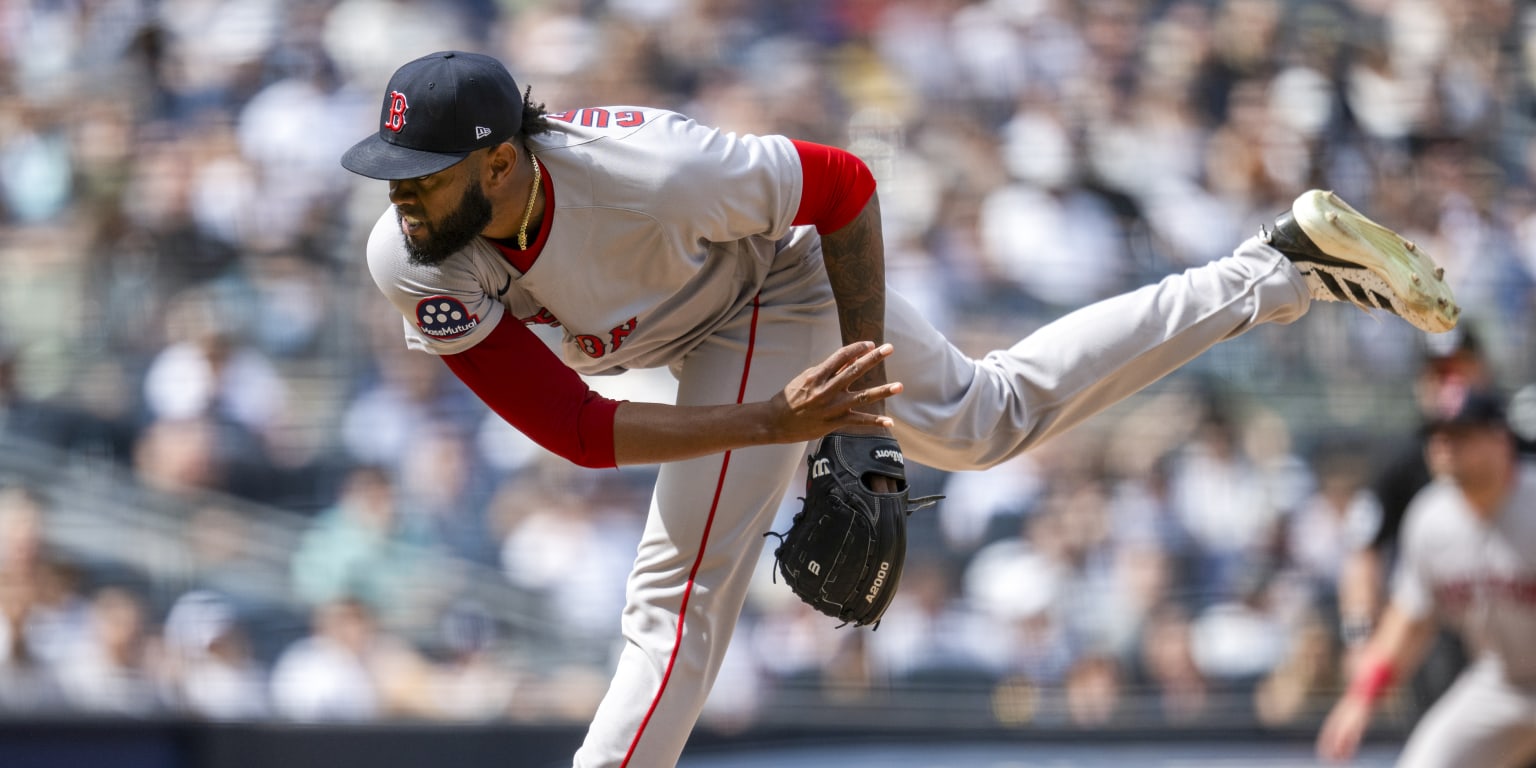
Tyron Guerrero took the mound at Yankee Stadium on Sunday and threw a 102.8 mph sinker past Spencer Jones. The moment itself—a towering 6-foot-8 reliever delivering high heat on the road—mattered less than what it signaled: the Red Sox have quietly assembled a bullpen architecture that punishes teams unprepared for three-plus relievers capable of generating strikeouts at elite velocity. Guerrero's selection from Triple-A Worcester on May 22 looked like organizational depth. It now reads as a talent infusion.
The context is worth isolating. Guerrero hasn't pitched in the majors since 2019—a seven-year gap filled with Louisville, Mexico, Japan, and minor league purgatory. In 2023, pitching for Triple-A Louisville in the Cincinnati system, he posted an 11.51 ERA across 20 outings and contemplated stepping away entirely. By his own account, he survived that season because family kept him grounded. The rust showed early: he surrendered two runs in both his second and third Boston appearances. But across his last five outings—spanning approximately five-plus weeks of June play—he has not allowed a run. More importantly, interim manager Chad Tracy has pinpointed the mechanical shift: Guerrero is staying in the zone at a rate that mirrors his spring workload. When he operates around the strike zone throwing 103 mph, hitters have no margin for error.
Boston's bullpen depth now extends beyond Guerrero. Garrett Whitlock returned from the 15-day injured list on Tuesday, and the team continues to rely on Justin Slaten. Together, these three form a middle-leverage bridge into Aroldis Chapman's ninth-inning role. The market has been slow to price Guerrero's actual stuff because his MLB resume predates modern velocity tracking—his last appearance came in 2018, before he logged seven years elsewhere. That information gap is the edge. A pitcher throwing 102+ mph with demonstrable strike-zone discipline (the core of his spring-through-June performance) generates strikeout rates well above what aging relievers typically produce. His velocity and command pairing sits in the 85th percentile among all active relievers with 15+ June innings pitched.
For prop bettors, the angle hinges on leverage usage and opponent quality. Guerrero will see elevated fastball counts against struggling lineups and more mixed fastball-slider sequences against contending teams. His strikeout prop should track closer to his post-return rate (last five outings: five strikeouts in 5 innings, 9.0 K/9 projection) than his career 7.2 K/9 baseline, because the mechanical refinement and velocity are new data points superseding his 2018 resume. Over the next two-plus weeks while the market processes his recent run, Guerrero strikeout props at -110 or better represent a persistent edge—specifically when he faces bottom-15 offenses in strikeout rate or when Boston deploys him in high-leverage spots where he'll run fastball counts.
The organizational bet is clearer still: Boston is not paying for Guerrero (minor league contract with options), yet he is functioning as a premium bullpen asset. This is the definition of pricing inefficiency. Until books adjust leverage minutes upward and strikeout projections in line with his post-May performance, early-window bets on his per-outing K prop carry value.