Red Sox Weigh Speed Weapon for October, Creating Roster Construction Leverage
By Ty Whitney ·
Boston's consideration of a 60-steal Triple-A speedster signals a shift toward bench versatility in a tight Wild Card race where one roster spot could swing a best-of-three series.
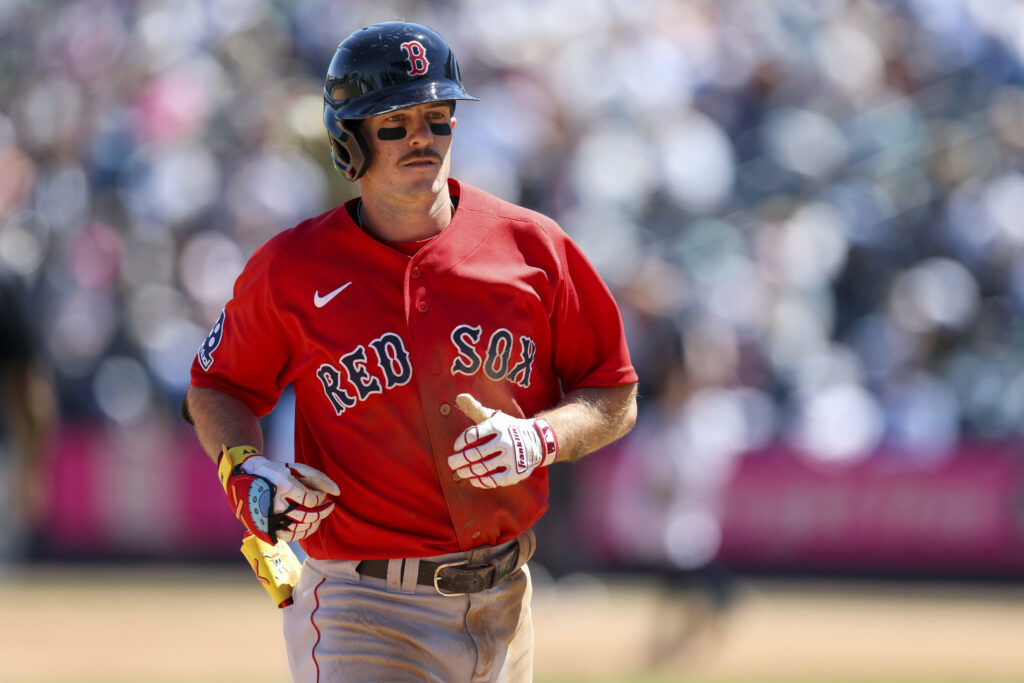
The Red Sox are actively evaluating outfielder Braiden Ward as a potential playoff addition, interim manager Chad Tracy confirmed Wednesday. Ward, 27, has reached 60 stolen bases in Triple-A this season—a minor-league accomplishment that has caught the attention of the organization precisely because Boston locked itself into the AL's No. 5 seed with limited roster flexibility heading into October. The team's Wild Card Series window opens in roughly two weeks, and a specialized pinch-runner who can credibly swipe a base or turn a first-inning sprint into a scoring position carries genuine value in a shortened series.
Ward's profile is unusually thin for a prospect commanding this kind of late-season discussion. He's hit .238/.356/.355 with minimal power across 437 Triple-A plate appearances. He was acquired last winter for a relieved lefty (Brennan Bernardino to Colorado) in what amounted to a speculative depth deal. But his speed is legitimately elite—FanGraphs' prospect writeup positioned him as a Terrance Gore–type career pinch-runner, and Ward backed that assessment by going 19-for-22 in stolen-base attempts during spring training. The theft success rate sits at .870 this season (60 steals in 69 attempts), which is the kind of efficiency that doesn't matter much in May but becomes actionable leverage in a three-game elimination format.
The roster math favors Ward's case. Deadline acquisition Eli White, who had been the leading candidate for Boston's bench speedster role, landed on the injured list last week with right-foot ligament damage and is now a question mark for October availability. Ward would technically slot in as an injury replacement, allowing Boston to add him to the 40-man roster without sacrificing depth at a premium position. Teams can carry up to 13 pitchers in Wild Card play, which in practice means one extra bench spot—the perfect window for a high-variance, high-upside role player who doesn't need to hit.
For betting purposes, Ward's addition would influence Red Sox game scripts more than individual player props. The presence of a credible steal threat off the bench subtly reframes early-inning run-creation paths; teams with speed have lower first-inning walk rates because pitchers become conscious of the threat, and bullpen behavior shifts when the tying or go-ahead run is on first with one out. This doesn't move moneylines materially, but it does tighten unders on Red Sox team totals in games where Ward enters—the variance of blown early leads compresses when you've got a weapon who can manufacture an extra 90 feet on the basepaths. Boston's postseason opponent, likely the Yankees (a rematch from last October), tends to pitch around contact against speed; that's where Ward's insertion into the conversation becomes a legitimate strategic tell about how the Red Sox are building their October roster.
Tracey's public acknowledgment of Ward's consideration also signals organizational confidence that deeper bench construction—speed over power—gives Boston an edge in a short series. That's a philosophical stance bettors should track. Teams that prioritize bench depth and unconventional roles tend to show stronger first-inning overs and lower postseason moneyline variance because they've built redundancy into their late-game toolbox. Ward won't take an at-bat in most games, but his mere presence on the roster is a micro-efficiency play.