Mead's Boston Debut Lands in Perfect Storm: Struggling Pitcher, Hitter's Park, Rhythm Opportunity
By PropBetEdge Editorial Team ·
Curtis Mead inherits a second-base spot tonight against an Oakland pitcher who hasn't survived five innings all season.
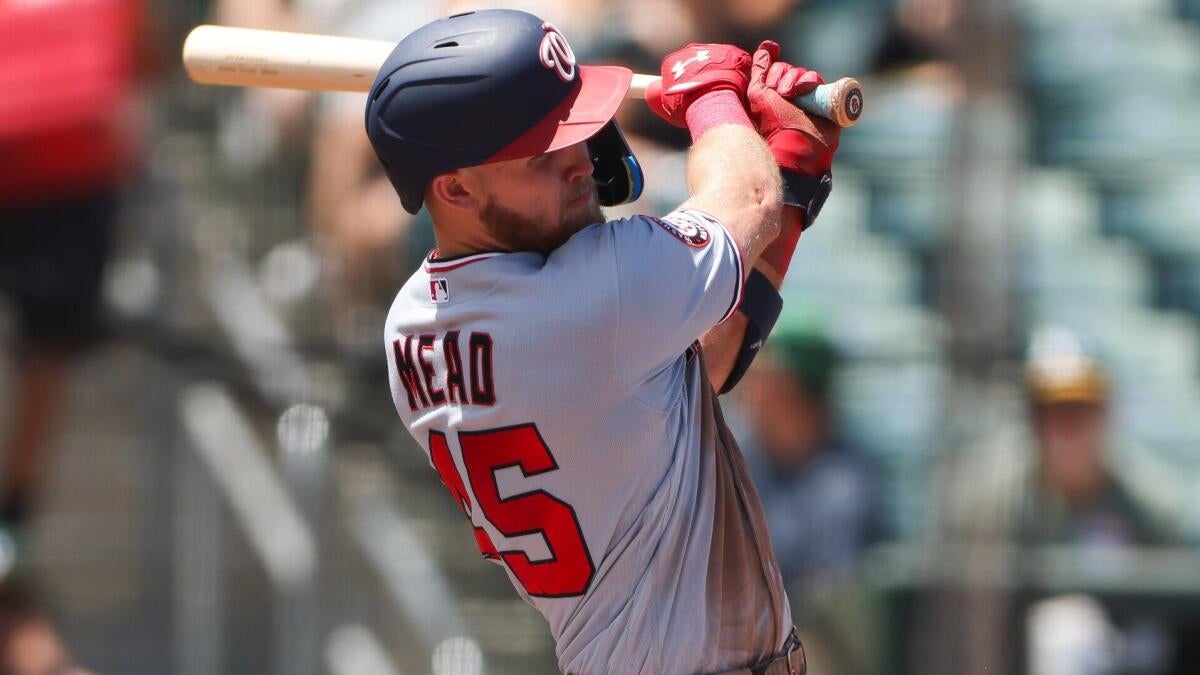
The Red Sox shipped 24-year-old lefty Connelly Early to Washington over the weekend to acquire infielder Curtis Mead, a trade that signals how sharply Boston's deadline calculus has shifted. Six weeks ago, the Sox looked destined to sell. Instead, a 15-game winning streak vaulted them into playoff position—now holding the second AL wild card slot—and transformed acquisition from luxury to necessity. Early, a promising 7-5 arm with a 3.44 ERA on the injured list, won't hit free agency until 2032. But Boston is stocked with young starting depth. Mead, 25 and control through 2031, addresses a lingering hole: the team needed a right-handed bat. His 2026 season with Washington—.254/.352/.500, 17 doubles, 17 homers across 87 games—finally delivered on prospect pedigree that fizzled in Tampa Bay.
Mead debuts tonight at second base in Sacramento, a position where he's started just 35 times in his career and only once this year. He played third in Washington; Boston slots him at the keystone because Caleb Durbin holds the hot corner and All-Star Willson Contreras anchors first. It's an unconventional positioning for a sudden acquisition, but the Red Sox offense is built to accommodate. The Athletics counter with Jack Perkins, a righthander who embodies Oakland's seller-mode descent. Perkins carries a 6.75 ERA overall and 7.41 at home, with five home runs allowed in his last three starts over 11.2 innings—all losses. He hasn't gone past five innings once this season and only once in his two-year career.
The stage setup favors Mead's power stroke. Sutter Health Park, the Sacramento venue, plays as a classic hitter's cathedral: consistently hot, wind blowing out to the gaps. Mead's recent visit there with Washington produced 5-for-11 with five runs and three doubles—direct evidence he can navigate the ballpark. He figures to slot somewhere in the lineup's top five, likely the two-hole or lower. More important: Mead brings fresh, debut energy against a pitcher who has shown zero capacity to manage a full outing. Perkins' inability to pitch deep into games means more exposure to Boston's bullpen, where the team has invested heavily all summer.
The propositional edge hinges on Mead's total bases line. At 1.5, the market is pricing him as a single-or-nothing proposition—overlooking that (a) he's a power hitter (17 homers in 87 games) entering a ballpark designed to reward it, (b) Perkins allows hard contact at an alarming rate, (c) Mead's recent Sacramento tape shows he thrives there, and (d) a debuting player often swings with added aggression in his opener. The model projects him at 1.84 total bases, a modest edge, but the ceiling is real. A double clears the number; a homer runs away with it. Against a pitcher allowing five homers in 11.2 innings, that tail risk exists.
Perkins' outs-recorded line at 15.5 is the inverse play. He projects at 4.9 innings—well under the threshold—meaning if he exits by the fourth or fifth inning after a bad outing, bettors chasing unders on his workload will cash early. Boston's bench has ammunition, and Mead's presence as a new bat likely accelerates the hook if Perkins falls behind. The Athletics' broader context matters too: catcher Shea Langeliers' torn meniscus and probable season-ending status signals an organizational pivot to prospect development. Oakland isn't fighting tonight; Boston is.