Red Sox Trade Away Early's Upside to Plug Infield; Mead's Savant Profile Worth Testing Immediately
By Erik Schwartz ·
Boston sells on a young starter's strikeout rate to acquire a third baseman whose underlying metrics suggest he's hitting better than his .254 average implies.
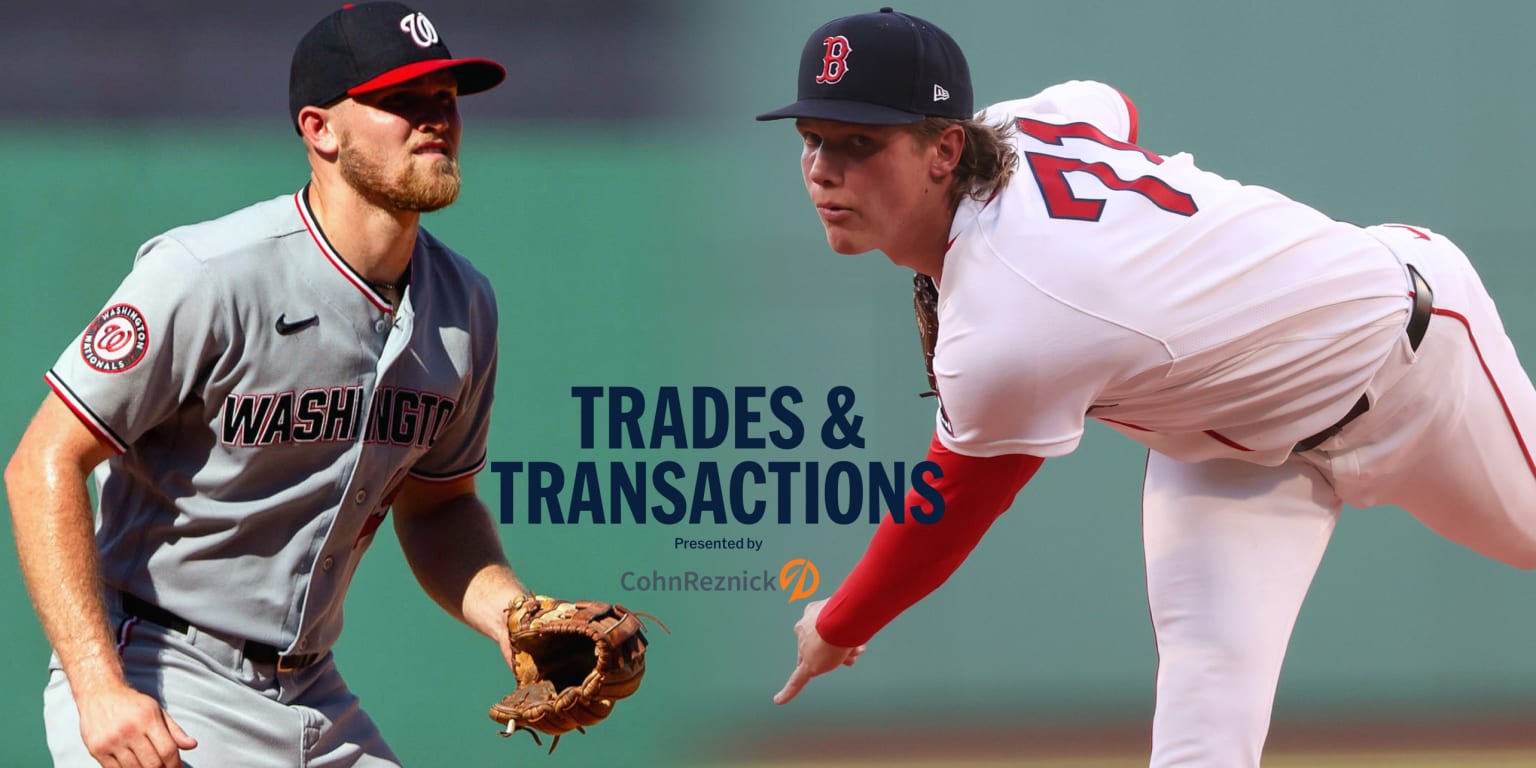
The Red Sox and Nationals completed a trade Saturday night that ships left-handed starter Connelly Early to Washington in exchange for infielder Curtis Mead, sources confirmed to MLB.com. The deal arrives nine days before the Aug. 3 trade deadline, a window Boston appears to be using to consolidate payroll and address a gap up the middle rather than chase external impact arms. Early, a 2025 debut who has posted a 3.44 ERA with 9.1 K/9 across 17 starts this year, has been sidelined since July 1 with left elbow inflammation and was expected to return to action in August after completing a pair of bullpen sessions and a rehab assignment. The Nationals absorb that injury risk and timeline in exchange for a young starter still operating within the cheap control window.
Mead arrives as the more immediate puzzle. The 25-year-old Australian has bounced between three positions—third, first, second—this season, accumulating 87 games and posting a .254/.352/.500 slash line that reads as pedestrian on its surface. Dig into the underlying profile, however, and a different picture emerges: his expected weighted on-base average (xwOBA) sits at .359, a metric that ranks in the 85th percentile league-wide. That gap between actual average and expected output is not noise—it typically signals a hitter whose batted-ball quality and exit-velo profile are outpacing his fortune on balls in play. Mead's walk rate (352 OBP) and power stroke (500 slugging) suggest a hitter making harder contact than his hit tool has converted so far this season.
From Boston's perspective, the acquisition serves a dual purpose: it plugs a short-term need at a position where depth was becoming a liability, and it brings in a young hitter whose Savant percentiles (particularly his 85th-percentile xwOBA) suggest mean-reversion potential over the remainder of the season. The market for mid-season infield upgrades is thin enough that the Red Sox did not have to surrender a high-impact prospect or future asset. Early's injury history and extended rehab timeline made him a lower-ceiling trade candidate, even if his strikeout rate is legitimate.
For prop bettors, the angle hinges on Mead's immediate opportunity cost. A hitter in the 85th percentile for xwOBA has historically seen his actual batting average move toward that metric over extended opportunity. With Boston controlling his at-bats down the stretch and likely deploying him regularly at third or second base—positions where the Red Sox have underperformed expectation—Mead becomes a reliable vehicle for hit prop overs and runs-scored overs if he enters the lineup as a regular. His .254 average is not predictive; his .359 xwOBA is. Test him in the 3-5 hole on the Red Sox card, and his individual batting average props will carry edge until the market reprices his actual output to reflect his quality of contact.