Red Sox's Trade Gamble on Mead Ends Before It Starts
By Erik Schwartz ·
Curtis Mead lasted one game in Boston after arriving Saturday, now sidelined with a wrist fracture from a hit-by-pitch in his debut.
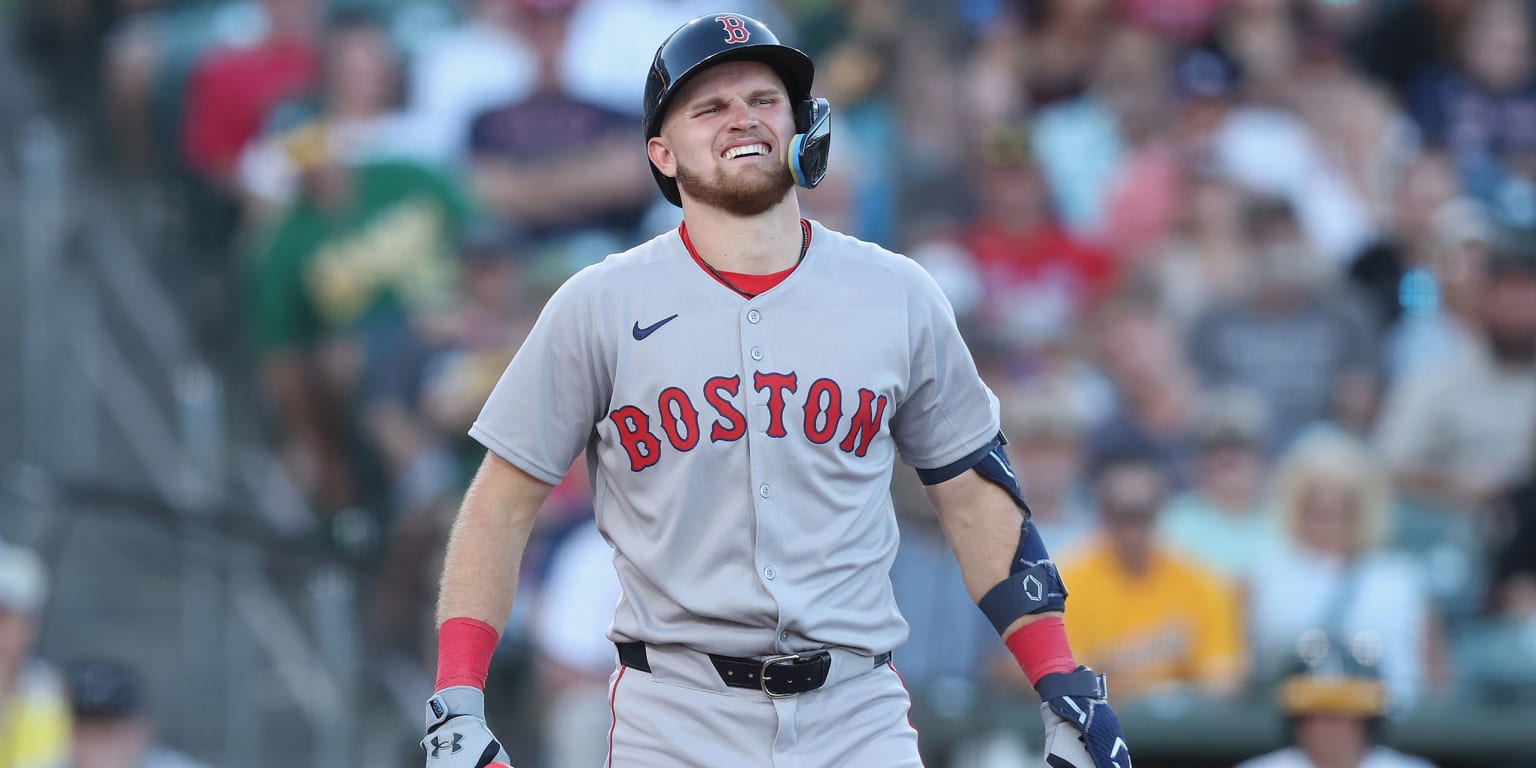
Curtis Mead's tenure with the Red Sox lasted exactly 24 hours. After arriving via trade from Washington on Saturday in exchange for left-hander Connelly Early, the infielder took the field Monday against Oakland and was struck on the left wrist by a 94.9 mph fastball in the fourth inning. Initial X-rays looked clean, but follow-up imaging revealed a fracture. Boston placed him on the 10-day injured list Tuesday with Nick Sogard recalled from Triple-A Worcester to fill the gap.
The timing couldn't be more brutal for either party. Mead was having a legitimate career year with the Nationals—17 home runs, an .852 OPS over 87 games—his best output in four major-league seasons after a rough start with Tampa Bay. The Red Sox, apparently convinced they were adding a productive bat down the stretch, shipped out a young left-hander with starting upside to get a deal done. That calculus inverts entirely the moment a fastball finds the wrong part of Mead's wrist.
What makes this more than random bad luck is the broader context: Mead struggled in his first three years in the majors before this Washington resurgence. The Red Sox were betting that environment mattered—that a change of scenery to a more stable organization would unlock the prospect-level talent that drew them to pull the trigger. One at-bat into that bet, they're waiting for imaging to tell them whether they still have a player or whether the injury exposes underlying mechanical or approach issues that derail his second act before it begins.
For Boston's offensive projection, the loss of Mead removes a middle-order right-handed bat that was producing at league-average power rates for the first time. The Red Sox had been searching for consistency in the lineup; adding Mead was meant to stabilize a middle-infield spot against right-handed pitching. Sogard, the replacement, projects as a contact-heavy, limited-power option—a significant downgrade in expected total bases and home run output. If Mead misses the full 10 days, Boston's team total and run-scoring props face modest headwinds as they navigate the remainder of July and into August without him. The injury also removes a hitter who was showing improved plate discipline in Washington, a trait that doesn't always travel but matters for strikeout rate and overall lineup volatility.