Mayer's Two-Month Stress Fracture Exposes Boston's Middle-Infield Depth Crisis
By Erik Schwartz ·
The Red Sox shortstop's delayed injured-list placement signals a roster already thinning at a critical defensive position.
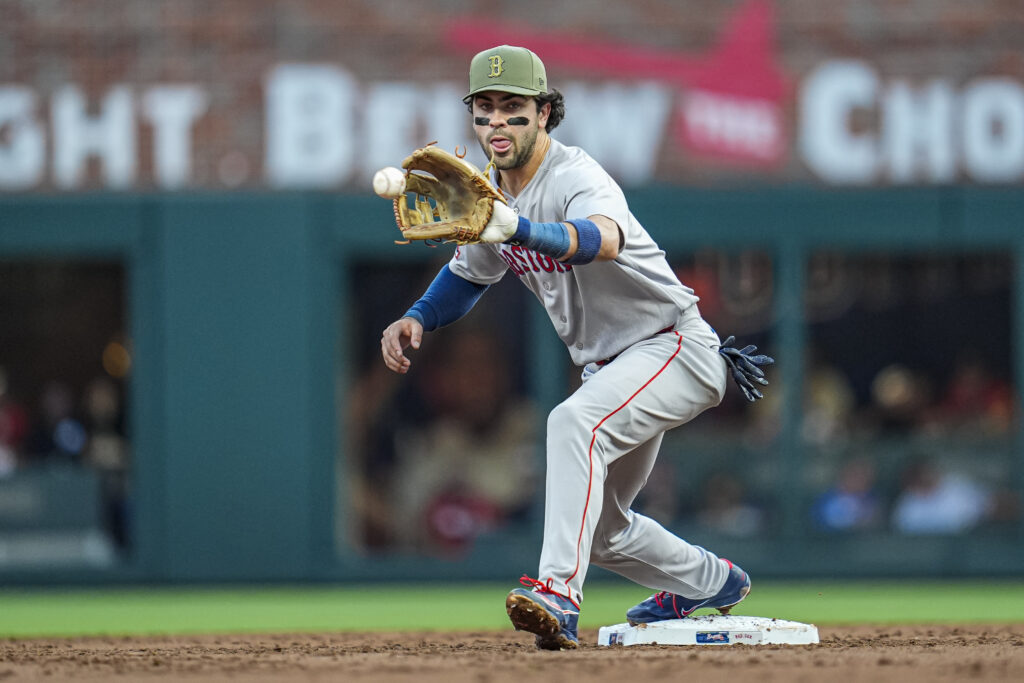
Marcelo Mayer is now on Boston's 10-day injured list with a bone stress reaction in his left ulna, a condition he's apparently managed for the past two months before the team formalized the move. Tsung-Che Cheng slots in as the replacement. The timing and duration of the injury raise a sharper question than the mechanical issue itself: why was Mayer playing through a two-month stress fracture, and what does that decision tell us about the Red Sox roster construction heading into the second half?
Stress reactions don't resolve on their own—they worsen under continued load. A shortstop carrying that kind of structural damage absorbs ground-ball impacts that travel directly through the wrist and forearm with every pivot, every ground ball, every throw across the diamond. Two months of that accumulation means the organization either didn't know the severity, chose to ignore it, or had no viable backup option. None of those scenarios is reassuring. Mayer hit .271 with a .734 OPS entering June; the offensive decline may have been partly mechanical—a player protecting an injury unconsciously adjusts his swing, loads differently, hesitates on fastballs—rather than a talent cliff.
Cheng's promotion is a placeholder move, not a solution. Boston's infield depth chart has already absorbed injuries to key contributors; adding Mayer to that list at shortstop forces the team to either shuffle veterans out of position or run a rookie through a heavy second-half schedule. That leverage matters for both team-total lines and individual prop markets. When a team's best shortstop is sidelined and the depth replacement is emergency-level, opposing lineups game-plan differently—they hunt fastballs more aggressively, run more often, take advantage of slightly softer infield defense. Boston's team total for games Cheng starts will almost certainly trend lower than games where Mayer was in the lineup, even accounting for Mayer's recent offensive struggles.
The propositional edge isn't on Mayer's individual performance—he's off the board for at least a week—but on Red Sox team totals when Cheng is the starting shortstop. Fade the over on Boston's run line in those matchups. A 4–5 run per game regression is reasonable when your primary source of ground-ball outs becomes less reliable and your middle infield turns into a liability rather than a neutral position. This isn't recency surfing; it's positional arithmetic. Teams with weak shortstops concede more baserunning opportunities, allow more advanced runners, and score fewer runs in tight situations where a quick double play keeps innings short.