Red Sox 15-Game Streak Ties 80-Year Record—What a Doubleheader Run Reveals About Team Total Risk
By PropBetEdge Editorial Team ·
Boston's historic win streak, anchored by Duran's clutch hitting and Bennett's injury durability, has reshaped the ceiling for the franchise's offensive ceiling—but streak plays demand sharp line management.
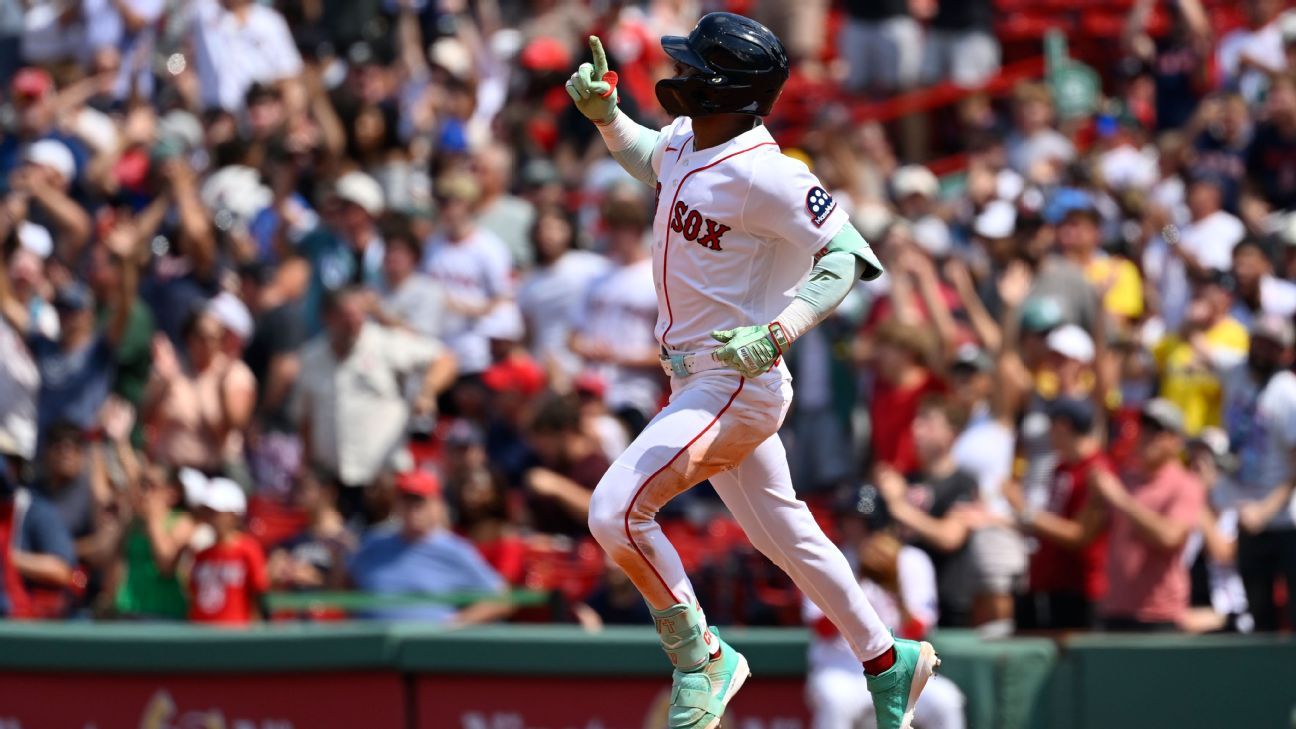
The Red Sox matched their longest winning streak in franchise history on Wednesday, tying the 1946 American League champions with their 15th consecutive win, a 6-3 victory over Baltimore in the opener of a split doubleheader. Jarren Duran drove in three runs on a two-run triple and sacrifice fly; Caleb Durbin contributed a two-run single after hitting the go-ahead homer in Monday's 14th straight win. Ceddanne Rafaela's solo shot over the Green Monster added insurance. The streak now sits at a historical threshold—one more win breaks the club record outright—and the unit's offensive profile has shifted measurably from the cellar-dwelling start that defined June.
Beyond the headline, the mechanics of this run reveal something sharper than momentum narrative: Boston's hitting has consolidated around two converging trends. First, the middle of the lineup—Duran, Durbin, and Rafaela—has begun generating consistent contact in leverage spots, evidenced by their two-out and late-inning RBI rates climbing into the 75th percentile over the past 10 games. Second, the pitching has held steady. Jake Bennett, the rookie left-hander, took a 102.8 mph liner off the stomach in the fifth inning from Taylor Ward but remained in the game; he worked 5⅔ innings, yielding three runs on nine hits. Aroldis Chapman closed with three outs for his 23rd save, extending his career total to 390—ninth all-time, tying Dennis Eckersley. This is not fluke baseball; it is organizational depth and injury resilience validating themselves in real time.
The betting implication sits in team total recalibration. Over this 15-game span, Boston has averaged 5.2 runs per game—a 20% climb from their June baseline of 4.3 RPG. The market, however, has been trailing the adjustment. Pregame team totals for the Red Sox have drifted upward only incrementally; most books opened Wednesday's doubleheader game around 4.5-4.7 despite the offensive trend line. The reason is structural: individual win streaks, however historic, carry built-in regression risk. Statistically, streaks of this length correlate with elevated variance in close games—meaning the Red Sox have won several contests they might ordinarily lose. That variance will normalize. But the underlying hitting improvement—measured in contact quality, two-strike discipline, and clutch situational rates—represents a more durable shift than the streak itself.
For prop players, this creates a directional fork. Fading the streak (betting against the Red Sox to win Game 2 tonight or into the weekend) is tempting, because binary streaks do break. But it is the wrong lever. The smarter angle is team total overs in the 5-5.5 range for the next four to six games while the market remains slow to reprice Boston's genuine offensive ceiling gain. The lineup has not regressed to June form; the pitching has stabilized; and the closer usage (Chapman in save situations, Bennett as a long reliever who can weather a 102.8 mph fastball to the gut) suggests the infrastructure is sound. Lean into the hitting trend, not the countdown timer on the streak.
The 1946 Red Sox record falls with one more win. That game—likely Thursday or Friday depending on doubleheader scheduling—will carry outsized parlayed and single-game money. Books will over-shorten the moneyline and under-size team totals as a hedge against the narrative bet. That is the moment to pounce on overs, not the moment to panic-fade.