Boston's West Coast Offensive Surge Tests Market Reality
By Ty Whitney ·
The Red Sox have gone 21-3 since July 3, but a middling run-prevention unit means their win streak may be outpacing their underlying talent.
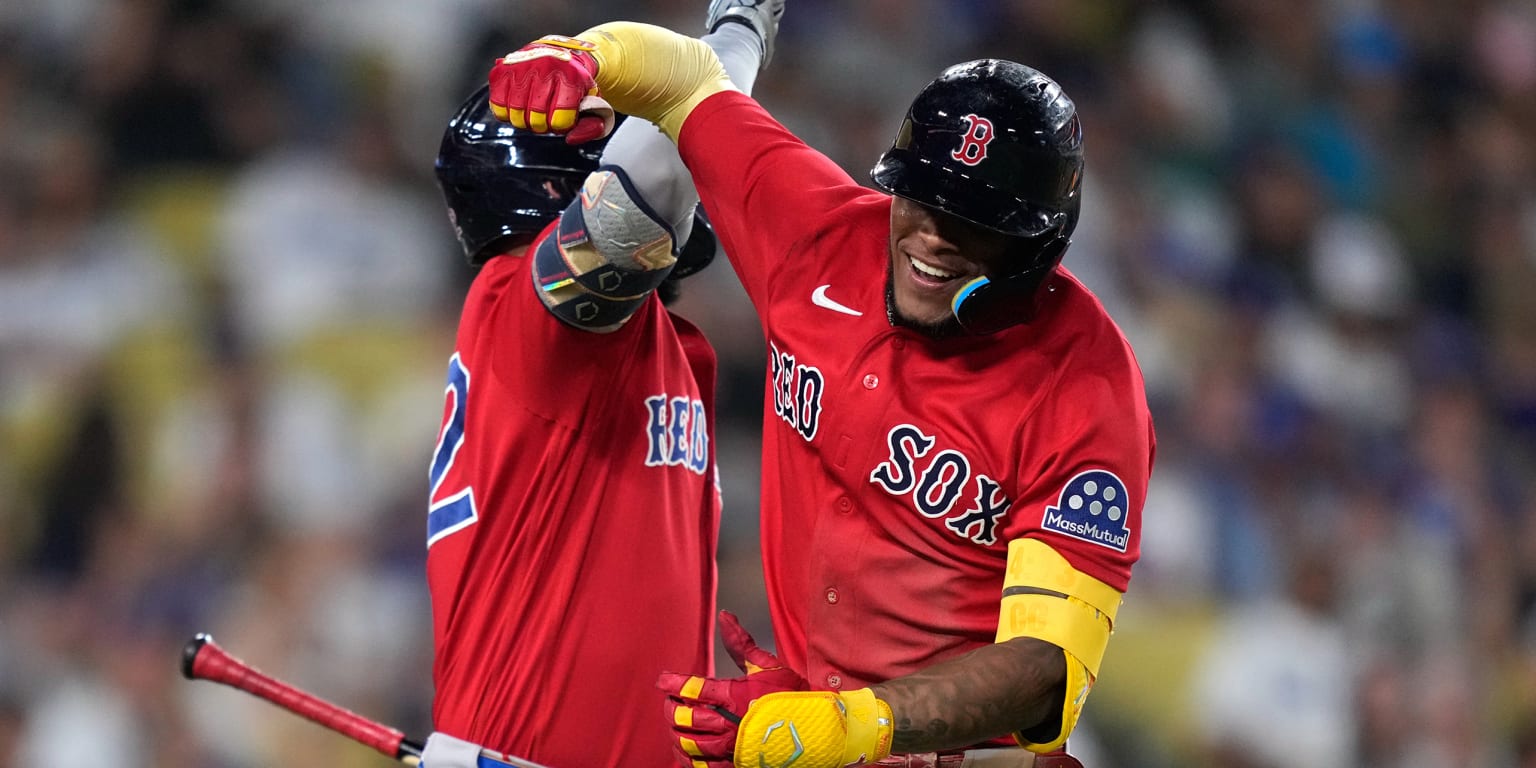
The Red Sox dismantled the two-time defending champion Dodgers 9-4 on Friday night in Los Angeles, with Ceddanne Rafaela's two-run home run igniting a five-run seventh inning that broke open an otherwise competitive game. Boston stands 4-1 through five games on a seven-game California road trip and has now won 12 of 13 contests since the All-Star break. The offensive flash is undeniable: a 10-batter seventh inning, back-to-back two-out contributions from Rafaela and Andruw Monasterio, the kind of situational hitting that playoff teams depend on.
But the win exposed the volatility hiding inside Boston's gaudy 21-3 record since July 3. Ranger Suarez, returning from a left groin strain, lasted only 4 2/3 innings and surrendered three runs on four hits and two walks—the kind of labored outing that suggests his recovery window remains incomplete. Willson Contreras was removed after absorbing a 95.4 mph fastball to the helmet in the third, a precautionary exit that strips Boston of one of its few defensive anchors. The Dodgers' Shohei Ohtani erased Boston's early 3-0 cushion with a solo home run in the fifth, a reminder that the Red Sox bullpen—however sharp Brayan Bello was in four scoreless relief innings—will face far sterner tests in October.
The mechanical issue: Boston's run prevention ranks 18th in ERA since July 3 at 3.47, while their offensive production has climbed to top-five territory. That gap is unsustainable. Teams that win 21 of 24 games typically have top-10 pitching staffs underwriting the margin. The Red Sox have a congregation of recent returnees (Suarez, ace Garrett Crochet coming back from elbow work) and a bullpen cobbled together from mid-season trades. The lineup is white-hot, but the pitching infrastructure remains a lottery ticket.
For prop purposes, this victory should not immediately reset the market's perception of Boston as a live October contender. The team's run differential since July 3 sits at plus-89—elite-level stuff—but that masks a pitching staff that has given up 3.7 runs per nine innings in that span. Rafaela's homer was the headline, but Suarez's uncomfortable exit is the subtler tell. If Boston's injury luck turns and Crochet's return accelerates their timeline, team totals tighten. If Suarez remains a health question mark, the offense will need to sustain 5+ runs per game simply to stay viable in the AL East race. The market has already priced in Boston's recent form; the question is whether the pitching upgrade materializes before the margin collapses.