Kimbrel's Tampa Bay Audition: A Veteran Reliever's Desperation Move Masks Real Bullpen Weakness
By PropBetEdge Editorial Team ·
Craig Kimbrel signs with Tampa Bay after the Mets' DFA, signaling organizational confidence in a 37-year-old flame-thrower but exposing the Rays' upper-relief depth problem.
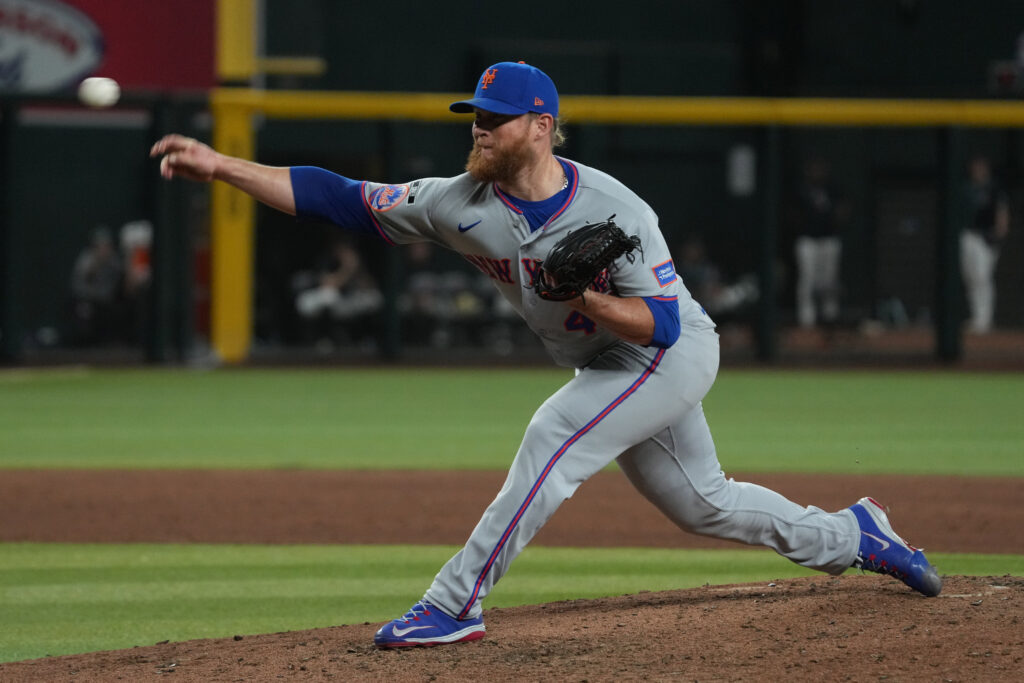
Craig Kimbrel is heading to the Rays on a major league deal, per Ken Rosenthal of The Athletic. The 37-year-old right-hander cleared waivers and elected free agency after the Mets designated him for assignment last week, landing in Tampa Bay where the organization sees enough residual velocity and movement to gamble on a late-career renaissance. At first blush, this looks like organizational desperation—a veteran reliever being recycled through his fourth organization in three seasons. But the calculus runs deeper.
Kimbrel's surface numbers in recent years have deteriorated predictably. His fastball sits in the low-to-mid 90s now, a full tick slower than his Cy Young seasons, and his strikeout rates have compressed as hitters have learned to lay off his slider. Yet the Mets' DFA wasn't purely performance-based; it was cap flexibility in a crowded bullpen. The Rays, by contrast, operate with surgical roster precision. If Tampa Bay signed him, they believe either that: (a) his repertoire still plays in their specific bullpen ecosystem—particularly in low-leverage or specific matchup spots—or (b) they have a significant durability or mechanical issue to resolve in the bullpen hierarchy that outweighs the marginal decline in Kimbrel's fastball velocity.
The prop angle here hinges on bullpen architecture. Kimbrel will not be deployed as a ninth-inning closer in Tampa Bay; that role is spoken for. Instead, he's a depth piece and potential leverage-situation reclamation project. This matters for reliever strikeout props. A 37-year-old throwing to shorter leash and tighter matchups will see lower usage rates but potentially higher K-rate per appearance if he's reserved for hitter-specific situations. His K/9 in 2025 may have dropped to 8.2–8.8, well below his career 11.4. But in a Rays uniform, facing a carefully curated opponent pool, those props could skew toward the higher end of that range—particularly in games where Tampa Bay targets him against right-handed sluggers early in counts.
For wider market impact, Kimbrel's addition also signals that the Rays' internal relief inventory carries more risk than publicly acknowledged. A contending team doesn't sign a 37-year-old on a whim. They do it when they've lost confidence in a younger arm or detected an injury pattern in their depth. That structural observation is worth monitoring for Rays team total props; if their bullpen picture is murkier than the odds-makers priced it, late-inning volatility becomes a real factor in close-game scenarios. Unders on Rays team totals in tight contests may carry edge because of relief uncertainty, even if the position players are sound.
Kimbrel's arrival is less about a dramatic mid-season rescue and more about Tampa Bay acknowledging a bullpen seam that needs patching with veteran experience. The 2026 version of Craig Kimbrel won't be a star. He'll be a strategic deployment, and that's exactly how to price him.