Kimbrel's Tampa Exit Signals Closer Carousel Continues; Peralta Inherits Ninth-Inning Leverage
By Ty Whitney ·
The Rays designated Craig Kimbrel for assignment on Sunday, promoting Freddy Peralta from the Mets acquisition to close games—a late-season bullpen shuffle that reshapes leverage usage and save opportunity distribution.
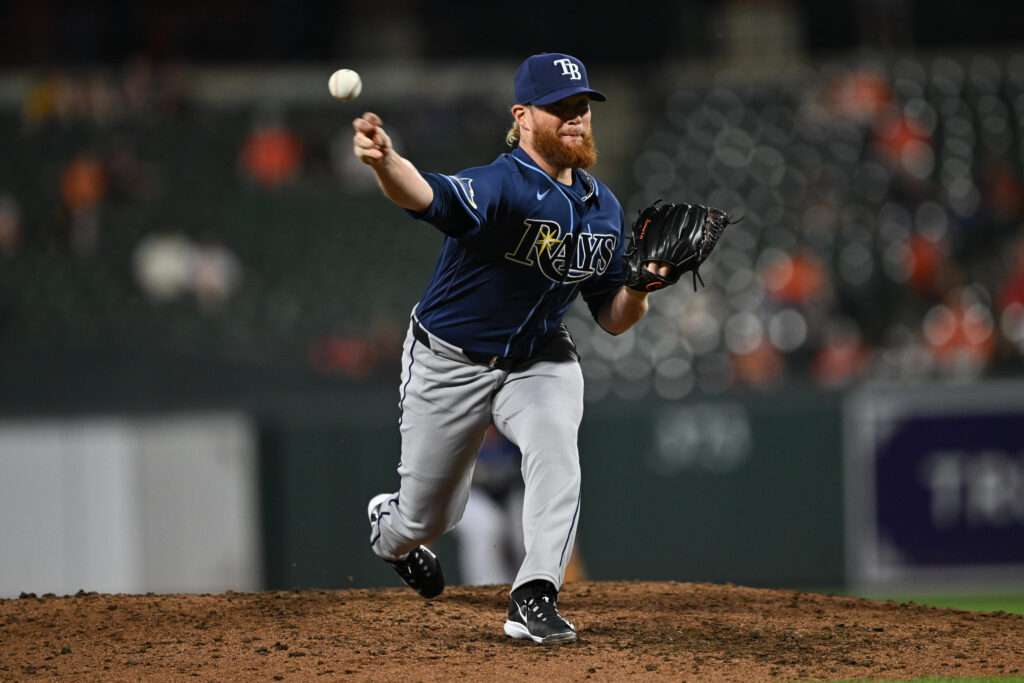
The Tampa Bay Rays formally designated right-handed reliever Craig Kimbrel for assignment Sunday, handing his ninth-inning duties to Freddy Peralta, the righty acquired from the Mets in the same window. The move signals the organization's willingness to reset its closer chair mid-season rather than ride out Kimbrel's remaining contract, a blunt acknowledgment that the 38-year-old's performance no longer justifies late-game leverage.
Kimbrel entered 2026 in the Mets organization after signing a minor-league deal—a far cry from his closer pedigree. His trek to Tampa Bay represented a low-cost gamble on durability and resume value in a bullpen fighting for relevance in the AL East. But durability and résumé mean nothing when the fastball loses velocity or command fragments. The designation removes a sunk cost and opens roster flexibility for a contender shopping for bullpen depth as the trade deadline window hardens.
Peralta's elevation carries immediate consequences for save-opportunity pricing. A Mets castoff arriving mid-rotation suggests he was undervalued in New York—or his arm profile fit Tampa's scheme more precisely. Either way, he inherits a closer role in a team that finished fourth in the AL East last year and is unlikely to accumulate save chances at the rate a first-place outfit would. Games decided by more than one run don't generate save situations; the Rays' record and run-differential entering Sunday (43-59, -47 RD) mean Peralta will see volatile usage—heavy in blowouts, scarce in close contests.
For bettors tracking save-prop prices, Peralta's insertion should trigger immediate line adjustments on both his strikeout totals and team save totals. If the market priced Kimbrel as a 3-4 save-per-week asset, Peralta won't inherit that volume on a below-.500 team. Any sharp positioning assumed Kimbrel would eat innings; those books now face excess inventory on Rays saves (the team total, not individual reliever output). Look for saves props to compress downward over the next 48 hours as position players adjust for reality—a late-season contender's relief corps operates under different leverage economics than a seller's.
The tactical edge: Fade Rays reliever strikeout overs for the next week as the bullpen stabilizes around Peralta's actual usage. A new closer on a losing team doesn't automatically convert to strikeout volume; it converts to sporadic, low-pressure appearances. The market may overprice his upside based on resumé alone. Wait for three games of live data before engaging his K props at standard juice.