Williamson's Return Sharpens Rays' Middle Infield; Fraley's Exit Opens Bench Clarity
By Ty Whitney ·
Tampa Bay reinstates its defensive anchor at second base as the postseason roster takes shape, pushing out a veteran outfielder who couldn't stick in a crowded corner.
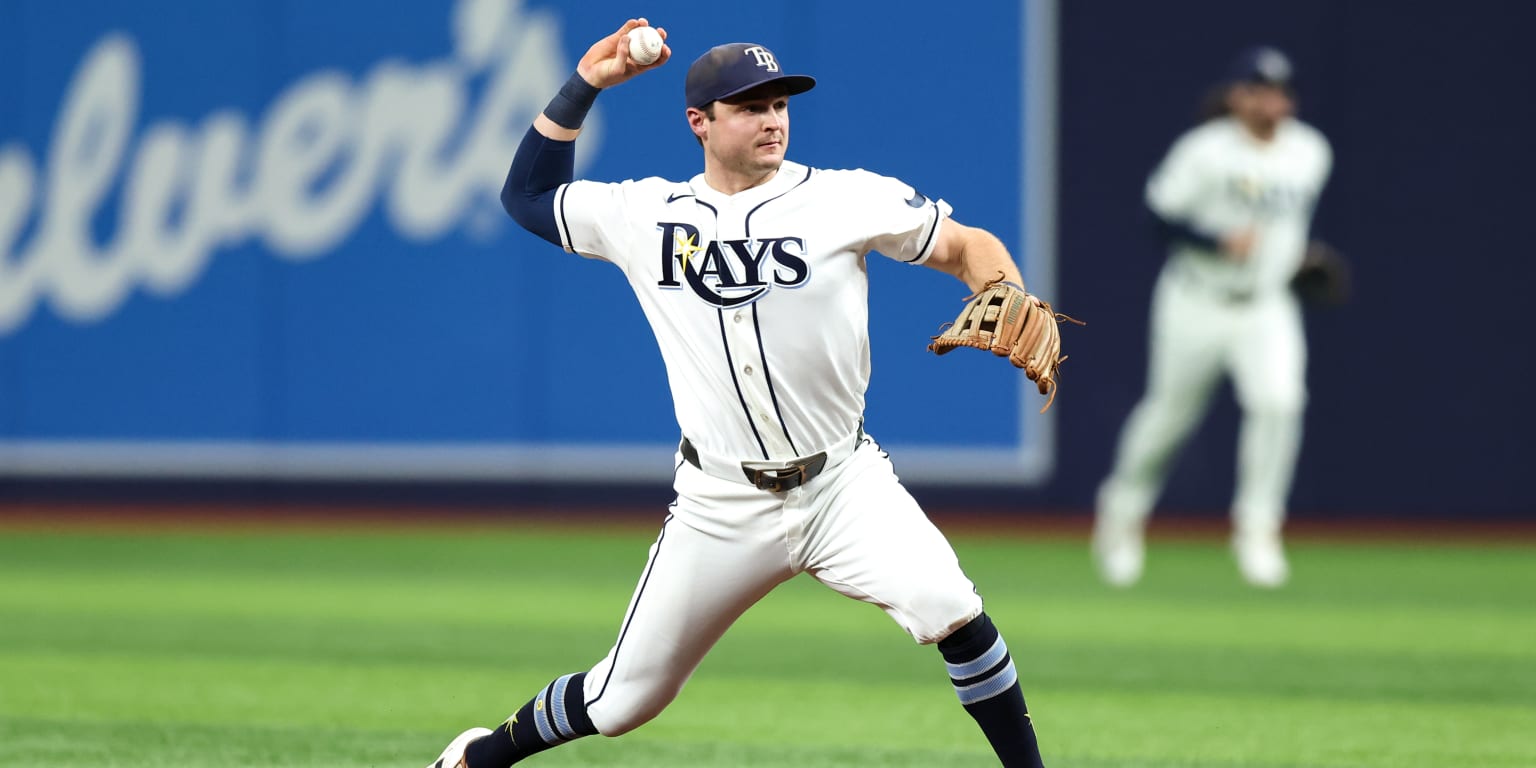
Ben Williamson is back in the Rays' lineup, reinstated from the injured list before Sunday's series finale against Boston after a right hamstring strain sidelined him since August 6. To clear a roster spot, Tampa Bay designated veteran outfielder Jake Fraley for assignment—a move that had been signaled as inevitable since Fraley returned from his own 60-day stint (a hernia injury dating to May 17) only to find himself squeezed out by the emergence of Victor Mesa Jr. in left field and the team's need to retain Jorge Mateo, the utility infielder acquired to fill Williamson's vacancy.
Williamson's absence created a hole in Tampa Bay's defensive architecture. He platoons with hot-hitting Richie Palacios at second base and serves as a shortstop backup to Taylor Walls—roles that demand both glove reliability and positional flexibility in a competitive October window. His 84-game résumé this season (.247/.309/.332, 3 HR, 26 RBI, 1.1 WAR) is not an offensive calling card, but his primary value lives in the field and the stability he provides up the middle. The Rays don't win games through DH production; they win them through pitcher-friendly defensive efficiency and controlled at-bats. Williamson's return to the lineup for Sunday's start at second base signals that the team views him as essential to that formula during a pennant chase.
Fraley's designation is the other side of roster math: he couldn't find a role. His .216/.289/.364 line across 31 games in a Rays uniform is not the profile of a postseason contributor, and the team's corner-outfield picture has closed. Mesa Jr.'s emergence means there's no regular at-bat waiting for Fraley, and designated hitter spots are already allocated. The fact that the Rays chose to keep Mateo—a speed option and defensive reserve—over Fraley underscores what the team values as October approaches: positional flexibility and contact management over right-handed power depth on the bench.
From a betting lens, Williamson's return stabilizes the Rays' defensive profile in a way that quiets some of the variance in pitcher-specific K rates and contact quality. Teams with strong up-the-middle defense—particularly at short and second—see lower BABIP variance and fewer defensive-driven line-drive outs that inflate ERA. Williamson's glove work acts as a ceiling on opponent offensive production, which matters in tight games where pitching depth is the competitive edge. Against a Red Sox lineup that doesn't have elite top-of-order speed, the addition of a sure-handed shortstop backup and second-base defensive presence should modestly suppress Boston's offensive efficiency in this series finale. Conversely, Fraley's DFA removes a potential left-handed pinch-hitter from the Rays' bench, which is immaterial in a 162-game context but signals roster construction priorities: the team is betting that Mesa Jr. and existing corner outfielders can carry the offensive load without Fraley's depth.
For Rays-specific prop considerations, Williamson's return into the lineup and full availability over the final week shapes team-total and spread expectations. His presence doesn't spike offensive projections—his bat is neutral to slightly below league-average—but it removes uncertainty from the defensive equation, which reduces the variance on Rays pitcher strikeout props and raises confidence in their run-suppression numbers. The team's ability to field a full-strength infield in a pennant race should tighten the lines on Tampa Bay spreads and team totals in their favor.