Rays Lock in Emerson at $9.75M: A Draft Valuation Signal for Tampa Bay's Near-Term Ceiling
By Erik Schwartz ·
The Rays' record-setting bonus for a high school shortstop reveals internal confidence in development timeline—and constraints on when Emerson can meaningfully impact major-league win probability.
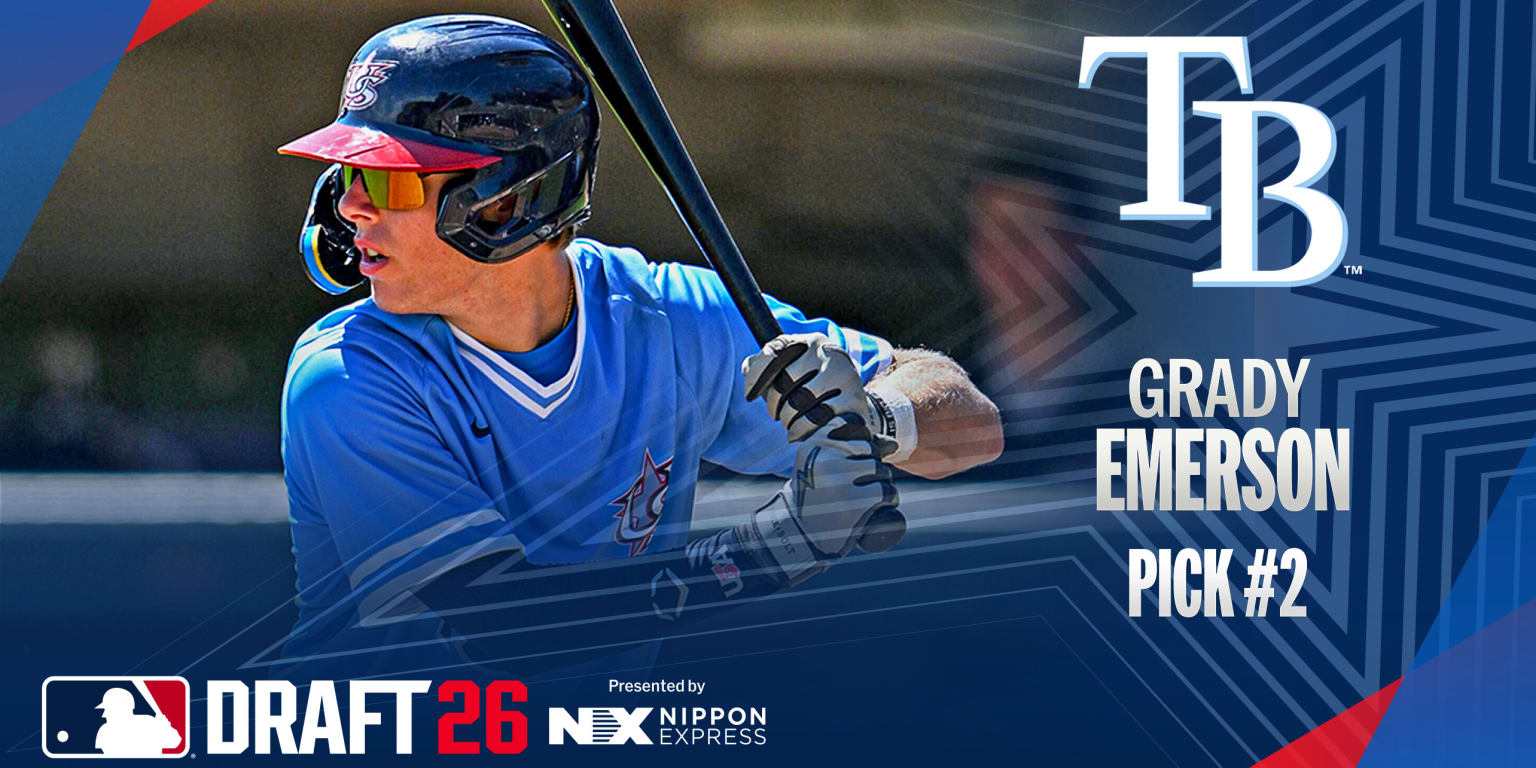
Tampa Bay agreed to a $9.75 million deal with Grady Emerson, the No. 2 overall pick in the 2026 Draft, per MLB Pipeline's Jim Callis on Wednesday. The bonus ranks as the highest in history for a prep player and second overall behind UCLA's Roch Cholowsky, the No. 1 pick. The Rays' willingness to spend top-tier money signals a rare conviction in a teenager's ceiling—but the timeline tells a different story for bettors looking at Tampa Bay's competitiveness window over the next two seasons.
Emerson, an 18-year-old shortstop from Fort Worth Christian, is a genuine five-tool prospect with Bobby Witt Jr.'s developmental blueprint already embedded in his mind. The Rays' scouts, led by area scout Chris Hom, have been tracking Emerson since early contact, cementing the relationship with a private workout and family dinner roughly a month ago. MLB Pipeline grades him as a "lock" to remain at short in the majors, with comps pointing toward elite two-way production—defense, hitting, baserunning. The pedigree is not in question. What matters for Tampa Bay's near-term outlook is Emerson's own stated goal: reach the majors by age 20, requiring a compressed 18-to-24-month ramp through the minors. That timeline is aggressive even for the most polished prep talent, and the organization's private bet on his trajectory doesn't change the mathematical reality that a prospect signed in July 2026 cannot contribute to a major-league roster before the 2028 season at earliest.
For the Rays, this is a long-term asset purchase masquerading as a present-day organizational signal. The $9.75 million price tag reflects Tampa Bay's confidence in their player development apparatus—a legitimate strength—but also their current competitive position: they have the financial and roster flexibility to spend this heavily on a teenager's upside. That flexibility exists precisely because the Rays are not in a true pennant race. The organization is building for 2028 and beyond, not tomorrow. Emerson's arrival in the system doesn't move the needle on Tampa Bay's 2026-27 win totals or near-term payroll constraints. His presence is a multi-year bet, not a quarterly earnings beat.
From a prop-betting vantage, Emerson's signing carries minimal immediate impact on Rays team totals, spreads, or near-term roster construction bets. The practical relevance lies in what the Rays' willingness to spend tells you about franchise direction: Tampa Bay is not aggressively chasing a 2026 playoff run through veteran trades or free-agent depth. They're building a foundation that extends into 2028-29, when Emerson's potential major-league arrival might coincide with the maturation of other young Rays talent. If you're evaluating Tampa Bay moneylines or team total overs for the remainder of this season, Emerson's $9.75 million commitment is a directional hint—not a positive one—that the organization expects this to be a developmental season rather than a win-now moment. The spending pattern reveals organizational tier, not roster firepower.
For bettors holding Rays overs on team totals or playoff odds through the rest of 2026, the Emerson deal reinforces the case to fade those positions. The organization's capital and focus are directed toward prospect infrastructure, not the current roster's competitive ceiling. That conviction is expressed in dollars. Conversely, if you're assessing Tampa Bay's 2027-28 outlook from a forward-facing perspective, the Emerson signing adds credibility to the idea that the Rays' front office believes in their developmental model—which historically has produced value in prospect valuations and, eventually, young controllable talent. That's a multi-year bet, not a week-to-week play.