MLB · milestone
Rays' First-Inning Execution Blueprint: Why Their Two-Out Discipline Carries Forward
Tampa Bay's 21-hit barrage against Toronto was built on a disciplined first inning that set a tone—and exposed a repeatable pattern in how the Rays manufacture runs in high-leverage spots.
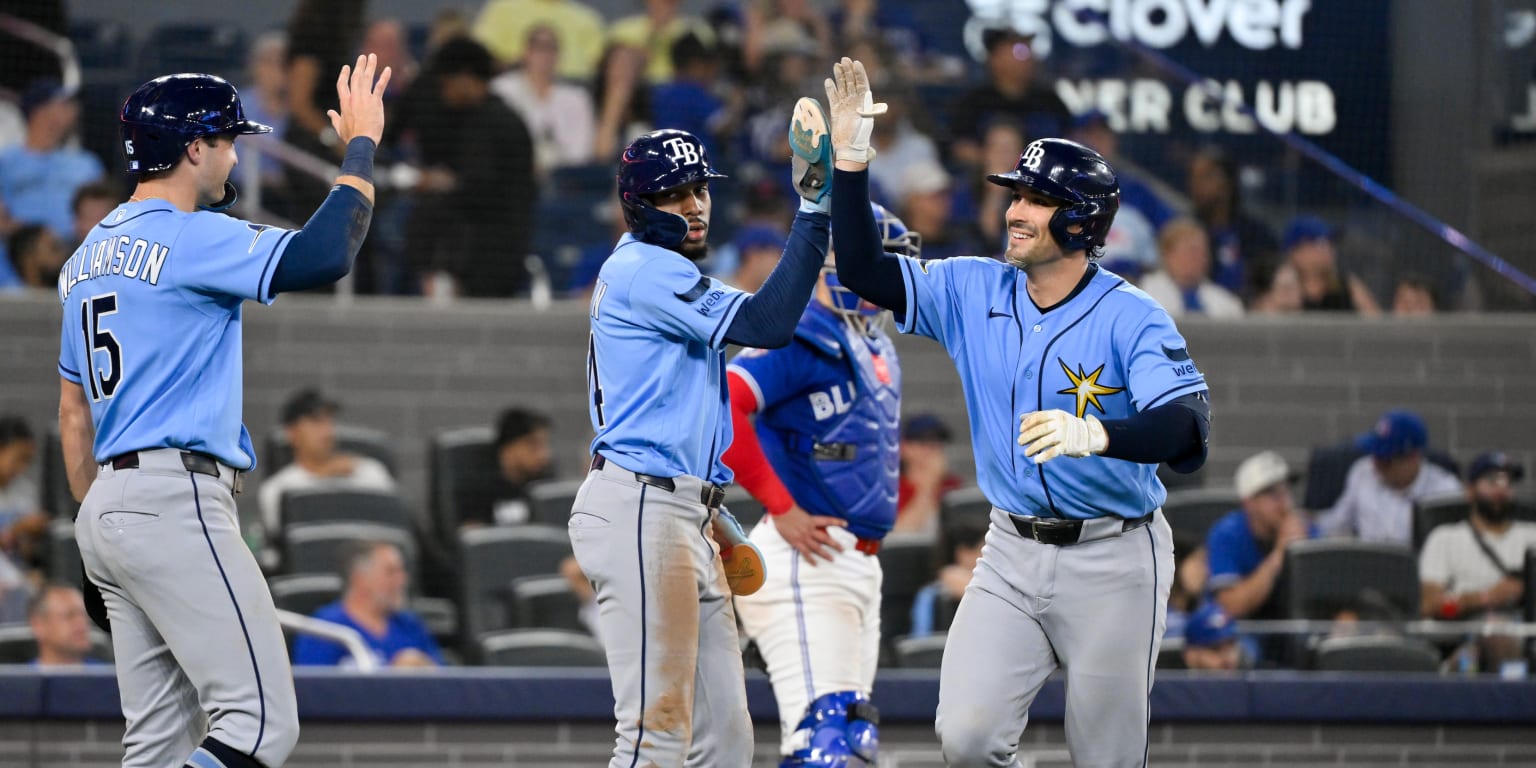
The Rays dismantled the Blue Jays 12-2 on Tuesday night at Rogers Centre, pounding out a season-high 21 hits and eight different players with multiple hits in a single game. That offensive display alone would be notable. What matters more for bettors is how Tampa Bay built its early lead: a methodical, full-count grind through the first inning that yielded three runs despite trailing 0-2 with nobody on base. That opening frame—38 pitches consumed over six outs, three of them walks—was not an accident. It was the Rays operating within their offensive identity and punishing a pitcher (Kevin Gausman) who couldn't locate his fastball.
Yandy Díaz's opening at-bat alone took 12 pitches and six foul balls before a lineout; he forced Gausman to work into the count rather than chase. Junior Caminero drew a walk. Cedric Mullins doubled. Jonny DeLuca, batting with two outs and runners in scoring position, swung at a pitch outside the zone and drove in two. Chandler Simpson worked another full count before delivering an RBI single. The sequence wasn't power-dependent. It was contact discipline meeting pitcher fatigue. And it matters because the Rays lead the majors this season with a .262 batting average in two-out situations with runners in scoring position—a number that doesn't regress on a single game but compounds when a team repeats that approach.
The Blue Jays' response in their first inning proved equally instructive. They loaded the bases with one out against Drew Rasmussen, who had labored through rough starts before the All-Star break. Rasmussen threw two pitches to Daulton Varsho and got a harmless popup. Kazuma Okamoto took strike one on a first-pitch cutter, then chased two fastballs out of the zone and whiffed. The inning ended. This is where the Rays' edge materializes: Toronto's inability to convert a bases-loaded, one-out situation into at least one run, while Tampa Bay had just manufactured three runs from a two-out deficit. The margin between those two sequences—Rays discipline vs. Jays impatience—was the game.
For prop bettors tracking Tampa Bay's next matchup, the first-inning framing carries weight. The Rays have shown they don't need power or scoring explosions to build leads; they build them through plate discipline and forcing opposing pitchers into the zone. When they face a pitcher who walks batters or works counts inefficiently, their team total (typically in the 4.0–4.5 range against mid-tier starters) offers value on the over. More specifically, their first-5-innings team total becomes attractive when the opposing starter has walked 3.5+ per nine innings over his last ten starts. Tuesday's sequence was extreme, but it's consistent with how the Rays generate offense. A Blue Jays loss and a 12-run output created a blowout score; a more typical version of this pattern is 5–6 runs in five innings against a pitcher who can't command, which still clears modest team-total thresholds.
The broader takeaway: the Rays are not a team that needs a single slugger to carry a night. Eight players with multiple hits across 21 total hits is sustainable offensive architecture, not a one-game spike. When they face pitchers who fall behind in counts or issue walks at high rates, their propensity to cash two-out situations with runners in scoring position remains the strongest persistent edge in their offensive profile. Track that pitcher tendencies—not just the raw ERA—before betting their team totals.