McClanahan to IL Reshuffles Tampa Bay Rotation; Market Overreacting to Cook Debut
By Ty Whitney ·
The Rays' ace exits after three innings with undisclosed discomfort, but the injury timeline and Cook's bullpen pedigree suggest the rotation impact is shorter than early lines reflect.
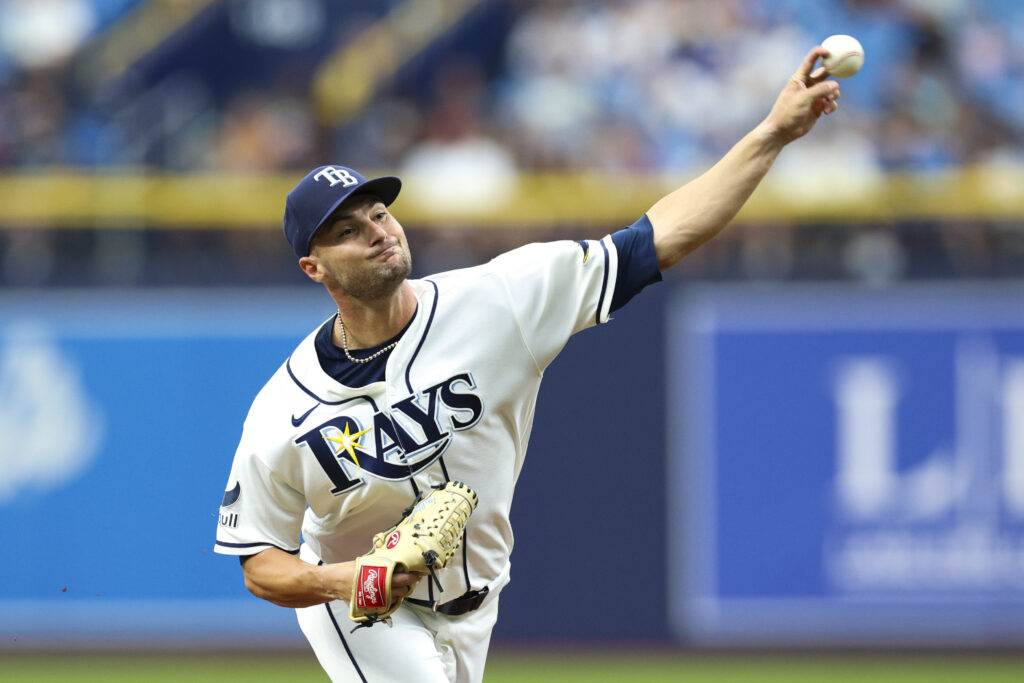
Shane McClanahan is headed to the 15-day injured list after exiting yesterday's start in the third inning due to what the Rays are calling discomfort. Erik Neander, the team's president of baseball operations, confirmed the move on local radio, with righty Alex Cook recalled for his major league debut as the corresponding roster transaction. The announcement triggered immediate line movement across Tampa Bay's rotation and team total props, but the specifics of McClanahan's injury and his probable timeline suggest the market is pricing in more disruption than the situation warrants.
McClanahan has been one of the Rays' most reliable innings-eaters this season—a rare asset in a bullpen-heavy organization. The vagueness of "discomfort" signals either a soft tissue strain (hamstring, shoulder, back) or early-stage mechanical irritation; neither typically mandates more than the 15-day window. If the injury were structural—a rotator cuff issue, labral fraying, or disc problem—the team would likely use stronger language and potentially skip the IL designation entirely in favor of a longer private recovery. The fact that Neander publicly committed to a two-week timeline on radio suggests internal confidence in that window. McClanahan will almost certainly miss his next scheduled start; the rotation will shuffle. But the Rays are unlikely to be without their ace for an extended stretch.
Alex Cook's arrival is where sharp bettors should calibrate expectations. Cook is a relief arm—he has no starting experience in the minor leagues and his strikeout rate (13.1 K/9 across three levels this season) is elite for a bullpen profile but irrelevant for spot-start duty. The Rays will either slot Cook into the bullpen immediately and push back the rotation, or use him for a brief mop-up role if they make an emergency start. Neither scenario materially shifts the team's run-expectancy for the next two weeks. What DOES shift is the surface-level narrative: a rookie debut always attracts public money, and the uninformed crowd will gravitate to overs on Rays run totals (reasoning: "new guy can't pitch") and unders on opposing team totals (same flawed logic). Neither is justified by the actual roster move.
For prop bettors, the angle is contrarian positioning. The market will misprice Tampa Bay's next 3-4 games assuming McClanahan's absence creates a void in starting pitching depth. In reality, the Rays' depth is poor relative to their talent, but Cook's insertion doesn't materially worsen it—he wasn't a starter anyway. Opposing hitters should see no material edge in the next fortnight. If you see overs on Rays opponents ballooning past season averages (more than 0.3-0.5 run differential from the pre-injury number), that's the edge: fade the overs on the grounds that Cook's role is bullpen-specific and McClanahan returns within 15 days. Similarly, Rays team totals will dip as the public assumes offensive dysfunction; if they fall more than 0.4 runs below their July baseline at home, lean the over. The injury is real, the disruption is real, but the magnitude is being exaggerated by a market reacting to a rookie call-up rather than the underlying rotation math.