DeLuca's Hamstring Exit Opens Right Field Opportunity for Rays
By PropBetEdge Editorial Team ·
Tampa Bay's hamstring injury to Jonny DeLuca creates a depth-chart shuffle that weakens the AL East leader's lineup production and shifts playing-time leverage to three reserve outfielders.
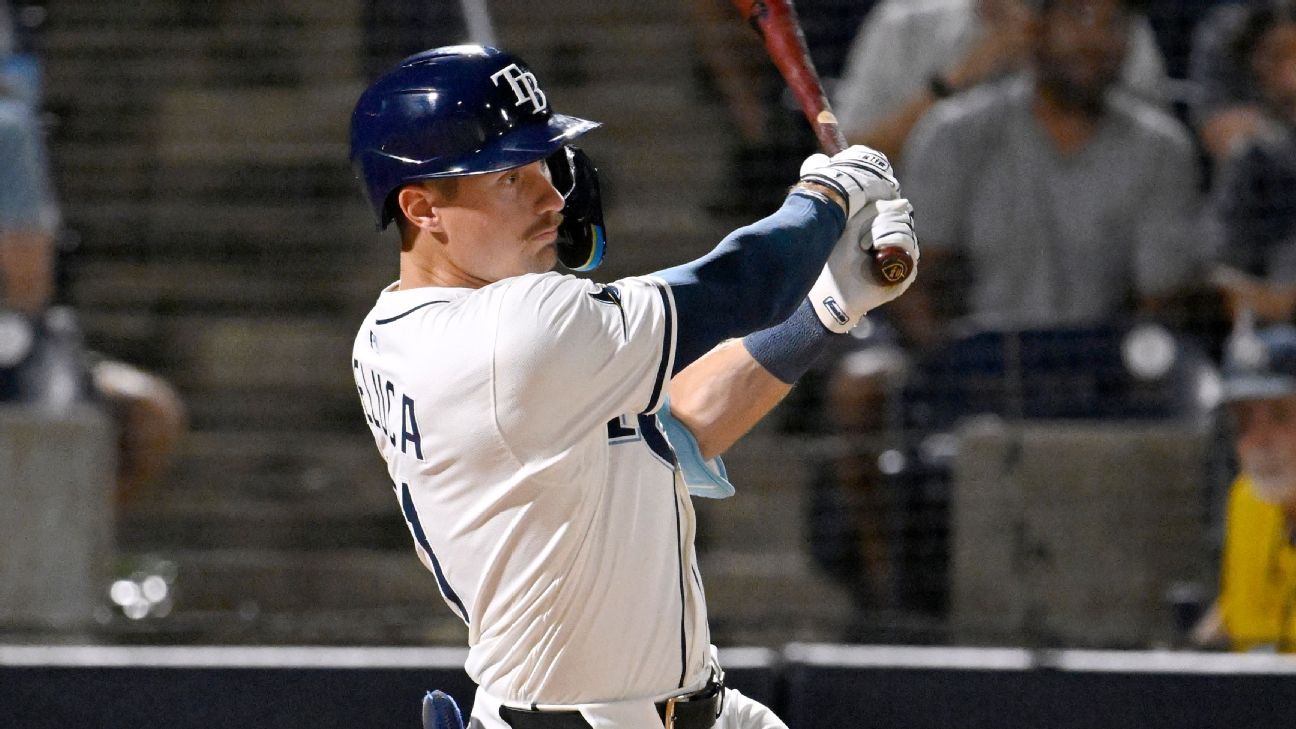
The Tampa Bay Rays placed Jonny DeLuca on the 10-day injured list Sunday after a right hamstring strain suffered Friday night against the Yankees. DeLuca felt pain rounding the bases on an infield single to shortstop and continued playing before being lifted after advancing to third. An MRI scheduled for Sunday would confirm severity, but the injury timeline—10 days—suggests a standard muscle strain with low re-injury risk once healed, though the Rays' injury history with DeLuca (hamstring and shoulder issues limited him to 20 games last season) warrants caution on his return date stability.
DeLuca was performing at a career-best clip this season: .269 with 19 RBIs across 41 games, a sharp reversal from his 2024 showing (.217, 31 RBIs in 123 games after arriving in a Tyler Glasnow trade from Los Angeles). The Rays, riding a 34-15 record and an AL East lead, are absorbing the loss of a right-handed bat who had stabilized their right-field rotation. Victor Mesa Jr., recalled from Triple-A Durham, and incumbent Ryan Vilade will now split the position with Richie Palacios cycling in. Mesa arrives off a .329 clip in 18 games at Durham but carries significant downside: a .188 line in 16 games last season with Miami suggests minor-league inflation. Vilade, acquired alongside Mesa in the Marlins trade, is the safer bet for consistent at-bats.
From a lineup-construction angle, the Rays lose not just DeLuca's bat but his positional consistency. A right-hander hitting .269 with gap power and baserunning value gave Tampa Bay a predictable middle-order contributor. The rotation of Mesa, Vilade, and Palacios introduces variance—none has produced a full season of major-league legitimacy at the same offensive profile. Mesa's ceiling is higher (if his Triple-A stroke translates), but the floor is steeper. This uncertainty ripples through team-total pricing, particularly in games where right-handed starters draw weaker Mesa-anchored lineups rather than DeLuca.
For prop bettors, the immediate angle centers on when DeLuca returns and whether the Rays remain aggressive in his first games back. His hamstring precedent (injured last year, missed time) creates re-injury risk in the first 5-7 games post-return—a period when usage may be limited or his swing mechanics may not be fully restored. Fade DeLuca props (hits, RBIs, TB) for his first two games returning until plate discipline and exit velocity resume historical norms. Conversely, if Mesa wins playing time and the Rays lean on him over Vilade, track his strikeout rate; his minor-league K% sits around 22%, in line with major-league mediocrity, but against weak divisional pitching early in his tenure, unders on team RBI totals gain traction when Mesa anchors right field over higher-contact batters.