Tampa Bay's Offensive Explosion Masks a Fragile Pitching Reality
By Erik Schwartz ·
The Rays' 16-run demolition of Baltimore looks dominant on the surface, but their run-prevention vulnerability and regression risk reshape the betting calculus for their hot stretch.
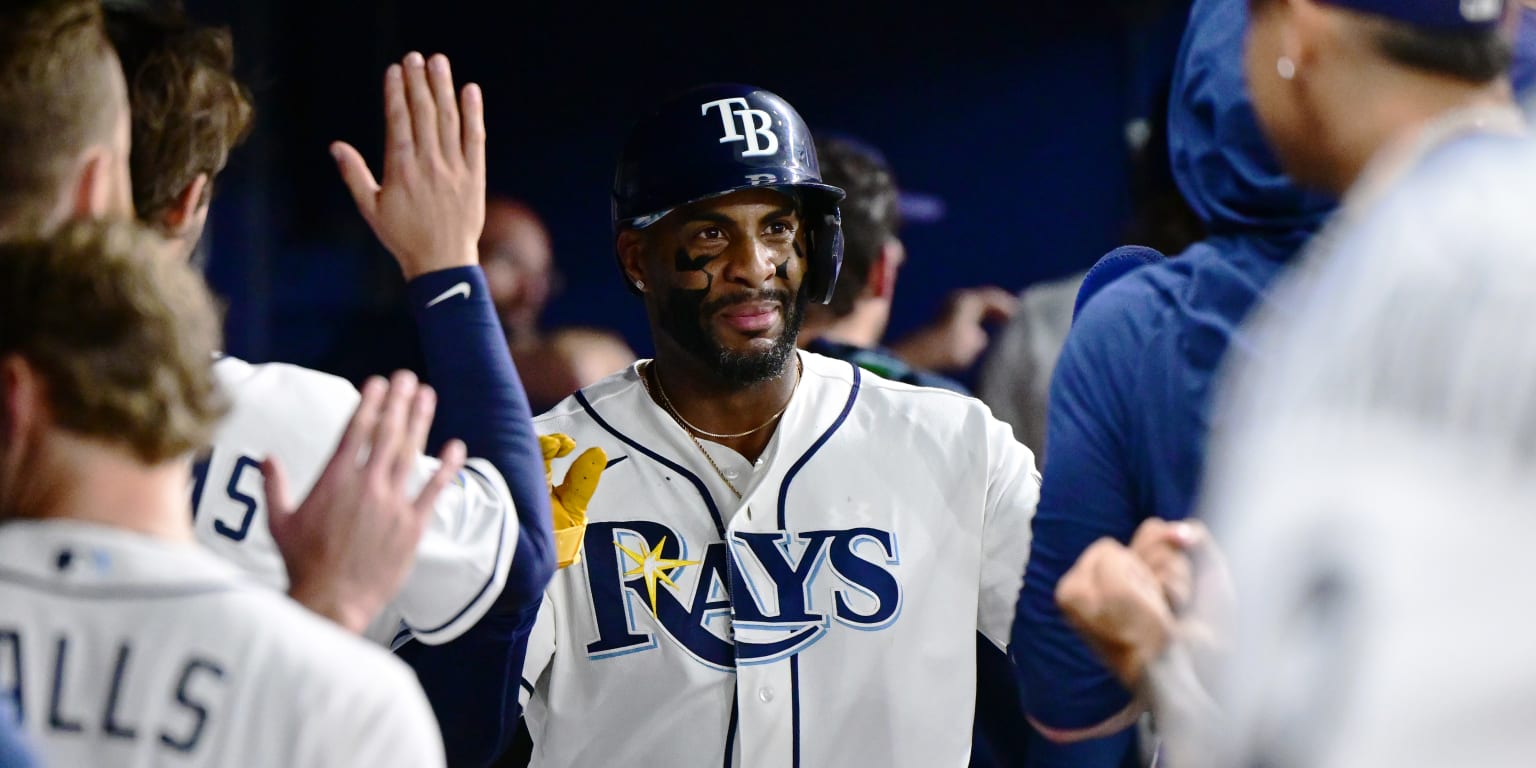
Tampa Bay dismantled the Orioles 16-6 on Monday at Tropicana Field, posting a season-high 16 runs on 18 hits and seven walks—the kind of offensive eruption that typically signals a team in control of its division. The Rays improved to 31-15 and have won 26 of their last 34 games. Yandy Díaz went 4-for-4 with four RBIs, Junior Caminero launched his 13th home run on a three-run blast, and Ryan Vilade went 3-for-3 with three RBIs. The damage was distributed—eight runs came against Orioles starter Trevor Rogers before he was pulled in the fourth inning, then the Rays added four in the fifth and four more in the sixth.
But beneath the surface stats lies a complicating detail: Shane McClanahan's 23 2/3-inning scoreless streak evaporated. After four straight shutout starts, the left-hander surrendered four runs across five innings—one on an Adley Rutschman single in the third, then three more in the fifth on a Weston Wilson home run, two walks, and a Pete Alonso double. McClanahan visibly frustrated himself walking off the mound and finished with his fifth win only because the Rays had already staked him an eight-run lead. This matters more than a final score suggests: Tampa Bay's pitching has been the spine of their run. McClanahan's dominance masked a thin bullpen and inconsistent rotation depth. One night of offensive explosion doesn't erase the fact that when their pitchers give up contact—as they did here—the Rays are vulnerable.
The offensive distribution is real but also volatile. Eight different Rays contributed runs, and role players like Jonny DeLuca (3 RBIs) and Taylor Walls (3 runs scored) capitalized on a struggling Orioles defense. The Rays manufactured 16 runs on 18 hits—a 0.89 hits-per-run ratio that ranks in the 90th percentile of offensive efficiency. Trevor Rogers imploded (knocked out in four innings), and Baltimore's pitching never stabilized. This is not a night that repeats weekly. The Rays' season-high 16 runs represents a +2.1 SD deviation from their run-per-game average. Regression is coming.
For bettors, the path forward splits in two directions. First: the Rays' team-total overs have likely spiked in implied probability post-game, and sportsbooks will price them aggressively for the next 3-4 games as algorithms react to Monday's offensive outburst. The market will overcorrect—estimating the Rays as a consistent 5+ run-per-game offense when their true baseline remains around 4.2. Second: McClanahan's blown streak signals fragility in their pitching core. The Orioles exposed him because Wilson and Rutschman were able to catch fastballs up in the zone. The next team that gets McClanahan in his next start (likely 5-6 days out) should be keying off short-to-mid leverage fastball counts and attacking aggressively. Lean unders on Rays team totals over the next week as the market prices in full replication of Monday's offense; the actual edge sits with run-line plays against Tampa Bay starting pitchers who aren't named McClanahan.