Rasmussen Solves First-Pitch Strike Problem, Rays Offense Finally Shows Up Early
By Ty Whitney ·
Drew Rasmussen's return to elite form—nine strikeouts on 17 first-pitch strikes—pairs with Tampa Bay's sudden willingness to score first, flipping a 2-8 skid into a clean 6-0 win and reshaping short-term run-line calculus.
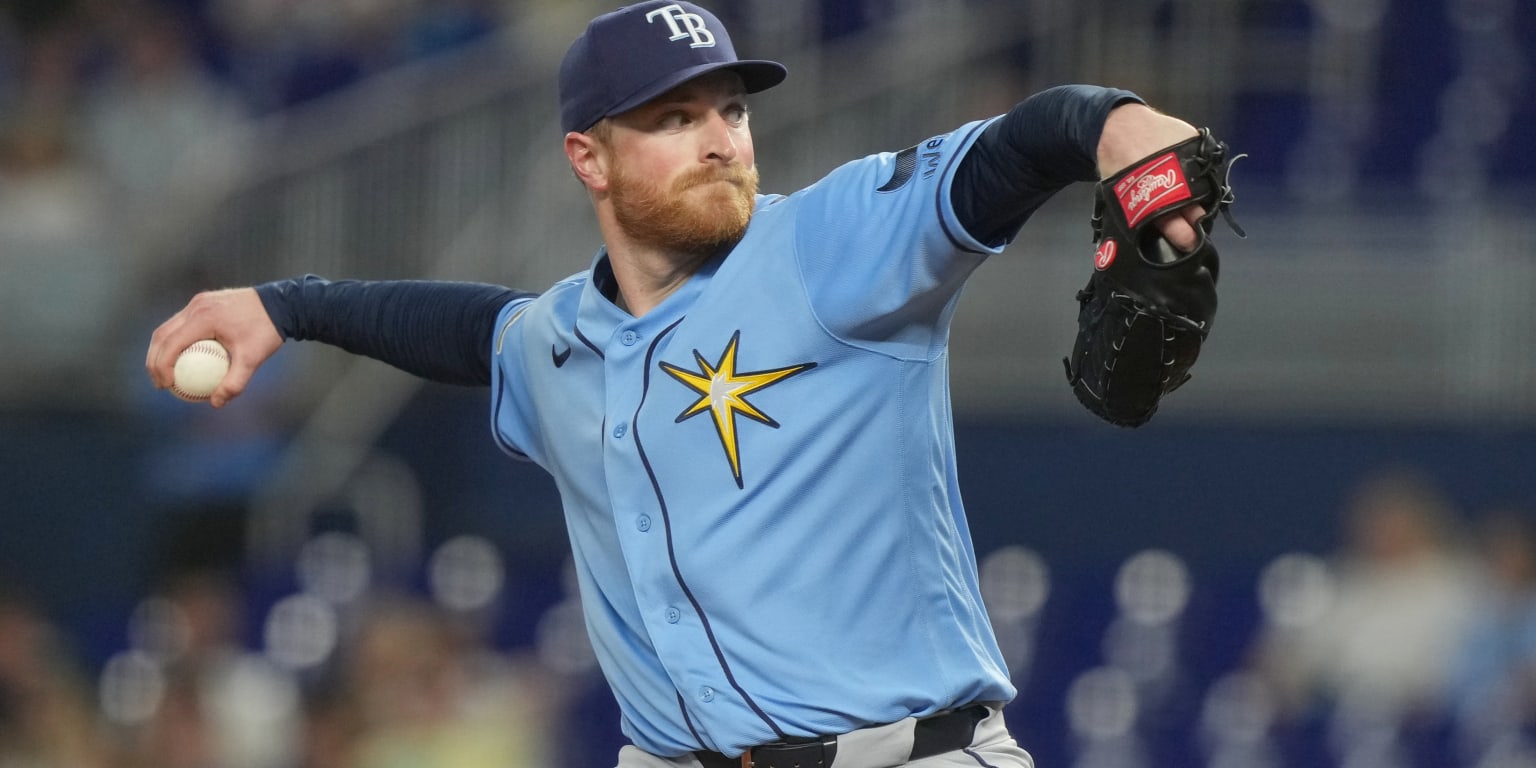
Drew Rasmussen walked into the Rays' dugout Wednesday morning at Tropicana Field knowing exactly what had gone wrong. His last outing, a five-run collapse against the Angels last Saturday, wasn't the product of bad luck or poor command. It was a mechanical leak: he'd stopped throwing first-pitch strikes at his usual rate, forcing himself into deep counts and allowing hitters to sit on fastballs. That one rough start followed a stretch in which the Rays had lost eight of their past 10 games, most of them defined by the same liability—Tampa Bay fell behind early, then spent the rest of the night clawing back. The Tigers swept them at home, scoring first in all three games. Across the Rays' 10-game skid, they'd scored first only four times.
Manager Kevin Cash's pregame message Friday was blunt: get some early runs. Let the offense carry the pitchers instead of asking them to pitch from behind. Rasmussen took the diagnosis one step further. Against Miami's lineup, he attacked with ruthless precision, firing first-pitch strikes to 17 of the 22 batters he faced. The result was one of his career-best performances: nine strikeouts, one hit allowed, seven innings, 6-0 final. His strikeout total tied for the second-highest of his career and marked his most since a 10-strikeout game against the Yankees on September 9, 2022—nearly four years ago. He mixed his strikeout arsenal across four different pitches: three each with his cutter and changeup, two with his two-seamer, one with his four-seam fastball. The efficiency was surgical.
What elevated Friday's outing from very good to elite-tier was context. This was only Rasmussen's seventh seven-inning start in his career, and the second such outing in his past three games—he'd also gone seven scoreless against the Yankees on May 24. For a rotation that had allowed at least five runs in five of their past seven starts, including all three games against Detroit, Rasmussen's dominant frame was a release valve. But the real story was the Rays' lineup. They didn't wait. With one out in the first, Junior Caminero doubled, Jonathan Aranda walked, and Yandy Díaz kept the line moving. Richie Palacios delivered the decisive blow: a line drive that caromed off Owen Caissie's glove in right field for a two-run triple. Ryan Vilade followed with an RBI single. Three runs in the first. That margin—combined with Rasmussen's first-pitch discipline—was the difference between a close game and a cruise.
The betting implication hinges on one durable pattern: the Rays are 26-7 when they score first this season. That's a .788 winning percentage, effectively a lock for run-line purposes. Friday's version—early scoring paired with dominant pitching—is the ideal expression of that edge. Rasmussen's return to form and his restoration of first-pitch strike rate matters because it suggests the mechanical adjustment isn't a one-game fix; a pitcher who corrects his release point or timing typically sustains it across multiple outings. His 17 first-pitch strikes on 22 batters against Miami is well above his season average, and if that rate persists, his strikeout props and innings quality ticks upward in his next start. More immediately, the Rays' willingness to attack early against weaker opposing pitching—the Marlins' rotation is bottom-ten in ERA—suggests Cash has moved away from the defensive, late-inning approach that defined the skid. Watch the team total and run-line pricing for Tampa Bay's next home stand: if the market hasn't fully repriced the early-scoring component into their team-total overs, that's where the edge sits.
The 37-23 record puts the Rays atop the AL East by 1.5 games. One win erases eight days of frustration, but the sustainable edge is behavioral: a team that scores first and a pitcher who trusts his primary fastball zone again.