McCutchen's Rangers Exit Signals Deeper Roster Churn; Lopez Adds Defensive Flexibility
By PropBetEdge Editorial Team ·
Texas's move to DFA the 39-year-old slugger and sign veteran utility infielder Nicky Lopez reflects a mid-season reset focused on position depth over aging power.
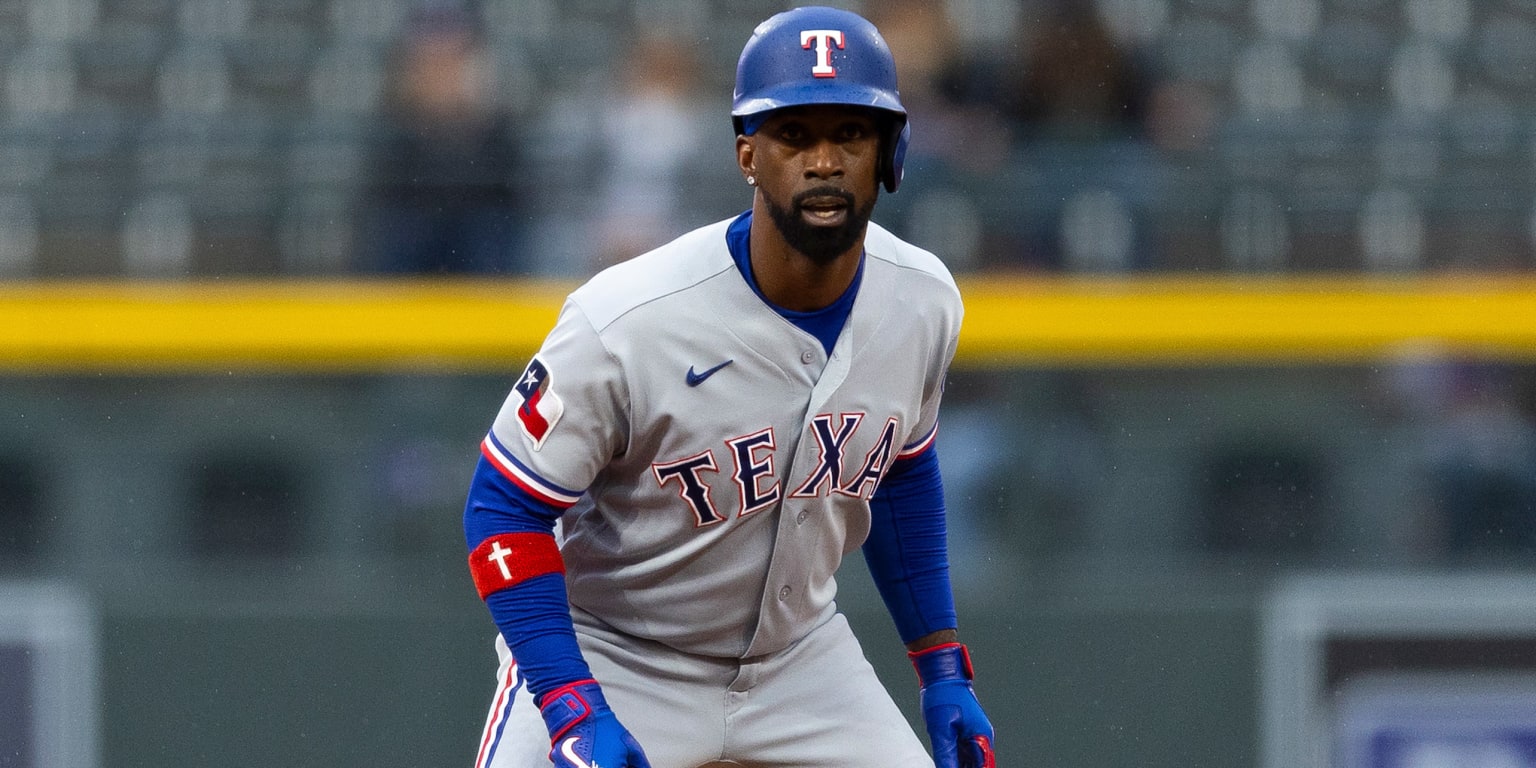
The Texas Rangers designated Andrew McCutchen for assignment Wednesday, clearing roster space to sign utility infielder Nicky Lopez to a Major League deal covering the 2026 season. McCutchen, acquired as a minor league free agent before Opening Day, batted .192 over 37 games with one home run and a .420 OPS—a stark collapse from a Hall-of-Fame career arc that once centered on consistent 25-homer seasons and Gold Glove defense.
McCutchen's exit from Arlington wasn't driven by a single injury or one brutal stretch; his role had already contracted to near-replacement status. He appeared in only 16 starts across the diamond and served as a pinch hitter in 21 of his 83 plate appearances—a league-high entering Wednesday's games. In those pinch spots, he went 2-for-18 with three walks, a .111 average that underscores his inability to generate value even in high-leverage moments. At 39, the physical decline appears structural rather than correctable. The Rangers clearly made an implicit bet that fresh legs and defensive range would yield higher expected runs than a powerful but increasingly unreliable bat off the bench.
Lopez arrives as a direct counter: the 31-year-old utility infielder can capably play second, short, or third and carries a career .989 fielding percentage across 693 games. After splitting 2026 between Colorado and Chicago-NL (posting a .333 average in Triple-A before crashing to 0-for-5 in four Cubs at-bats), Lopez is a league-verified defender with institutional knowledge of multiple infield alignments. The trade-off is obvious—Lopez's career .245 batting average and power vacuum (.310 isolated slugging) won't move the needle offensively. Texas is explicitly trading upside for stability and positional flexibility as injuries stack on the farm (three players currently on the 60-day list, including left-hander Cody Bradford and ace Jordan Montgomery).
For prop bettors, McCutchen's removal from the Rangers lineup eliminates what was already a marginal value source. His pinch-hit role at a .111 clip made his personal hitting props uninvestable; there was no causal edge there, only noise. More consequentially, Texas's decision to prioritize infield depth suggests they're operating with roster assumptions that lean toward extended absences in the middle infield or at DH—a structural constraint that will limit available at-bats for corner hitters and reserve outfielders on the bench. Lopez's signing doesn't directly impact hitting prop markets, but it signals Rangers management's internal triage: durability and positional fungibility now trump aging power in their depth calculus. That reshuffling ripples downstream into team total and lineup construction angles once the full impact of Montgomery's absence becomes clearer.
McCutchen's DFA carries a seven-day window before the Rangers must trade, release, or outright him to the minors. If released, he'll likely land elsewhere as a veteran minimum piece for a contender seeking depth—a graceful exit for a generational talent whose bat simply ran out of runway. For Rangers betting purposes, the immediate takeaway is straightforward: don't lean on power production from the bench. Lopez's defensive profile upgrades Rangers lineup flexibility, but his .245 career average and inability to drive the ball means any reliance on his personal hitting output is speculative and low-probability.