MLB
deGrom's Triceps Setback Threatens Rangers Rotation Depth in Late August
Jacob deGrom lasted two innings against the Angels before triceps fatigue forced an early exit, but manager Skip Schumaker believes the 38-year-old can return to the mound within a week—a timeline that will strain Texas's already-thin pitching staff heading into September.
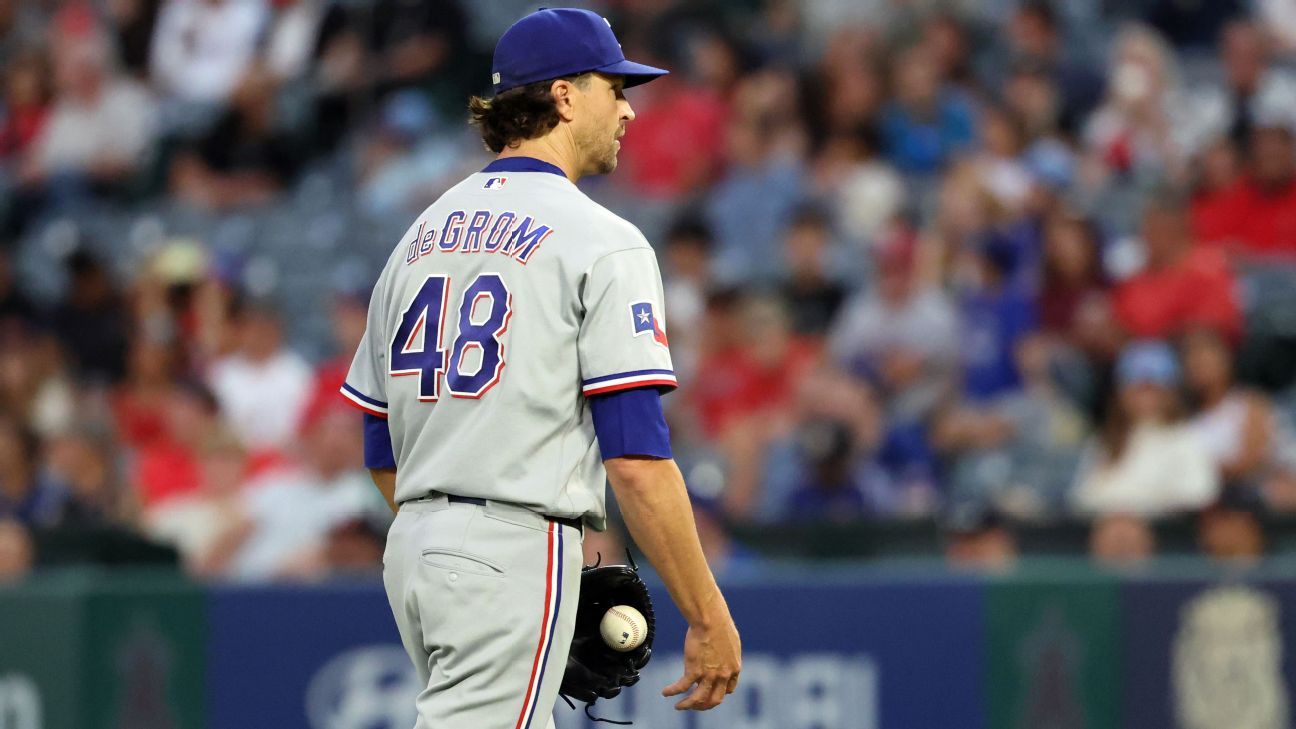
Jacob deGrom exited last Thursday's loss to Los Angeles after just two innings, victim to right triceps fatigue that compounds the left hip and glute issues he's carried since the All-Star break. The Rangers right-hander threw 32 pitches in a second inning that yielded two runs and five hits, forcing an early hook in what became a 7-0 defeat. Skip Schumaker confirmed deGrom cleared a subsequent bullpen session, opening the door to a Thursday start against Washington in the series finale—roughly eight days after the Angels appearance.
At 38, deGrom remains one of baseball's most durable strikeout artists when healthy, but this season has exposed the accumulated wear on a frame that has absorbed 13 big-league campaigns. His 3.95 ERA stands as his worst since entering the majors, and his record sits at 8-8 across 23 starts. The triceps issue is particularly concerning because it signals a new vector of injury beyond the hip and glute problems that have dogged him all summer. Triceps fatigue in a pitcher doesn't resolve with a few extra days of rest; it typically indicates either workload stress or compensation mechanics from fighting through other injuries—both red flags for recurrence.
The timing compounds Texas's rotation crisis. Losing deGrom to even a short stint leaves the Rangers scrambling to cover innings in late August when other contenders are deepening their pitching arsenals ahead of October. The Rangers brought up left-hander Gonzales and infielder/outfielder Freeman to cover some of the fallout, but neither is a replacement-level starter. If deGrom does take the ball Thursday and aggravates the triceps, the Rangers face a decision: push him through discomfort and risk a longer absence, or shut him down now and concede September flexibility.
From a prop perspective, deGrom's strikeout totals face headwinds both mechanical and situational. His K/9 has already declined to 8.1 this season from his career mark of 10.4, a shift driven partly by conservative pitch counts (he's averaging 97.2 pitches per start, up from prior years due to injury-related caution). Against a Washington lineup that ranks 24th in strikeout rate against right-handers, the expectation might be for elevated whiff rates—but the triceps constraint cuts the other way. Pitchers fighting through shoulder girdle fatigue don't elevate velocity; they maintain or lose it. deGrom's fastball has averaged 93.2 mph this season, a full tick below his career norm, and triceps engagement directly affects both velocity and break consistency. Books may initially price his strikeout prop as if he's 2019 deGrom; early sharp action should lean unders on K lines, particularly anything north of 8.5 in a matchup against a sub-average strikeout-prone opponent.
The return timeline itself warrants skepticism. Eight days is the minimum rest for a pitcher with structural upper-body fatigue, not a recovery guarantee. Schumaker's cautious framing—"had a chance to be on the mound Thursday"—suggests contingency planning is already in motion. If deGrom doesn't take that start, or if he does and posts a second consecutive short outing, the Rangers' win total and playoff odds shift materially downward. Texas is not a team that can absorb a three-man rotation in crunch time.
MLB Intelligence — Baseball intelligence beyond the box score. Open MLB Intelligence →