Josh Smith Out Indefinitely: Rangers Second Base Job Enters Open Market
By Ty Whitney ·
A viral meningitis diagnosis sidelines Texas's primary second baseman for 7-10 days minimum, forcing the Rangers to retool their infield depth and opening a slot in the batting order.
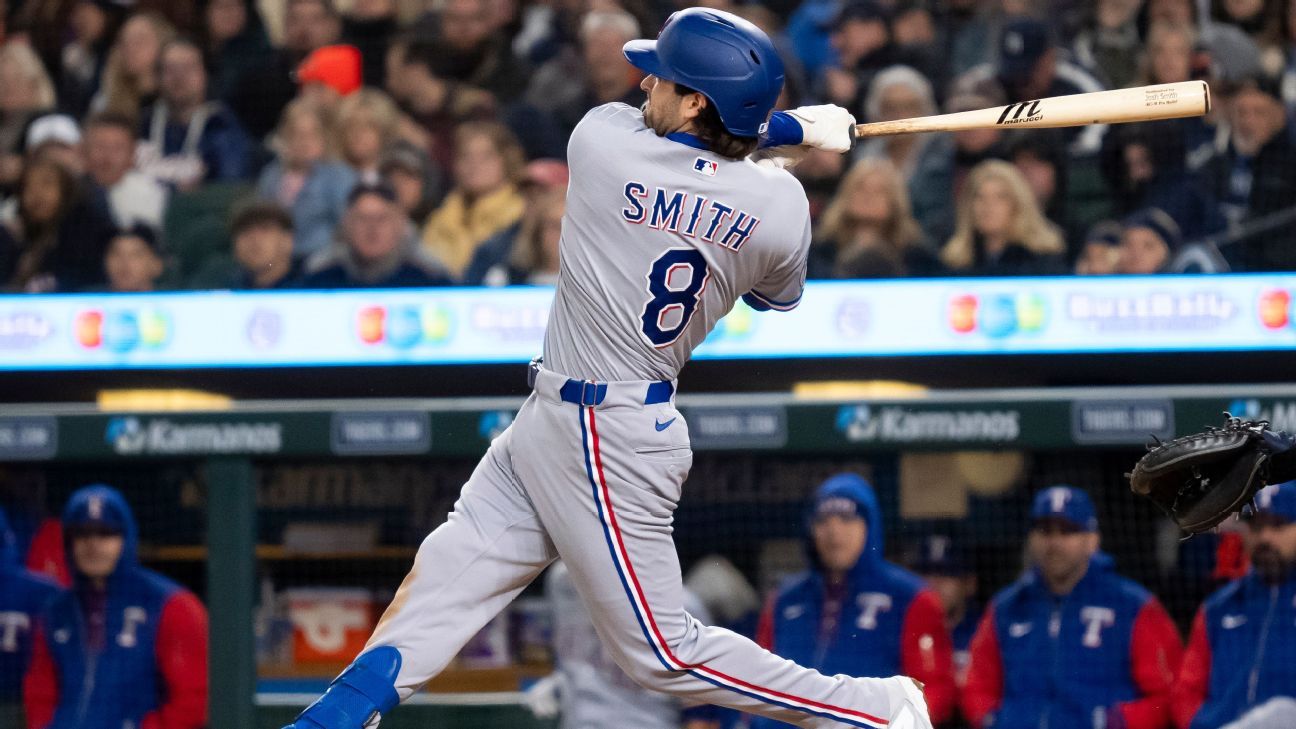
Texas Rangers second baseman Josh Smith is hospitalized with viral meningitis and will miss at least a week of action, the team announced Friday. Smith reported feeling ill Wednesday and checked into a Dallas-area hospital; the Rangers expect his return within 7-10 days, pending clearance to resume physical activity. This comes on the heels of a lingering right glute strain that had already landed him on the 10-day injured list May 4.
Smith's absence arrives at an awkward moment in the Rangers' season. He inherited the second base job after the team dealt Marcus Semien to the Mets in the offseason, a move that signaled internal confidence in his profile. Five seasons into his major league career, Smith was supposed to stabilize the position—instead, he's been a liability. He's hitting .217 with zero home runs and six RBI across 31 games, production that ranks in the bottom decile for qualified second basemen. Layering the glute strain, left wrist inflammation during rehab, and now a meningitis diagnosis paints a picture of a player fighting through a difficult stretch both athletically and medically.
The Rangers now face a three-week operational clock. Even if Smith recovers within the 7-10 day hospital window, he'll need a ramp-up period before returning to live competition—probably another 5-7 days of light activity, batting practice, and defensive work. That's a realistic 12-17 day window before he's game-ready. In that time, Texas will lean on backup options: likely a mix of incumbent utility infielders or a call-up from Triple-A. The Rangers' front office will monitor whether Smith's bat shows life once he returns; if not, they're sitting on an obvious roster inefficiency.
From a betting lens, this matters more for Texas's team total and win probability than for Smith's individual lines (which are now moot). The Rangers' batting order loses its nominal second-base slot and a below-average hitter—a net-neutral development on paper, since .217 production isn't anchoring anything. But the cascading effect on lineup construction and the uncertainty around when Smith can contribute again introduces slack into the Rangers' depth chart. If Texas faces a stretch without its planned second baseman, the team may shuffle more left-handed options into the lineup or carry an extra bench arm, which subtly reduces offensive upside. Look for marginal compression on Rangers team totals while Smith is out and for the next 2-3 weeks after his return, as the club absorbs both the gap in production and the collective distraction of reintegrating a recovering player.
The betting takeaway is indirect but real: avoid aggressively chasing Rangers overs on team totals while Smith is hospitalized and during his return window. The team total at 4.0-4.5 runs (their typical target) becomes slightly less attractive without clarity on depth. If the Rangers' series totals or overs are inflated by pre-injury action or Vegas sloppy-line syndrome, tightening exposure makes sense. The angle is more about avoiding false value than hunting a specific spike.