Ranger Suarez's Contact Control Unlocks a Durable Pitching Edge
By PropBetEdge Editorial Team ·
After a shaky start in Boston, Suarez has engineered a measurable drop in hard contact that's sustaining elite strikeout rates and low ERA despite below-average fastball velocity.
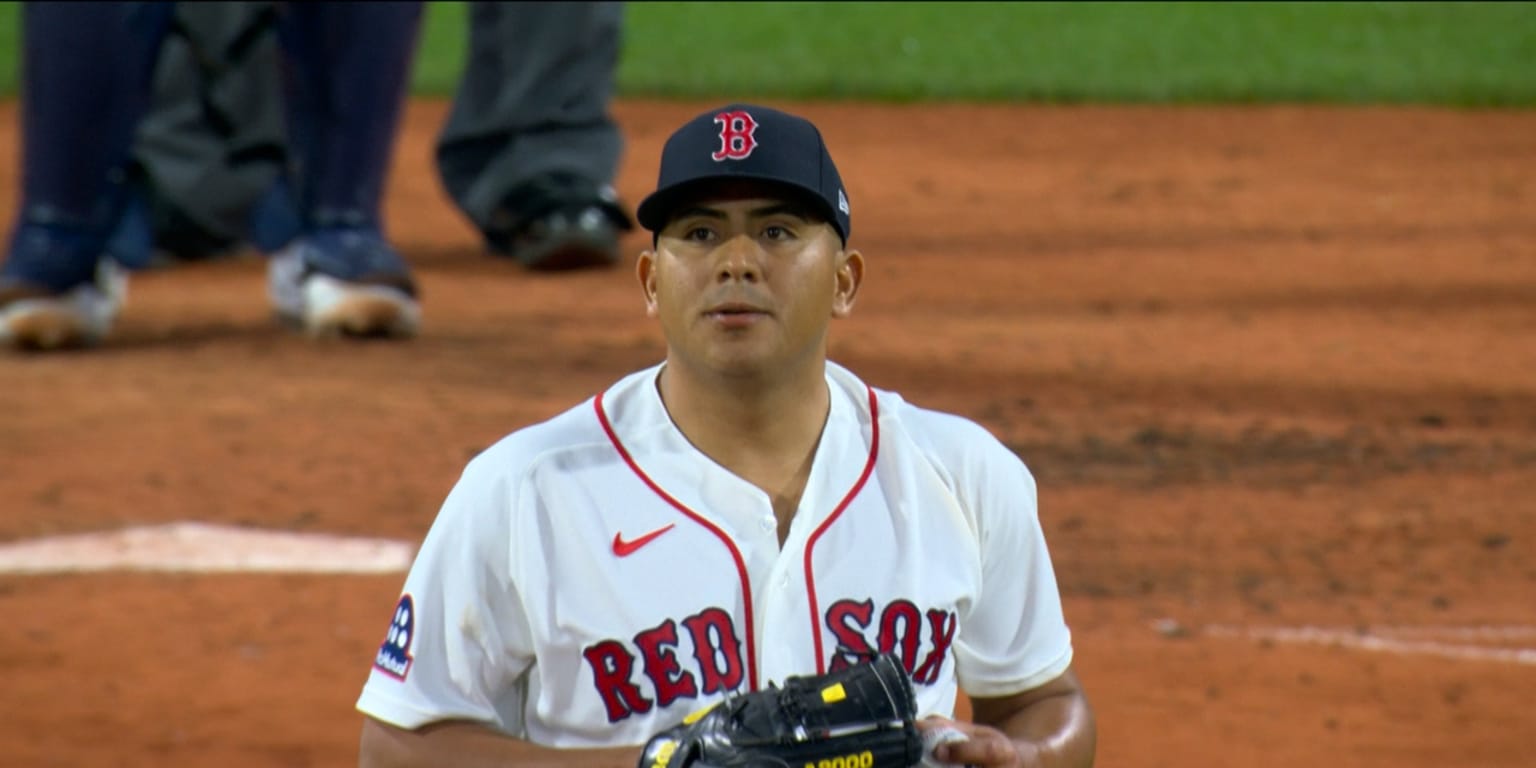
Ranger Suarez is operating as baseball's quietest premium pitcher—a left-hander who throws 91 mph but commands opposition batters like a control specialist from a different era. Since late April, the Red Sox's $130 million investment has posted a 0.42 ERA across 21⅔ innings, trailing only Jacob Misiorowski among qualified starters. That run began April 27 against Toronto and has persisted through a league-schedule grind that included facing his former Phillies teammates. The mechanics aren't accidental.
Suarez's early struggles—four-plus runs allowed in three of his first five Boston starts—traced directly to a contact problem. Through his opening five starts, 42.5% of balls in play came off the bat hard, with a 10.0% barrel rate and 88.8 mph average exit velocity. The fastball was getting hurt, especially at 91.9 mph, where hitters ordinarily hunt up. Over his last four starts, that hard-hit rate collapsed to 21.6%, barrels vanished entirely (0.0%), and exit velocities dropped to 86.2 mph. The shift mirrors his Phillies track record: he allowed four-plus runs just five times all of last season. What changed isn't velocity. It's sequencing and the three-fastball mix—sinker, cutter, four-seam—deployed at similar velocities but divergent movement planes. Batters are now 1-for-14 off his four-seamer despite its modest heat. The unpredictability is the point.
Command, paradoxically, remains a liability. Suarez's zone rate sits at 43.9% this year versus 51.1% last season—12th lowest among 127 pitchers with 40-plus innings. Even in his hot stretch, he's landing just 41.9% of pitches in the zone. That should theoretically invite more walks and deeper counts, yet the weak-contact profile more than compensates. When a hitter can't elevate the barrel and fastball velocity isn't a threat, zone rate becomes almost irrelevant—the pitcher controls the negotiation.
From a prop lens, Suarez's strikeout markets are worth examining now that the market has partially repriced him upward. His K-rate in the recent four-start window remains elite (around 9.5 per nine), sustained by soft contact and poor barrel percentages rather than triple-digit heat. The Braves lineup coming Tuesday enters play averaging 5.22 runs—second-highest in baseball—with a 9.9% barrel rate and .732 OPS against lefties. Atlanta has the offensive ceiling to exploit inefficient zone rates, but Suarez's contact suppression is durable, not dependent on randomness. The edge in his strikeout props exists if the market hasn't fully incorporated that his recent ERA gains aren't variance correction—they're structural. A pitcher who induces barrels at 0% rates over a full month isn't regressing to his early-season baseline; he's found an operational mode that works despite mediocre fastball velocity.
The real vulnerability for Suarez backers is durability at low zone rates over a full season. Command tends to regress toward career norms. But for the next 2-4 weeks, until walk rates spike visibly, his strikeout floor is higher than his recent performance might suggest to a casual market.