Suarez's Return Stabilizes Boston's Rotation as Playoff Window Opens
By PropBetEdge Editorial Team ·
The Red Sox lefty exits injury after a 20-day absence to pitch four scoreless innings, reshaping the team's postseason math with a staff that now has an All-Star arm available for October.
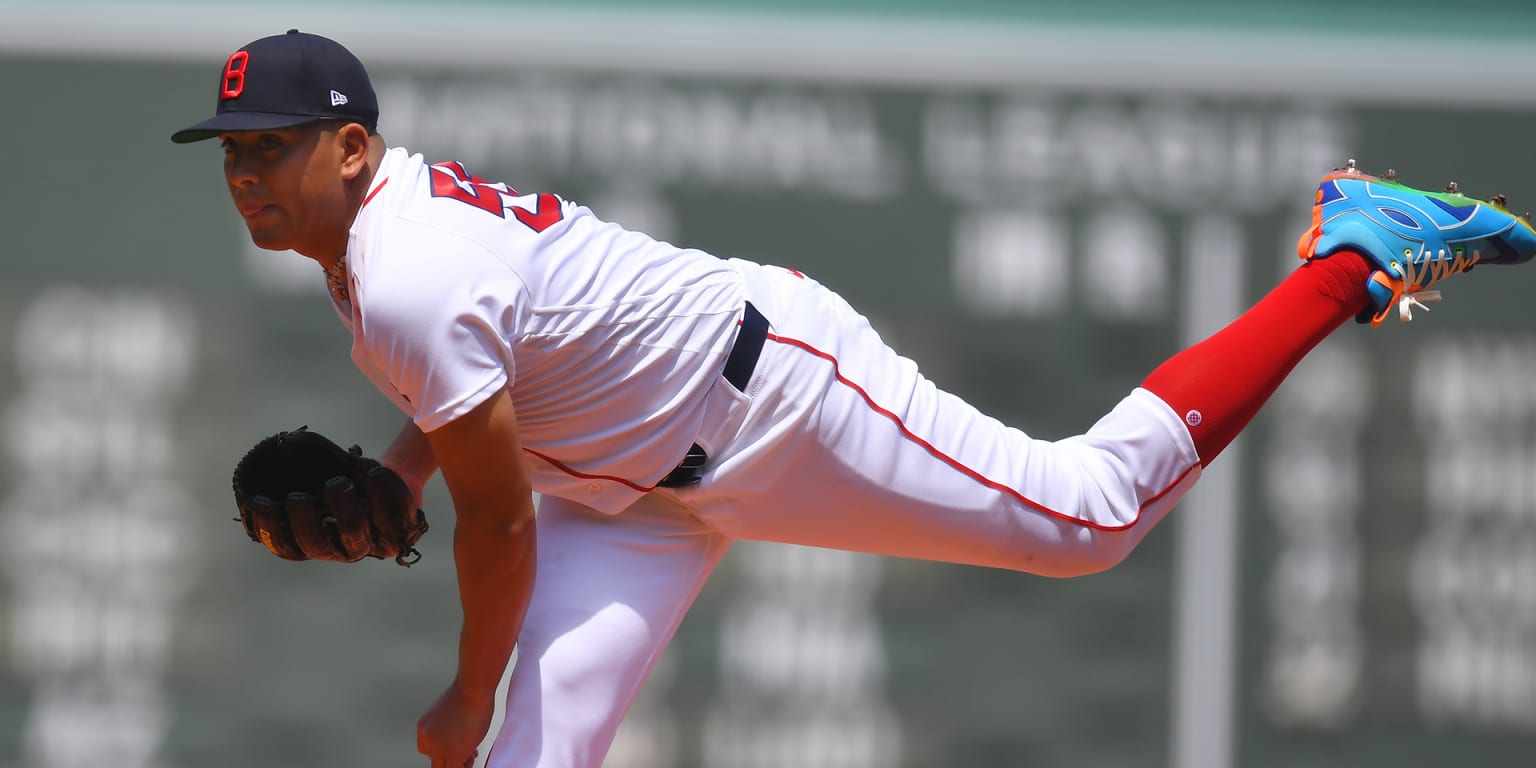
Ranger Suarez returned to action Sunday afternoon at Fenway Park, delivering exactly what Boston needed: four scoreless innings on 64 pitches against Toronto in a 6-1 win. The 30-year-old left-hander scattered four hits, issued no walks, and struck out six—the kind of efficient, composed outing that announces a pitcher is fully healthy. Suarez had been sidelined since July 6 (retroactive IL date), initially with a left groin strain, then compounded by illness. Over those 20 days, the Red Sox completed their metamorphosis from 39-48 to 54-50, a 15-game winning streak that vaulted them into Wild Card contention. Suarez's last appearance before injury—July 6 against the Angels—came in a team context of fading playoff odds. His return alters that equation.
The mechanics of Suarez's outing reveal a pitcher unrushed and command-sharp. He retired the Angels' Nathan Lukes and Vladimir Guerrero Jr. on 12 pitches in the first inning. After allowing Springer's single in the second, he turned a comebacker into a 1-6-3 double play. In the third, with Giménez reaching second base, Suarez froze both Davis Schneider and Lukes with full-count curveballs—the kind of sequences that confirm a pitcher's feel for secondary stuff isn't compromised by injury layoff. Interim manager Chad Tracy declined to specify pitch counts or workload limits pregame but confirmed he focused solely on health. Post-outing, Tracy's assessment was straightforward: "Probably feeling it out a little bit in the first, but as he went along … [Suarez] looked just like he usually does." The 42 of 64 strikes—a 66% strike rate—supports that read.
From a roster perspective, this activation cost Boston Curtis Mead, acquired in the trade that sent left-hander Connolly Early to Washington. That swap signals the organization's calculus: in a compressed playoff push, an All-Star starter in his prime carries more win value than depth depth in the infield. Suarez's 2026 All-Star selection and track record of 200-inning durability in prior seasons underpin that bet. With the Red Sox now eight games above .500 and in a genuine pennant race, having Suarez available for a full postseason run—and for the stretch run itself—functions as organizational validation that October is the real target.
For prop purposes, Suarez's clean outing against a Blue Jays lineup that featured two batters (Guerrero Jr., Springer) capable of early-inning damage carries forward-looking weight. The strikeout total hit 6, well clear of his season average, and he induced weak contact in high-leverage spots. Over his three prior 2026 starts (pre-injury), Suarez averaged 7.3 K/9 with a 3.18 ERA and sub-3.0 BB/9. If he maintains that ratio-based floor in his next start, strikeout props should be priced conservatively; casual books may still be adjusting for his absence. Because this was a single rehab outing—not a multi-game pattern—markets will almost certainly tighten his K line 24-48 hours after final numbers post. An early lean on strikeouts (K over 6.5 or similar) captures that gap before sharp money re-prices. Conversely, his IP limit on this return suggests future starts may come on shorter leashes early; fade innings props for the next 1-2 appearances until the team confirms full workload clearance.
The Red Sox rotation now has a legitimate frontline arm for the final five weeks and beyond. Suarez's availability reshapes team-total expectations and bullpen leverage calculations going forward.