Rangel Gets Rotation Lifeline as Phillies Patch Painter Void
By PropBetEdge Editorial Team ·
Alan Rangel's second call-up signals Philadelphia's willingness to lean on Triple-A performance over pedigree, but a 3.99 ERA at the minor-league level won't carry weight against major-league hitting.
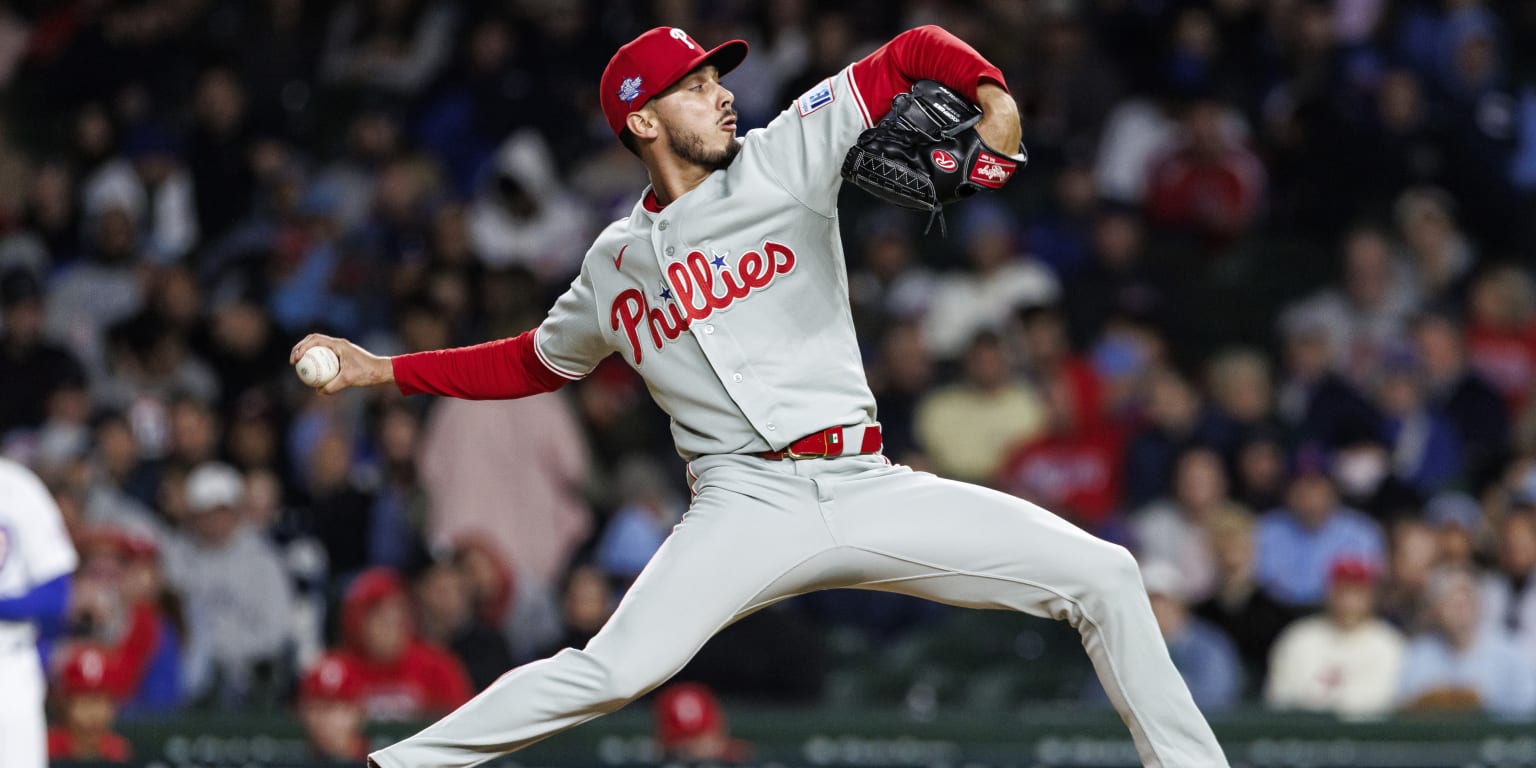
The Phillies recalled Alan Rangel from Lehigh Valley on Monday to fill Andrew Painter's absence from their starting rotation. Interim manager Don Mattingly framed the promotion as an extended audition—Rangel will operate in a flexible role, potentially starting every fifth day or working as bulk relief depending on circumstances. The 28-year-old has logged 14 appearances (11 starts) with Lehigh Valley this season, posting a 3.99 ERA across 70 innings. He made his first big-league appearance on April 22 against Chicago, tossing three innings of relief with five strikeouts, enough to earn Mattingly's confidence heading into a series against Washington.
Rangel's path to this opportunity is telling: after 12 years in the minor leagues, he's finally getting regular major-league reps not because of elite prospect status but because he's been the most consistent arm the Phillies had available at Triple-A. That matters for context. A 3.99 ERA at Lehigh Valley—a hitter-friendly environment where even middle-rotation types routinely post inflated numbers—translates to a significantly higher expected ERA at the major-league level. The jump from PCL pitching to facing playoff-capable lineups like Washington's is sharp. Mattingly's comment that Rangel "has been throwing the ball well" is manager-speak for "he's our best option right now," not a statement about elite stuff.
What the market will initially undervalue is the volatility baked into Rangel's innings. Bettors who see "new pitcher in rotation slot" will anticipate stabilization of Phillies team totals or team ERA—a natural bookmaking reaction to plugging a hole. But Rangel entering his second major-league stint with minor-league credentials creates a different profile. Early innings against the Nationals will likely feature elevated strikeout rates (hitters sizing up unknown stuff, defensive positioning still forming) followed by deterioration as opponents adjust in subsequent at-bats. This is a classic pattern: new-arm performance spikes in innings 1-3, then regresses hard. The Phillies' team total props and first-five-inning lines will reflect initial optimism that Rangel steadies the rotation. That optimism is misplaced over the arc of his starts.
The constraint Mattingly mentioned—that Rangel may not start every appearance, or may pitch limited innings as an opener—adds another layer of uncertainty. A three-inning limit or bulk-relief role compresses the variance window but also narrows the betting landscape. Team totals priced at 4.5 runs or higher assume a traditional starter's output. If Rangel's innings are capped, that number becomes less reliable. Conversely, strikeout props on Rangel himself carry edge only in the first two innings of early starts; after that, opponents adjust and whiff rates normalize. The Phillies' offensive pressure is unchanged by this move—Painter's absence is real, Rangel doesn't fix it—so lean toward unders on team totals when he takes the mound, particularly in games where the Phillies are favored and markets have inflated their scoring expectations.