Ramos Arrives as Yankees Patch Right-Field Gap Mid-Stretch
By PropBetEdge Editorial Team ·
The All-Star acquisition gives New York a proven bat against righties, but his splits suggest the edge is narrower than the deadline price tag implies.
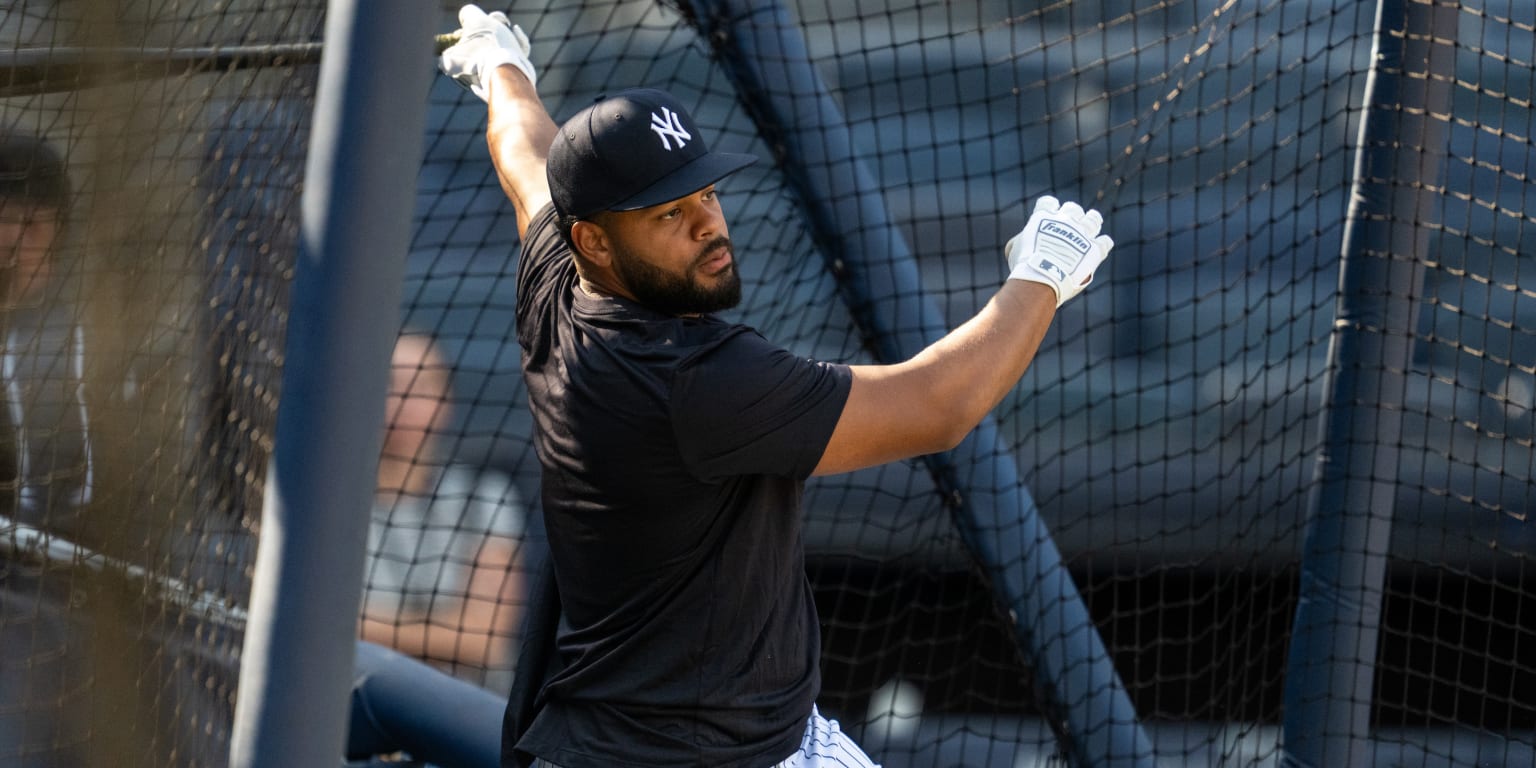
Heliot Ramos found out he was a Yankee the way most players do in August: a teammate pointed at a TV screen in the clubhouse. The Giants' right-fielder learned of his trade to New York on Monday while the San Francisco lineup was preparing to face Texas, then took the field in pinstripes the very next night against St. Louis. It was a compressed timeline even by deadline standards, but Ramos stepped into the cleanup spot in left field without hesitation, armed with a simple mandate: perform.
The Yankees didn't acquire Ramos on speculation. He was an All-Star in 2024 and carries legitimate offensive credentials into the stretch run. His 2026 line of .264/.304/.424 sits at 104 OPS+ across 74 games, but the underlying profile is what moved the needle: an 88th-percentile barrel rate (13.7%) and an 85th-percentile hard-hit rate (48.3%) rank him among MLB's most consistent round-ball hitters. The team adds him to an outfield already featuring a hamstring-limited Cody Bellinger and recent acquisition Luis García Jr., completing a three-piece overhaul to the offensive infrastructure in 48 hours. On paper, it looks like a ruthless consolidation of talent.
Yet the microscopic details reveal why the market may be overweighting his immediate impact. Ramos has lived and died by his handedness split this season: he's slugging .492 with an .835 OPS against left-handed pitching but only .404 with a .696 OPS against right-handers—a 139-point split in slugging percentage. That gap matters in a pennant race where the Yankees will face a diverse mix of starters over the final 58 games. Ramos spent 86% of his plate appearances against lefties with the Giants (64 left-field starts vs. seven right-field), a profile that doesn't translate neatly to daily lineup duty at Yankee Stadium. Manager Aaron Boone's comments about flexibility and Ramos's own willingness to play both outfield positions suggest he'll see righties, but the defensive repositioning also hints at offensive consideration—teams don't shuffle premium bats around on principle.
For prop purposes, the cautionary tale is simple: Ramos's raw counting numbers (runs, RBIs, home runs) will be inflated by the quality of the Yankees' supporting cast relative to his San Francisco run, but his hitting metrics against right-handed pitching remain modestly above league average rather than elite. His team total output matters more than his individual line does. The Yankees' aggregate offensive ceiling has risen materially with three new bats entering a lineup that struggled against right-side-heavy pitching staffs down the stretch. Take overs on Yankees team totals in games where the opposing starter is left-handed; fade them or tread cautiously when facing righties, since Ramos's effectiveness against that cohort remains a question mark. The barrel rate and hard-hit rate suggest he'll find extended success eventually, but the first two weeks of his Yankee tenure will more likely resemble competent depth contribution than All-Star elevation.