Quintana's 60-Day Move Signals Extended Colorado Rotation Crisis
By Erik Schwartz ·
The Rockies' escalation from 15-day to 60-day IL for their left-handed starter, combined with another elbow injury already sidelining a rotation mate, forces a prolonged reliance on depth arms and reshapes team total expectations.
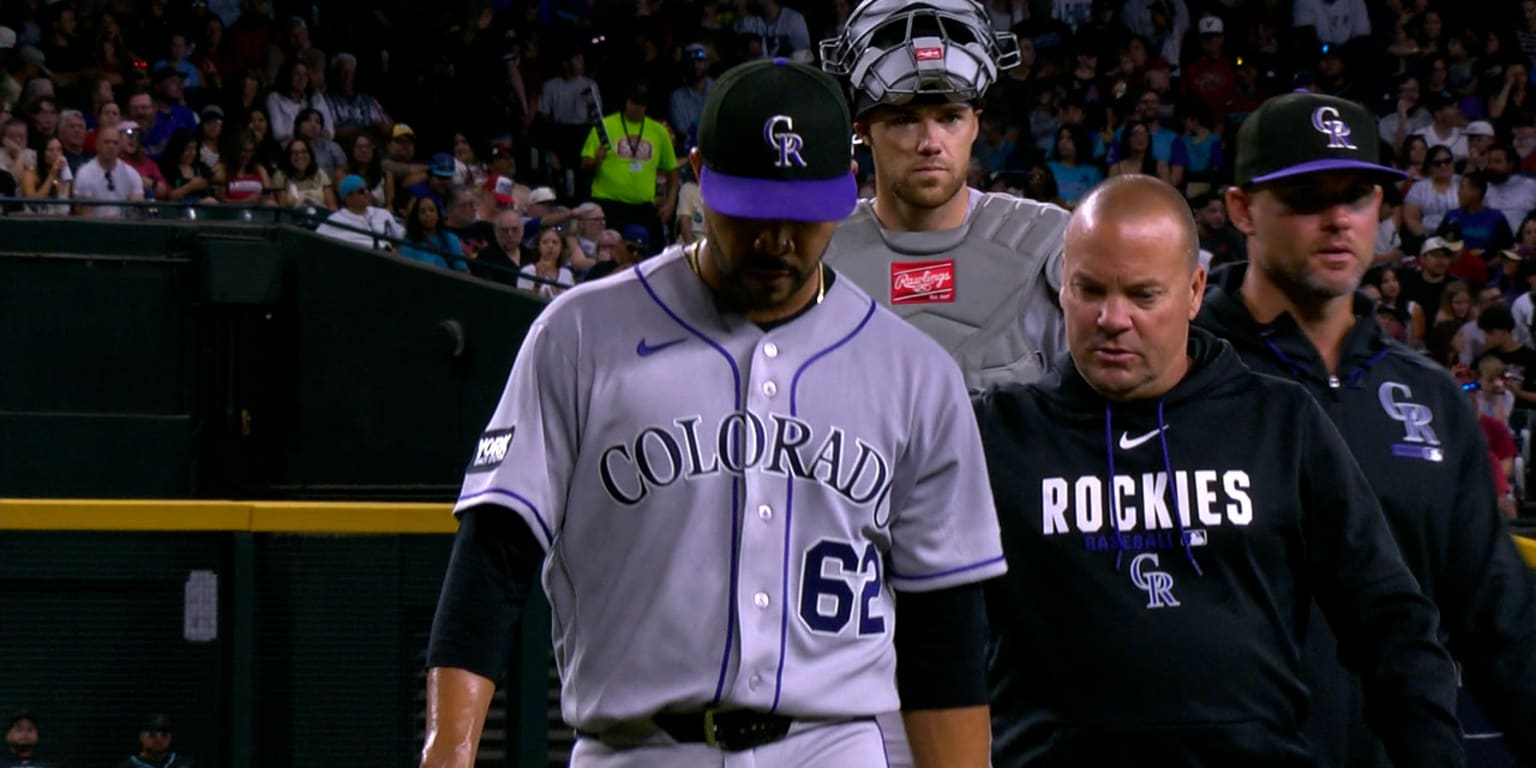
Jose Quintana's transfer to the 60-day injured list Thursday represents a significant downgrade to Colorado's rotation depth. The left-hander was initially placed on the 15-day IL after a six-run, 1 2/3-inning collapse against Arizona on Sunday—a sharp departure from his prior stretch, when he'd posted a 3.04 ERA over five starts. The diagnosis: left elbow sprain, no surgery required. But the timing of the escalation matters. Teams don't jump to 60-day status on minor soft-tissue tweaks; the move signals medical confidence that Quintana won't be available for weeks, possibly months.
The larger issue isn't Quintana alone—it's the compounding injury toll in Colorado's starting corps. Chase Dollander, the rotation's other elbow casualty, remains on the 15-day IL without clearance to throw. That leaves the Rockies cycling through a rotation already thin on reliable depth. Quintana had carved out respectable form before the injury, posting that 3.04 ERA in his five starts before imploding. He wasn't a staff anchor, but in a below-average rotation, every usable arm matters. Losing him to a multi-week absence forces the organization into premature deployment of relief innings and removes a stabilizing mid-rotation option.
For betting purposes, Quintana's absence has immediate implications for Colorado's run-scoring environment. The Rockies' starting pitching ERA will climb measurably without him; when a team's fourth or fifth starter gets removed, the replacement typically brings higher walk rates and fewer strikeouts. That creates two divergent prop angles depending on opponent quality. Against elite offensive teams, the resulting ERA vacancy could push team totals upward—Colorado's offense will need to compensate for thinner pitching. Against weaker lineups, the Rockies' own run prevention deteriorates, pushing their run line and moneyline odds worse, which in turn steepens the team total line as the market reprices their win probability.
The no-surgery verdict is constructive—Quintana won't be a loss for the season—but the 60-day timeline suggests an eight- to twelve-week absence minimum. That window covers the majority of the schedule and forces near-term rotation volatility. Look for Colorado's team totals to drift lower in games where a rookie or reclamation-project starter takes the ball in place of Quintana's steadier workload. The edge exists because the market will overcorrect initially, pricing Quintana as a reliable starter, then adjusting only after the Rockies have burned through a few forgettable starts. Early in this absence window—the next 7-10 days—Rockies team unders carry value when a borderline starter is listed rather than the now-unavailable Quintana.
The injury also signals potential internal roster adjustments. The Rockies activated Jeff Criswell from the 60-day IL and optioned him to Triple-A, a depth move that suggests the organization is preparing for an extended rotation shortage. Monitor rotation assignments closely; the team's construction will tighten around proven depth pieces, and daily lineup productivity could shift as a result.