Brewers Face a Rotation Roulette Ahead of Trade Deadline—and Their Pitching Props Hang in the Balance
By Erik Schwartz ·
With Jacob Misiorowski's form collapsing, Kyle Harrison's elbow clouded, and the August 3 deadline less than two weeks away, Milwaukee's ERA advantage may not survive the postseason.
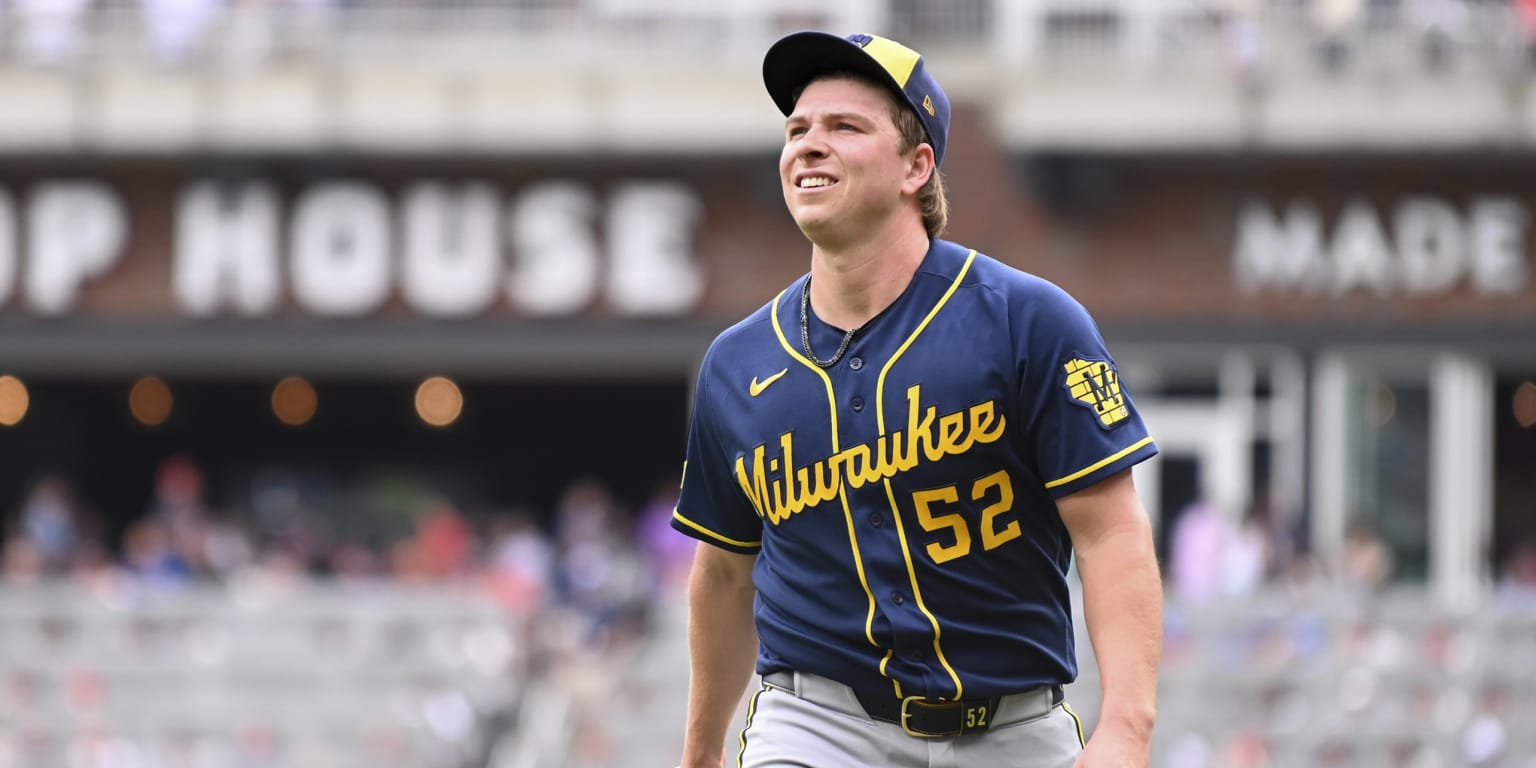
The Brewers' starting rotation looked sturdy through the regular season—second-best team ERA in baseball at 3.44, a full two-hundredths ahead of the Yankees. But durability and postseason readiness are not the same thing, and what Milwaukee owns right now is fragile scaffolding that Pat Murphy is openly worried about plugging.
Jacob Misiorowski, the ace around whom the rotation was supposed to be built, was visibly off on Monday night after 12 days of rest. Two innings, 65 pitches, his legs gone—Murphy's word was "concerned," even as Misiorowski insisted he's "right in the spot I need to be." That disconnect matters. Kyle Harrison, the breakout left-hander who arrived as a catalytic piece, landed on the injured list with elbow soreness before the break and has been vague about the severity. An MRI was "all good," per Harrison, but Murphy revealed "there's a little trace of something there." He's eligible to return Friday but won't pitch until he's logged side work and build-ups—a timeline the team hasn't publicly committed to. Beyond those two, the rotation is a patchwork: Logan Henderson, Shane Drohan, Robert Gasser, Brandon Sproat, then a handful of recently acquired or recovered arms (Coleman Crow, Lance McCullers Jr., Bryse Wilson) operating with either limited track records or innings limits. The team has the depth on paper. It doesn't have the reliability.
Matt Arnold and the front office now face a two-week sprint to decide whether to spend from a top-ranked farm system to acquire an established starter. That's a signal about the organization's internal confidence in what's already on the roster. Murphy was direct: yes, the Brewers have rotation needs; yes, they have bullpen holes. The fact that he had to spell this out suggests the deadline conversation isn't academic—it's urgent. Teams don't speak in this register when they're comfortable with the current inventory.
For bettors, this uncertainty translates into a series-level edge. Misiorowski's strikeout prop lines (likely 7.5-8.5 depending on opponent) are vulnerable if his mechanics remain inconsistent or his workload is managed. Over 14 days, we may see him limited to 80-90 pitches per start while the rotation tightens. More immediately, any Brewers starter prop lines built on full-season usage rates—especially Misiorowski's K/9—will be priced for a role he may not hold post-deadline. If Milwaukee acquires a veteran, Misiorowski could slip into a time-share or bulk role, crushing strikeout equity. The market hasn't yet fully baked in the possibility that the rotation architecture changes within weeks, not months. Early-deadline prop lines on Brewers starters are offering value on the under side because the book is pricing for baseline roles, not the managed/diminished role a reinforcement might trigger.
Harrison's return timing is also a fade signal. If he pitches Friday or the following week, his pitch count will be a hard ceiling (50-60 pitches). Any strikeout prop for Harrison in his first 2-3 starts post-return will be inflated relative to reality. The bettors leaning on Harrison to be a full-strength piece immediately are pricing in health he hasn't fully re-established. That's a contrarian lean on the under.