Priester's Command Collapse Signals Extended Brewers Rotation Uncertainty
By PropBetEdge Editorial Team ·
A second failed rehab outing leaves Milwaukee without answers on a pitcher once anchoring the staff, and suggests the thoracic outlet syndrome recovery will take longer than hoped.
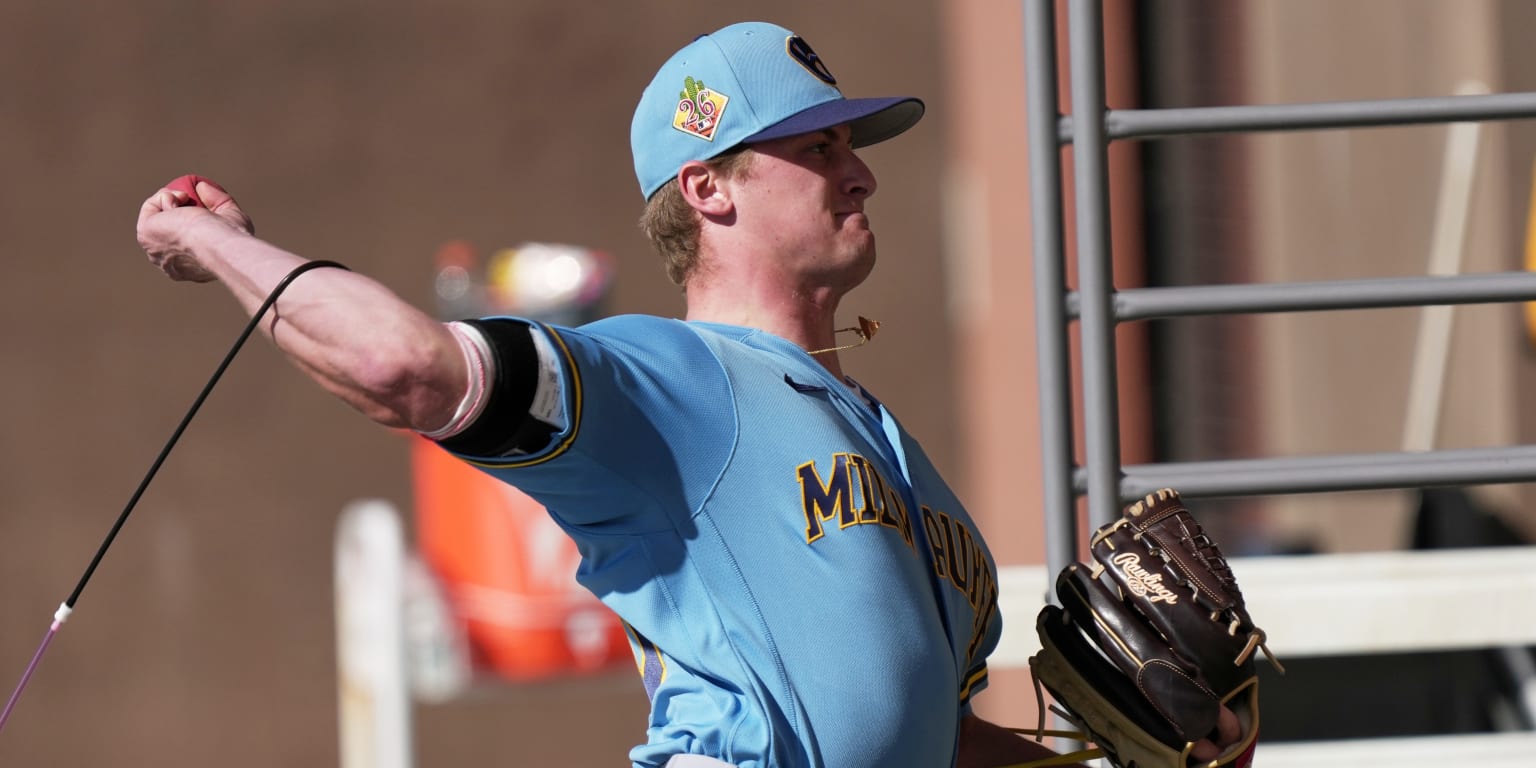
Quinn Priester's comeback is deteriorating. The Brewers right-hander lasted only four outs in his High-A Wisconsin rehab start Saturday, surrendering seven earned runs on five hits while recording more earned runs than outs—a ratio that indicts both health and command. A devastating second inning, in which he yielded four singles, two run-scoring walks, and a wild pitch, mirrors the collapse that ended his first rehab assignment with Triple-A Nashville in early May, when he posted a 9.00 ERA across three starts.
The pattern reveals more than a rough outing. Priester was 13-3 with a 3.55 ERA last season for Milwaukee after the mid-April acquisition from Boston—a clear-eyed investment that reaped immediate dividends. His velocity has cratered from 93.9 mph last season to 91.5 mph in Triple-A; his strike rate in the Wisconsin outing sat at 49% (23 of 47 pitches). The thoracic outlet syndrome diagnosis, confirmed in March after wrist soreness persisted through spring training, was supposed to resolve without the decompression surgery that sidelined Zack Wheeler for six months. Instead, Priester's symptoms—nerve and blood vessel compression in the neck affecting arm function—appear to be outpacing the Brewers' conservative recovery timeline.
The velocity loss alone tracks with TOS mechanics: compressed nerves affect arm slot consistency, which ripples into command variability before affecting pure fastball heat. But Priester's strike-to-walk ratio suggests something deeper than fatigue. His inability to repeat his release—evidenced by wild pitches and walk clusters in high-leverage counts—signals that his nervous system hasn't fully recovered proprioceptive control. This doesn't improve in a few weeks. It typically improves in months, if surgery isn't necessary.
From a roster perspective, the Brewers must now plan without Priester's 2024 production for at least the next six weeks. Any Milwaukee starter currently in the rotation carries elevated workload risk, particularly in games where weather or traffic delays force extended relief appearances. Brewers relievers will see uptick usage, especially high-leverage arms, which compresses their seasonal durability. Conversely, backup starters called up mid-season typically face early-season conditioning deficits; their strikeout rates and ERA will likely underperform pre-call numbers through June. If you're betting Brewers pitching props or team totals, price in that instability.
The betting angle: fade Brewers team totals in the 3.5-4.5 range for at least the next 10 days. Milwaukee's rotation depth wasn't elite before Priester's setback; without him, the back-end starters will see compressed leverage situations and higher pitch counts than normal. Over/unders on Milwaukee games should tilt toward unders as the team leans on relief depth to cover innings. Any promoted starter making his first appearance should face elevated under liability due to unfamiliarity with current opposing lineups and park adjustments.