Priester's Season Ends; Brewers Rotation Loses Its Anchor
By PropBetEdge Editorial Team ·
Quinn Priester will undergo thoracic outlet surgery Monday, ending his 2026 season and forcing Milwaukee to reshape its starting pitcher mix for the stretch run.
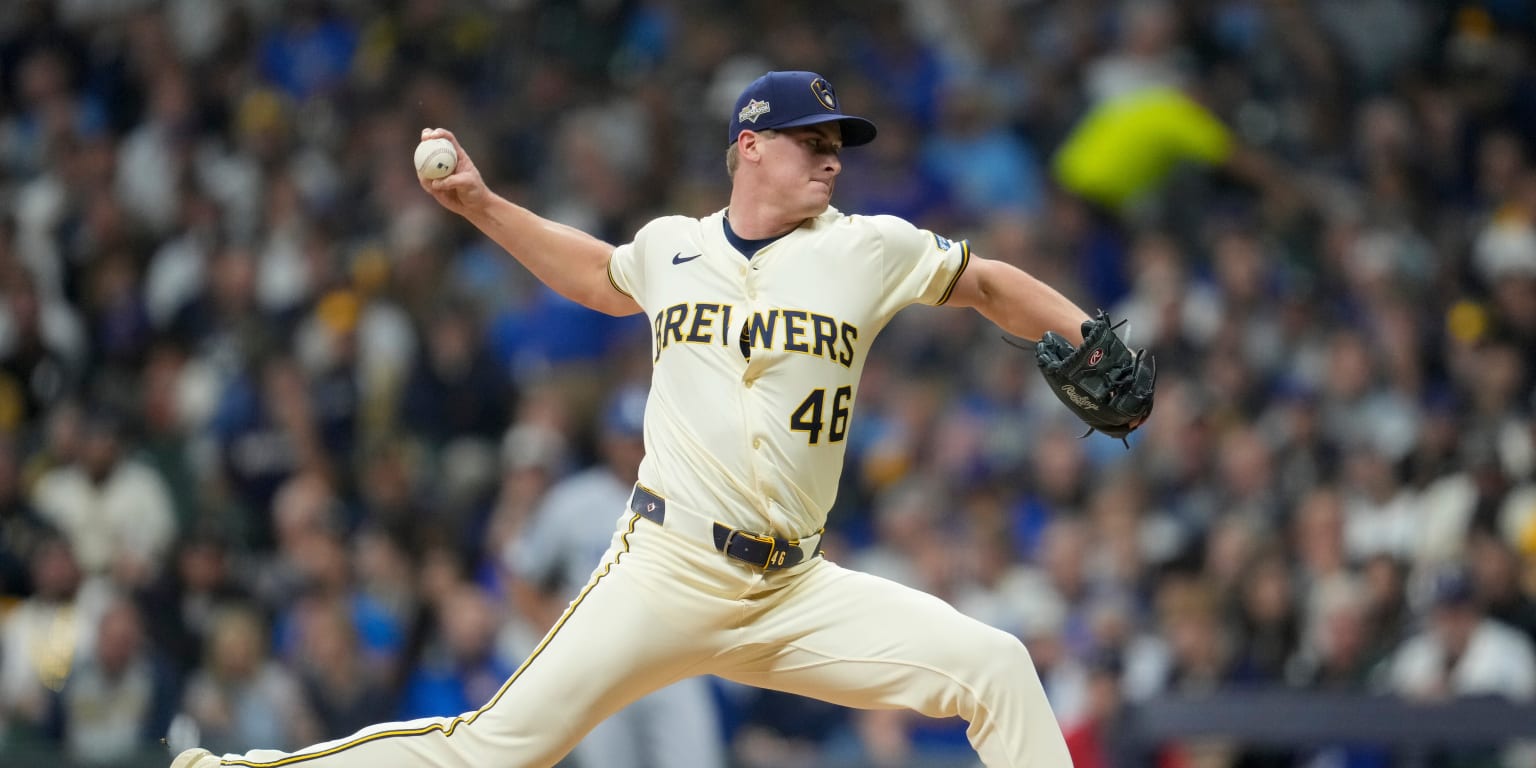
Quinn Priester's season is over. The Brewers' most reliable starter in 2025 will undergo decompression surgery on Monday in Dallas, removing his first rib to relieve pressure on the nerve bundle running through his neck and shoulder—a condition that has rendered him unable to command a baseball despite four months of injections, massage, blood flow restriction, and postural correction. Priester, 25, leaves having made zero major-league appearances in 2026 while posting a 6.75 ERA across eight minor-league rehabilitation starts. The decision closes a brutal chapter for both pitcher and organization: Priester felt healthy for stretches but couldn't translate that into performance, a mental toll only deepened by the knowledge that no conservative treatment would solve the underlying compression.
Thoracic outlet syndrome isn't a name-it-and-treat-it condition. It requires months of differential diagnosis, which is exactly what Priester and his medical team—including his uncle Paul, a vascular surgeon in Philadelphia, and specialist Gregory Pearl—attempted before concluding that only surgical decompression would provide relief. The condition traces to last season, when Priester's wrist soreness in the late regular season and postseason planted seeds of nerve compression that full rest couldn't heal. He entered spring believing the layoff would suffice. He was wrong. By mid-April, symptoms returned and compounded: loss of proprioception, numbness, inability to feel the baseball coming out of his hand. That's a death sentence for a pitcher whose value was built on command and consistency.
The Brewers now enter the second half without the pitcher they'd penciled in as a rotation cornerstone. Priester carried a 3.39 ERA last season with 171 strikeouts in 167 innings—the team's most durable arm by innings and reliability. His absence opens holes in the rotation that Milwaukee will need to fill via trade or internal promotion. The timeline for his return is measured in seasons, not weeks: Pearl's decompression surgery typically requires 8–10 weeks before throwing can resume, 12 weeks before light catching, and 8–10 months total before the body feels fully healed. That places realistic return to full function in March or April 2027, assuming no complications—which means the Brewers' remaining four years of Priester's club control begin from a standing start in 2027.
For bettors, the immediate impact centers on Brewers starting-pitcher workload and team strikeout volume. Without Priester's 5.8 K/9 rate from 2025, Milwaukee's rotation-wide strikeout rate will contract. The loss of innings from a pitcher of his caliber (top 20% in walk rate, bottom 10% in wild pitches despite TOS symptoms) forces the Brewers to lean harder on surviving starters and extends bullpen usage across a compressed schedule. Team-strikeout props and bullpen-heavy games against the Brewers should trend lower in the second half; conversely, games in which Milwaukee starts a fill-in or relief option will invite higher opponent strikeout totals. The rotation's command profile—particularly walks allowed—will soften. Over the remainder of June and into July, when Milwaukee cycles through its replacement options, expect elevated walks and hit-by-pitch lines for Brewers starters, a structural drag on overall efficiency.
The Brewers' ability to win games also softens: Priester was a 5–6 win arm by preseason projection. His removal from the rotation tilts games the team might have won into coin-flips, especially in a division race. Milwaukee's win-loss trajectory for July and August should factored through a lower-quality starting pitcher pool. Moneyline and spread prices for Brewers games will adjust downward as the market prices in rotation degradation, but the adjustment will likely lag the actual impact by 7–10 days—the time it takes for the replacement starter's first or second performance to register in public perception. Early Brewers moneyline fades against strong opponents entering the second half capture the value before the market reprices rotation depth.