Pérez Exits with Forearm Injury; Atlanta's Rotation Depth Tested Again
By PropBetEdge Editorial Team ·
A 92 mph comebacker off Juan Soto's bat ends Martín Pérez's afternoon and raises questions about Atlanta's starting pitching availability heading into the stretch.
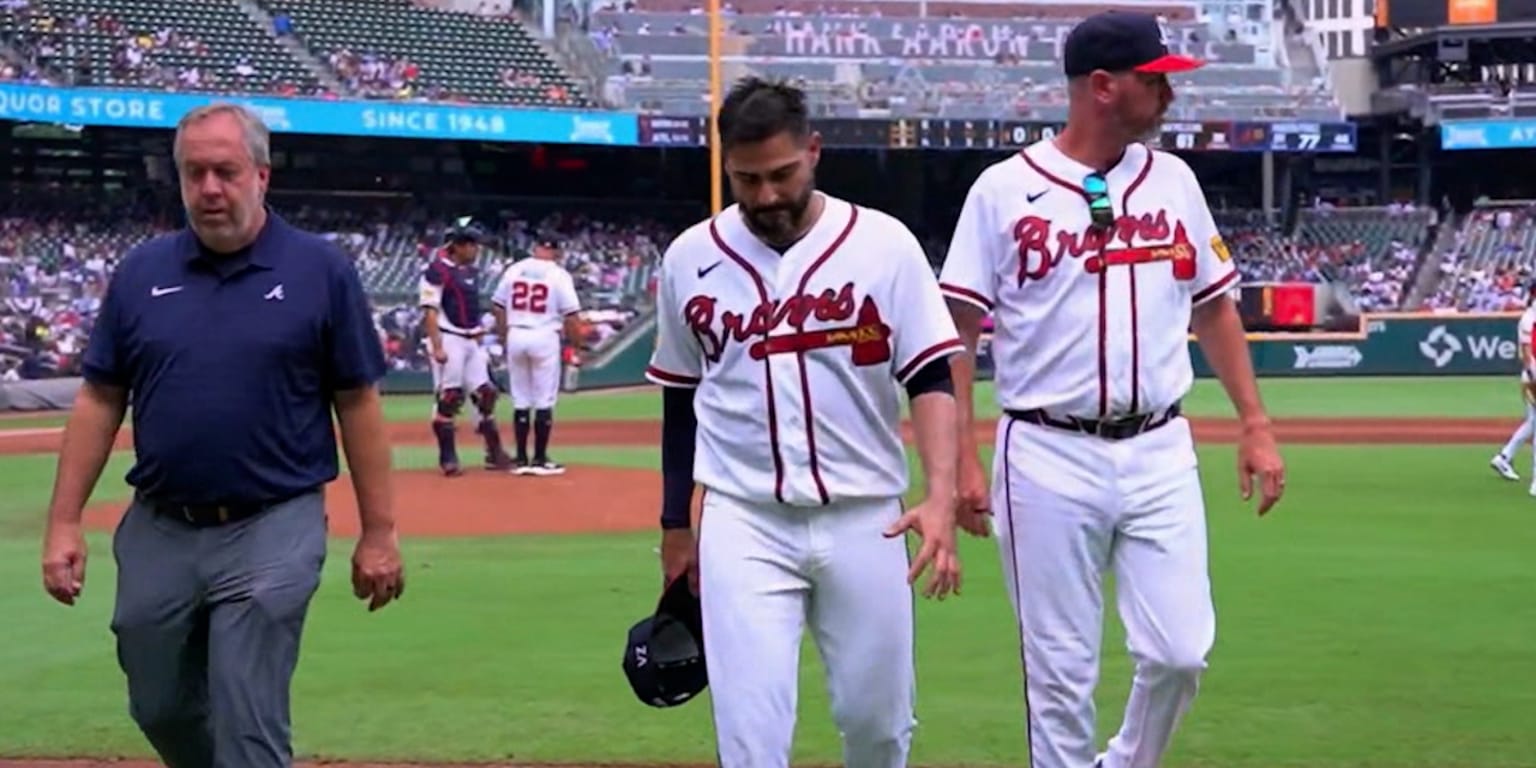
Martín Pérez's attempt to salvage a rough outing against the Mets came to an abrupt end in the fifth inning Sunday when a 92 mph liner off Juan Soto's bat struck his left forearm. Pérez fielded the ball and retired Soto at first base before immediately exiting without throwing a single warmup pitch, a clear signal the injury demanded immediate evaluation. The Braves will now assess whether he lands on the injured list—a move that could force Atlanta to accelerate JR Ritchie's return to the majors after optioning him to Triple-A just hours earlier on Sunday morning.
Pérez's performance before the injury underscored the volatility that has plagued Atlanta's rotation. He retired just two of his first 11 batters faced and was already trailing 5-3 when he exited. The veteran southpaw did settle in, retiring nine straight to close his outing, but the damage was done. Over his last six starts dating to early June, Pérez has pitched to a 4.85 ERA—a sharp decline from his season average of 3.54 across 18 appearances. That deterioration arrives at a moment when Atlanta can least afford it: the rotation has been a documented weakness for weeks, and depth options are thin.
The immediate succession question centers on Ritchie. The reliever threw three scoreless innings on Saturday before his option move—a decision that now looks like it may need reversing. If Pérez's forearm injury requires a stint on the IL, Ritchie becomes the likeliest candidate to slot into the rotation despite his primarily relief background. That scenario carries obvious risk for game outcomes and betting implications: Atlanta's staff ERA and team total over/unders will hinge on whether a relief pitcher pressed into a starting role can sustain performance across five-plus innings.
From a prop perspective, this injury matters most for Braves team totals and first-five-innings totals in the short term. If Pérez misses time and Ritchie enters the rotation, Atlanta's offensive projection shifts downward—not because the lineup changed, but because the opposing pitching quality increases relative to expected starter quality. Sportsbooks already price in known rotation information; a forced spot-start or rushed return by an untested starter widens the edge for unders. Moreover, Pérez's deteriorating numbers over his last six starts suggest the injury may simply have accelerated an existing decline. Bettors should view Braves totals with caution until the rotation picture clarifies, particularly in games where Atlanta's fifth starter slot remains fluid.
The betting calculus also shifts intra-game. Braves team totals and first-five-innings props against mediocre or unknown opposition become less reliable; conversely, if Ritchie earns the call and performs credibly, that becomes a value opportunity for contrarian bets on Atlanta going forward. Watch for early-week line movement on Braves games as injury status clarifies—and use that movement as a signal that public sharp action has already shifted.