Cole's Comfortable Margin Masks the Real Post-Surgery Baseline
By PropBetEdge Editorial Team ·
Five starts back from Tommy John surgery, Cole is pitching efficiently in blowouts—but the prop market hasn't yet priced the difference between a lead pitcher and a true ace.
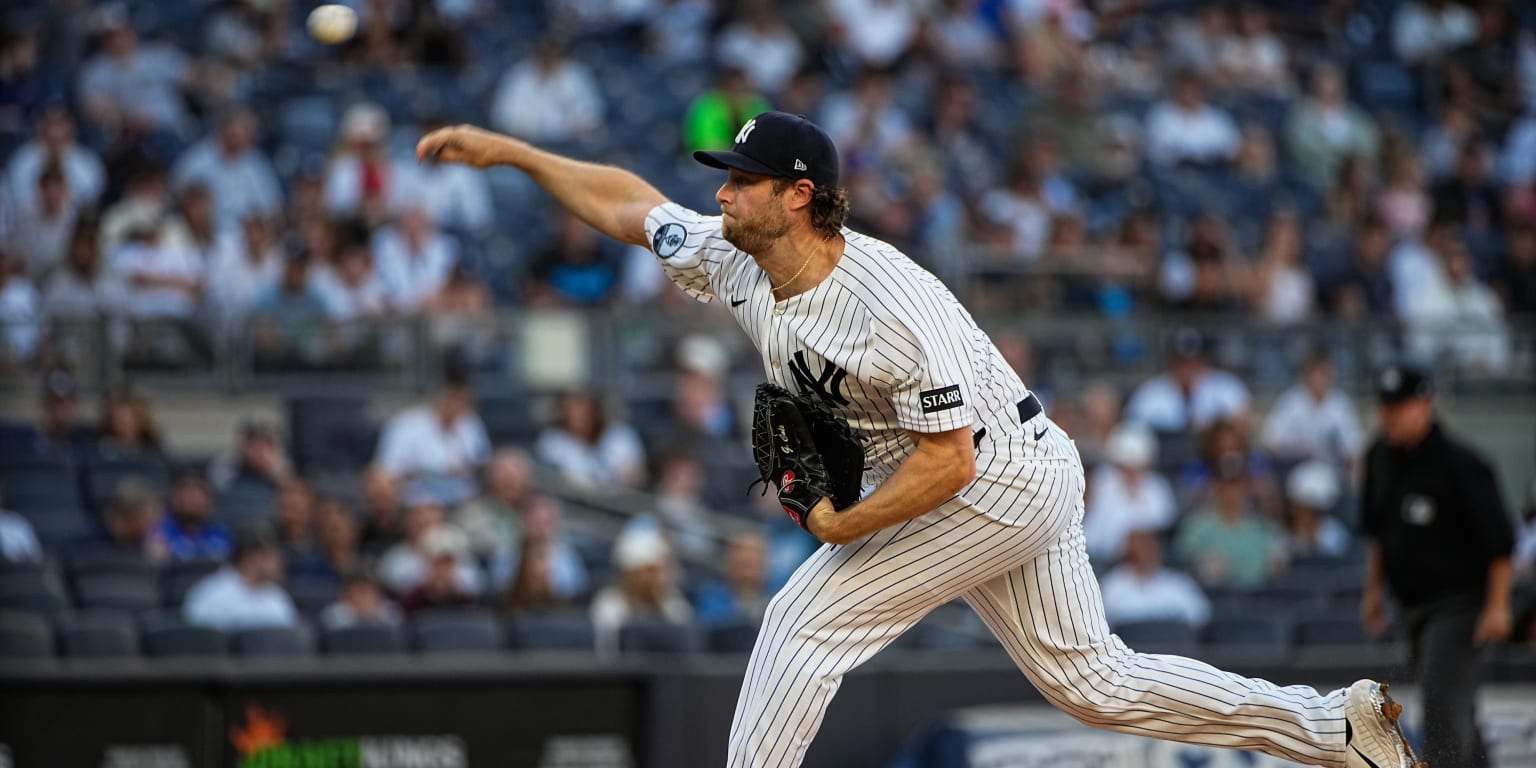
Gerrit Cole carved through six innings on a 90-pitch budget Tuesday against the White Sox, surrendering three hits and two walks while striking out six. On the surface, it reads like a seamless return: the Yankees' ace pacing the dugout in the early frames, arm loose, workload managed. The reality underneath is more nuanced. Cole benefited from one of the league's most lopsided offensive performances—Spencer Jones, Ben Rice, and Paul Goldschmidt all homered to build the Yankees an early cushion that allowed Cole to pitch in cruise control.
This is the fifth start of Cole's post-Tommy John campaign, and the efficiency numbers are solid: 59 strikes on 90 pitches, a 65.6% strike rate that sits comfortably in his career neighborhood. But parsing the surface stat from the contextual layer matters for prop construction. Cole allowed Andrew Benintendi a solo shot in the first, then blanked 13 consecutive batters before a Tristan Peters single in the sixth. That's not dominance—that's a pitcher operating with a six-run moat, asked to eat innings rather than navigate high-leverage spots. Davis Martin, Cole's counterpart, had yielded just three home runs over his first 78.1 innings entering the game. The Yankees walked in with 102 homers on the season—a major-league high—and immediately exploited that gap.
For strikeout props, Cole's K-rate trajectory post-surgery remains the operative thread. Six strikeouts on 90 pitches translates to a 6.67 per-nine rate—respectable for a scripted game flow, but a tick below his career 9.2 per-nine baseline. The market has been slow to adjust Cole's strikeout lines downward across his early-return window, partly because his velocity checks in around 97–98 mph on his fastball and hitters remain conscious of his pedigree. That creates an edge: oddsmakers are pricing Cole as if he's mid-career Cole; he's pitching like a post-surgical version still relearning how to pitch from behind in the count without relying on heat.
The pitcher's next three or four starts will determine whether this is a temporary baseline compression or a structural reset. Tuesday's game tells you little because the Yankees' pile-on offense meant Cole could pitch passive baseball. His K-prop line—likely sitting somewhere around 6.5 to 7.5 depending on the book—remains overcooked for a return pitcher who is not yet trusting his off-speed material in high-pressure moments. Lean under on Cole's strikeout props until we see him pitch in a tight ballgame where he has to manufacture swings and misses rather than ride out early leads.
The moneyline and team-total angles favor the Yankees' offensive continuation. Their 102 home runs already represent elite production, and facing mid-rotation starters like Martin—who carries a 4.47 ERA—provides matchups where the Bombers' top-heavy lineup will repeat this damage. The White Sox are 29th in runs scored and 27th in run differential; they are a play-in-traffic team for Yankees overs. Focus there instead of trying to rebuild strikeout narratives around a pitcher whose arm is still recalibrating.