Griffin's Return Reshuffles Pittsburgh's Lineup Math—and Its September Odds
By Ty Whitney ·
The Pirates' rookie shortstop targets Friday activation after nine weeks sidelined, arriving at a moment when every roster piece matters in a tightening wild-card race.
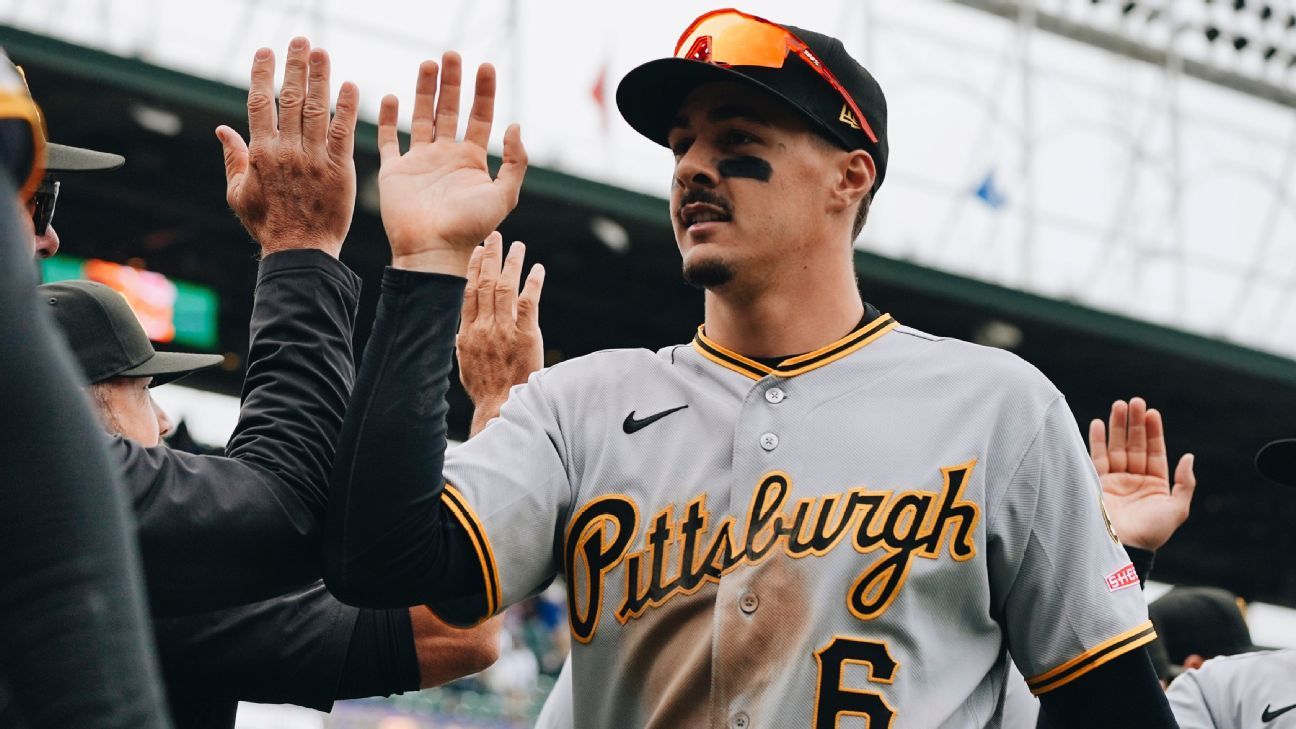
Konnor Griffin will attempt to rejoin the Pirates' lineup Friday against the Angels, ending a nine-week absence that began in early July with a left-hand knuckle injury. The 20-year-old said Thursday he's pain-free and passed grip-strength testing at levels above baseline—a crucial checkmark for a player whose value centers on bat control and speed. Pittsburgh enters the series 5.5 games behind the final wild-card spot, and front office brass has signaled they're comfortable with the reinjury risk, viewing September experience for a young talent as worth the exposure.
Griffin's production footprint before the injury was electric and erratic. In 59 games, he compiled a .276 batting average, five home runs, 25 RBIs, and 20 stolen bases—a profile that blends gap power with aggressive baserunning. The volume is small enough that sample variance looms large, but the strikeout rate and walk rate matter more than raw average here. A 20-year-old shortstop hitting .276 in his rookie season can carry different readings depending on whether he's a 25% K-rate slug-oriented player or a contact-forward operator who might evolve into more consistent run production. The rehab assignment—details sparse in the reporting—lasted several games, which typically suggests the team observed swing mechanics and defensive range without incident.
Pittsburgh's climb back into contention depends partly on Griffin's ability to hold down a premium defensive position while generating above-average offensive value. A 20-year-old in his first taste of full-season baseball doesn't command the same expectation as a veteran returnee, but the Pirates' front office isn't recalling him for developmental window alone. The fact they'll activate him mid-September, in a playoff push, signals confidence in both his health and his readiness to contribute now rather than as a future trade chip.
For bettors, Griffin's return creates a subtle but material shift in the Pirates' run-production calculus. His speed game (20 steals in 59 games projects to roughly 55 over a full season) means he moves the needle on both team totals and individual stolen-base props, but more importantly, he's a catalyst who changes the timing and sequencing of Pittsburgh's offensive innings. Shortstops who steal bases at that volume don't just steal; they draw throws, disrupt pitcher focus, and create scoring opportunities that don't show up in traditional box stats. The team's team-total line should drift slightly upward on the news of his return—expect it to shift 0.3 to 0.5 runs higher over his next several games—not because he's a star, but because the Pirates gain a run-engine in the nine spot that wasn't available for the past two months. Any market pricing that treats his return as a neutral roster swap is underweighting the chaos factor of aggressive speed at shortstop. This edge is persistent: it survives Friday's activation and holds through September as long as Griffin stays healthy and maintains his rehab-assignment form.