Ron Marinaccio's Mechanics Have Failed Him: What Pirates' Quick Exit Tells Relievers About Velocity Without Ride
By PropBetEdge Editorial Team ·
Pittsburgh's mid-deadline bullpen overhaul left Ron Marinaccio as collateral damage after just 10 days, but the real story is a fastball that lost its shape—and why that matters for your under bets on Pirates relievers going forward.
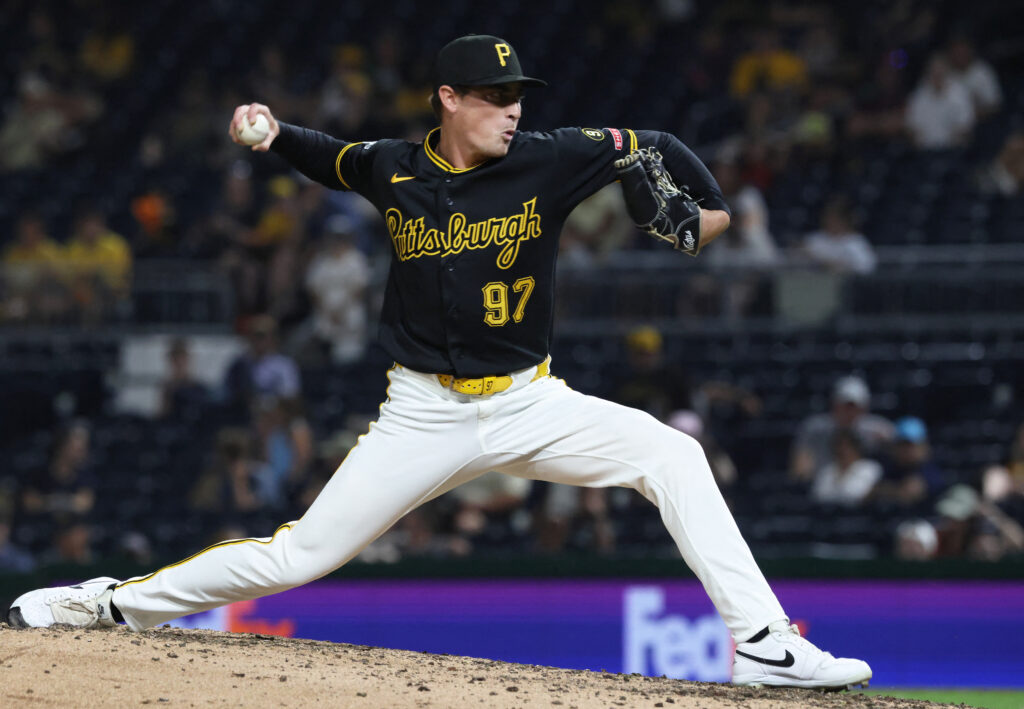
The Pittsburgh Pirates designated Ron Marinaccio for assignment on August 3, clearing roster space for Lake Bachar barely a week after acquiring the right-hander from San Diego in a cash deal. Marinaccio's brief tenure—four appearances, zero impact—ended as quietly as it began, the casualty of a bullpen retrofit that added Luke Weaver and Camilo Doval at the deadline. This is not a story about organizational depth. It is a story about mechanical deterioration and what happens when a reliever's fastball loses its most valuable property.
Marinaccio arrived in Pittsburgh off a designation from the Padres, having pitched to a 4.99 ERA across 37 combined appearances this season. That number undersells the problem. His strikeout rate has cratered to 18.4%—career-low by a wide margin. His Stuff+ has slid to 94, well below the baseline for a pitcher who posted sub-1.00 ERA marks with the Padres last season and held his own as a depth arm for the Yankees from 2022 through 2024. The fastball, however, tells the real tale: it sits at 93.8 mph, matching his career average, but the induced vertical break has collapsed to 13 inches from the 15-17 range he maintained in New York. Opponents are slugging .483 against it with five home runs in 2026. A fastball that doesn't rise is a fastball that gets hit, no matter how the radar gun reads.
The deterioration cascaded into his breaking stuff. His changeup has yielded minus-5 Run Value, placing it in the fifth percentile league-wide. When a reliever's primary offering loses its ride, hitters stop respecting the speed and start sitting on the secondary pitches—which now become predictable. Marinaccio's called-plus-swinging strike rate has bottomed at 24.5%, the sound of a reliever losing the battle before the pitch leaves his hand. A mechanical shift—whether subtle (arm slot drift, release point variance) or pronounced (hip-shoulder separation timing)—doesn't typically announce itself on a box score. It announces itself in Run Value and home-run rates and strikeout rates that don't match velocity.
For bettors tracking Pirates relief usage the rest of August, this matters concretely. Pittsburgh's relief corps entering the deadline ranked among baseball's worst at holding leads in close games—exactly why they overhauled it. Weaver and Doval bring pedigree and recent track records. What Marinaccio's removal underscores is that velocity alone no longer covers mechanical sins at the major-league level. Any Pirates reliever throwing 93-95 mph without elite spin or movement metrics deserves heightened scrutiny on strikeout props and under bets; the market may price based on heat alone. Marinaccio is a data point. His failed four-seam tells us to dig deeper than the radar-gun readings when evaluating secondary relievers in tight contests.