Ninth-Inning Baserunning Collapse Costs Phillies Chance at Dodgers Upset
By Erik Schwartz ·
Philadelphia's uncharacteristic mistake in a one-run game exposes the margin for error late in close contests.
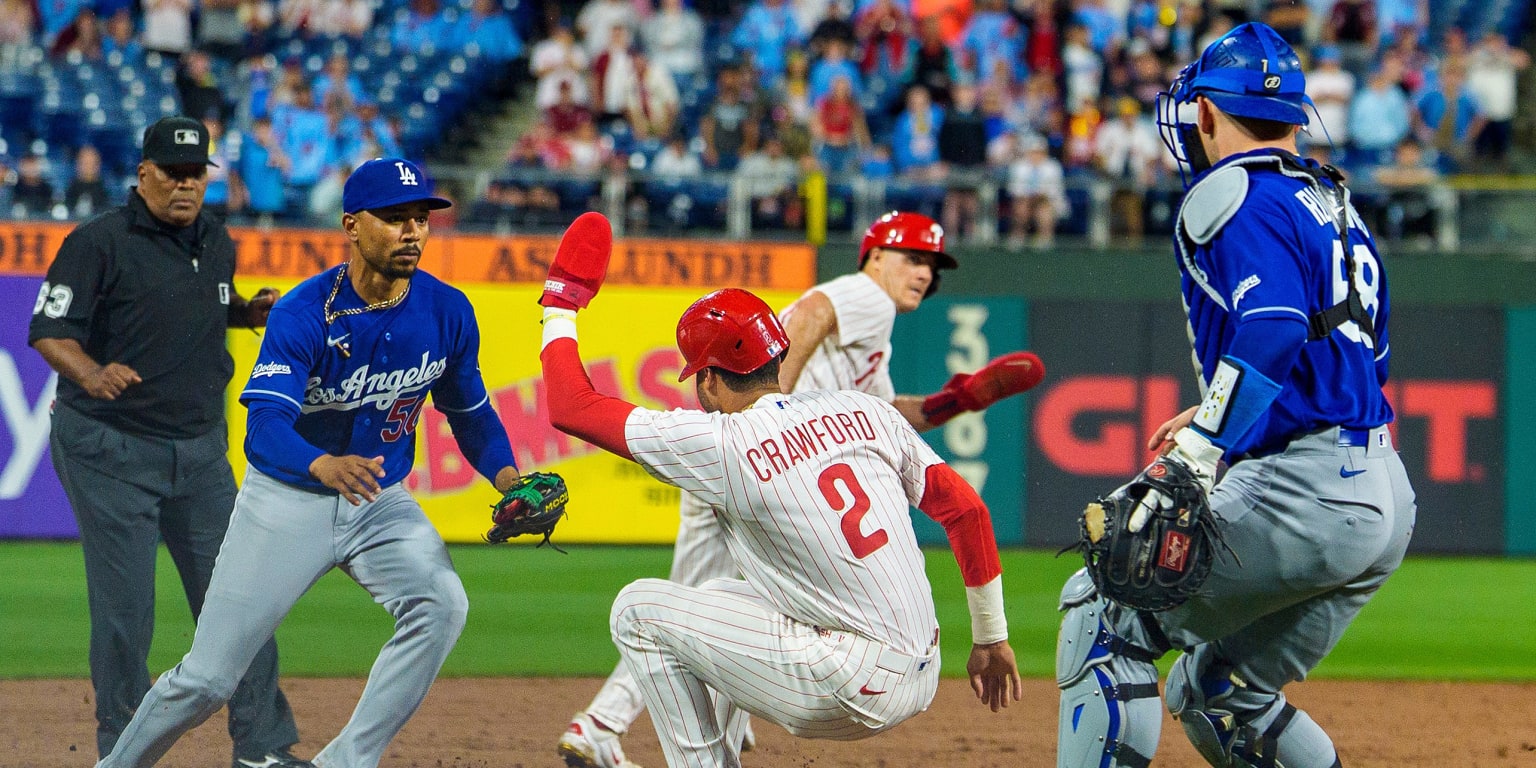
The Phillies squandered a ninth-inning threat Tuesday at Citizens Bank Park when a bizarre baserunning sequence handed the Dodgers a 2-1 victory and Los Angeles its 64th win of the season. With two men in scoring position and only one out, pinch-runner Justin Crawford found himself caught in a rundown between third and home. As catcher Dalton Rushing chased him back toward third, shortstop Mookie Betts applied the tag for the second out. But the play spiraled into chaos when J.T. Realmuto, stationed at third base, bolted toward second in an apparent attempt to draw the Dodgers' attention away from Crawford. The gambit backfired completely: Realmuto was tagged out sliding into second, delivering Los Angeles the final out of the game.
What made the sequence particularly damaging was the mathematical reality of the situation. A single ground ball with two in scoring position and one out typically produces a run or at minimum advances a runner into scoring position. Instead, the Phillies exited the inning with nothing. Realmuto, a career .280 hitter with strong baseball acumen, is not known for these lapses. His decision to retreat rather than advance reflects either miscommunication or a high-variance decision made under duress—the kind of unforced error that ballparks punish ruthlessly in tight spots.
The Dodgers' ability to close out one-run games carries direct implications for season trajectory and strength-of-schedule mathematics. Los Angeles now sits at 64 wins in late July, tracking toward the century mark if they maintain their current pace. Teams that win consistently in low-run environments (games decided by 2 runs or fewer) typically carry higher pythagorean win expectations than their raw records suggest, because such games are high-variance events where execution microscopies—exactly like Realmuto's mistake—determine outcomes. Conversely, teams that lose these marginal contests tend to underperform their run differential over time.
For betting purposes, this game underscores the hazard of backing one-run favorites in the ninth inning, particularly against teams with strong positional players who should know better. The Phillies entered as reasonable favorites given their run-scoring position and Crawford's speed advantage on the basepaths. Yet the margin for error in ninth-inning baseball is measured in inches and split-second decisions. Philadelphia's baserunning miscue is unlikely to repeat—Realmuto has been among the National League's steadiest players for years—but it reflects the volatility that haunts close games. For the Dodgers, the win validates their ability to close tight contests; for the Phillies, it's a costly reminder that late-inning execution cannot be outsourced to luck.