Wheeler's Durability and Giolito's Leaks Make the Phillies-Padres Over a Fade-Resistant Play
By Ty Whitney ·
Philadelphia's ace bounces back against a San Diego pitcher bleeding runs, but the matchup mechanics suggest caution on the scoring projection.
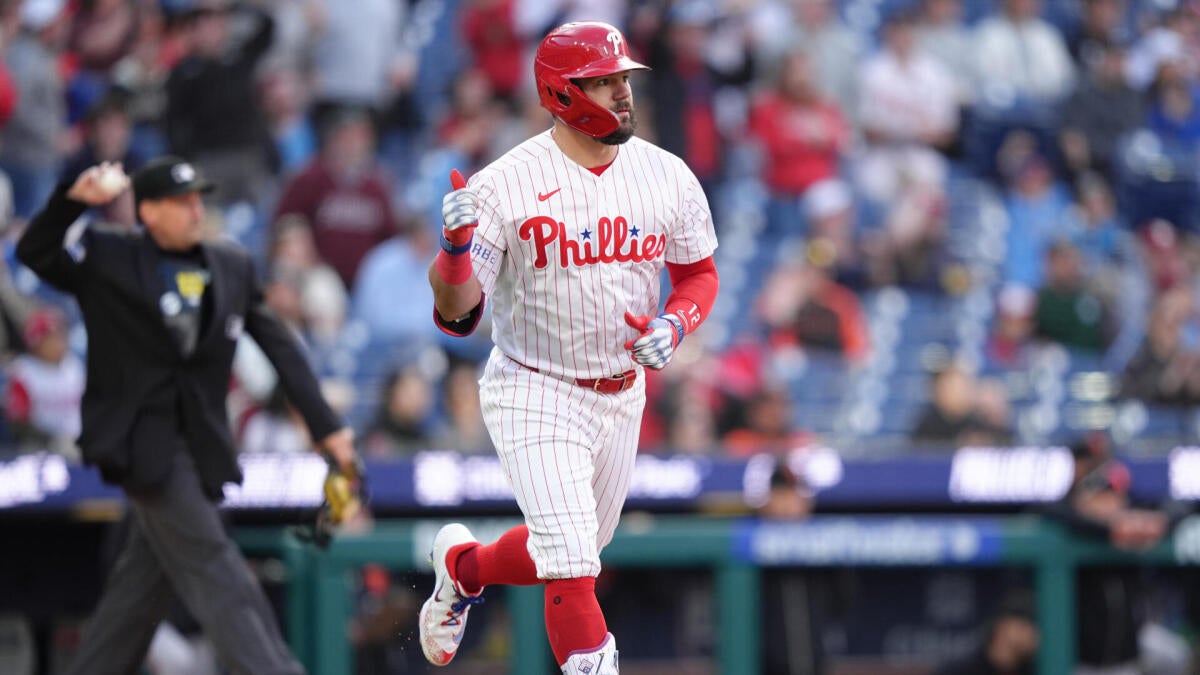
The Phillies close their three-game series against the Padres on Thursday at Citizens Bank Park, with Philadelphia sitting at 32-29 after winning the first two contests by identical 3-2 margins. San Diego enters at 32-28 and has now absorbed four consecutive losses—their third such streak this season and their longest skid to date. The pitching matchup pits Phillies RHP Zack Wheeler (4-1, 2.27 ERA) against Padres RHP Lucas Giolito (2-0, 4.97 ERA), a setup that on its surface appears to favor the home team's offensive chances.
Wheel's ERA masks a recent dip in consistency. His last outing saw him surrender four earned runs on four home runs, a one-inning collapse that signaled either fatigue or vulnerability to a specific opponent's approach—neither a permanent condition for a pitcher of his caliber. That said, Wheeler has held a 2.27 ERA over roughly 55 innings, which places him comfortably in the top tier of NL starting pitching. Giolito presents a starker problem. His 4.97 ERA understates the damage: he gave up four earned runs in just 2.2 innings in his most recent appearance, a rate that extrapolates to catastrophic offensive environment. More tellingly, Phillies centerpieces Harper, Schwarber, and Turner have combined for five home runs across only 27 at-bats against Giolito—a .185 ISO rate that signals systematic vulnerability to Philadelphia's left-side power.
The Phillies' six-game winning streak against San Diego dating to last season provides additional context, though recent trends matter more than historical sweeps. The moneyline sits at Phillies -191 (risk $191 to win $100), with the over/under posted at 8 total runs. SportsLine's model, which has returned 77% coverage on top-rated picks early in the season, projects the over as the primary angle, citing Giolito's recent implosion and the forecasted run production from both lineups. The model envisions Harper, Schwarber, and Turner each recording at least 1.5 total bases, while San Diego's Tatis Jr., Merrill, and Bogaerts are projected to score at least 0.5 runs apiece.
The critical mechanism here hinges on command versus cleanup hitting. Giolito's inability to navigate the Phillies' top third—particularly against left-handed power—creates a structural advantage for Philadelphia's run expectancy. A pitcher allowing five homers in 27 at-bats to your opponent's three best hitters doesn't recover that deficit with fastball location alone. Wheeler, despite his recent outlier game, carries a sub-2.30 ERA; his one bad outing does not constitute a trend. San Diego's offense, ranked mid-pack in team wRC+, lacks the sustained pressure to pile runs against a pitcher playing with house money after a bounce-back performance. The over assumes both teams score more than 4 runs on average; in reality, the distribution risk skews toward Philadelphia manufacturing 4-5 runs and San Diego struggling to reach 3. An 8-run total in this matchup requires San Diego's offense to perform above its median expectancy while Wheeler's blip becomes a pattern—a low-probability double.
Bettors chasing the over should weigh the specific advantage: Giolito's leakage is real, but Wheeler's reversion to form is more probable than sustained offensive surge from a Padres lineup in the midst of their longest losing streak. The -191 moneyline reflects appropriate confidence in Philadelphia's edge. The over at 8 runs presumes both teams exceed their established run-production rates simultaneously, a scenario that survives scrutiny only if Giolito's recent games represent a true baseline rather than an outlier spike within his broader 4.97 ERA context.