Phillies Add Depth with Hill Trade; What It Means for Their Outfield
By Ty Whitney ·
Philadelphia swaps prospects for a veteran outfielder and international pool space, a mid-season reshuffling that addresses depth but not star power.
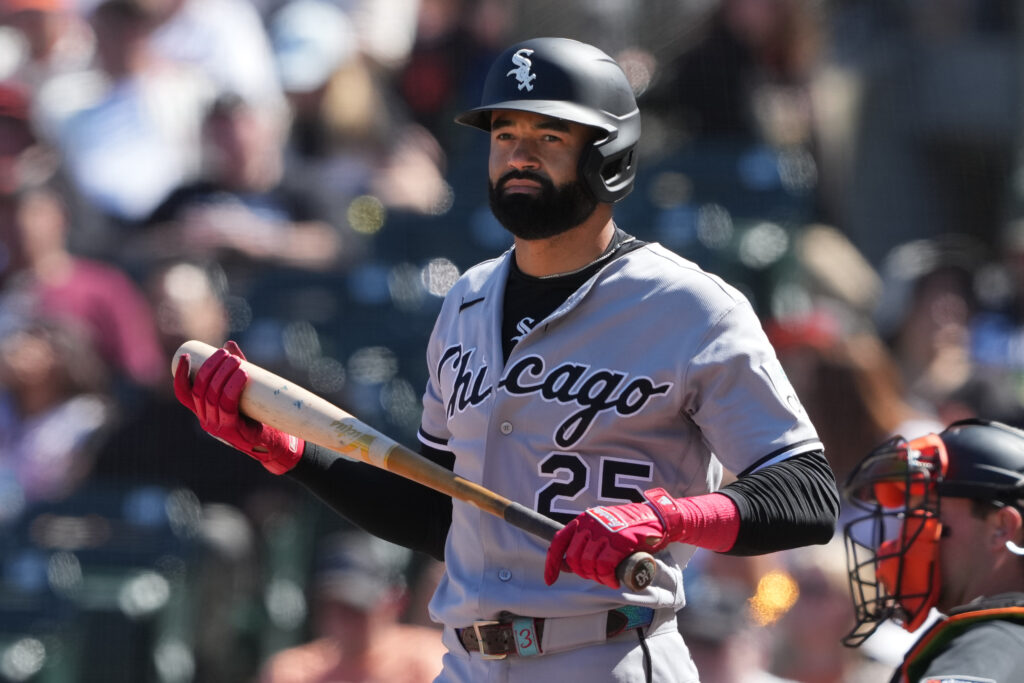
The Phillies acquired outfielder Derek Hill from the White Sox on Thursday, per ESPN, in exchange for outfield prospect Dylan Campbell and infield prospect Jose Colmenares. Philadelphia also received international bonus pool space in the deal—a secondary asset that reflects the club's flexibility in the prospect market. The Phillies will need to designate a player for assignment to clear a 40-man roster spot, a procedural cost that signals management views Hill as a necessary addition to the current lineup.
Hill arrives as a depth-and-leverage piece rather than a transformation bat. At this stage of the season, the move telegraphs a Phillies front office managing injury risk and platoon flexibility more than manufacturing an offensive upgrade. Campbell and Colmenares represent mid-tier organizational assets—neither prospect was a cornerstone piece or a first-wave talent in Philadelphia's system. The White Sox, in selling depth mid-season, accept that return as a tactical consolidation toward a longer rebuild. From a valuation standpoint, both clubs are signaling modest conviction: the Phillies don't see an immediate path to a championship-level addition, and Chicago is accepting lower-tier compensation rather than holding Hill for contention.
The prop implications hinge on Hill's role and the Phillies' current outfield configuration. If Hill becomes a regular or semi-regular starter against left-handed pitching (his historical sweet spot), he carries lower isolation power than the team's incumbent starters—a factor that suppresses Phillies team run totals in games where he gets substantial plate appearances. If he slots into a bench role with occasional pinch-hit opportunities, the lineup impact narrows further. Hill has posted a career .298 ISO and has never averaged more than 4 home runs per 550 plate appearances in a full season; he's a contact-over-power profile, and a Phillies team already balanced toward singles and doubles will skew even further in that direction with elevated Hill usage.
For bettors, the edge lies in recognizing that market-set Phillies team totals—particularly run lines and run totals in upcoming games—may not immediately reprice for a lineup that has become marginally more contact-dependent. If Hill enters the starting nine against a left-handed starter, the Phillies' implied run rate should edge downward by 0.3–0.5 runs relative to their recent season average. This is a persistent pattern, not a single-game variance play; Hill's batting profile is stable and well-documented. The angle strengthens in games where the Phillies face quality left-handed pitching, a matchup where Hill will receive the most usage. Conversely, in games where Hill doesn't start or appears in limited capacity, the team total reverts to its baseline, and overs become more attractive relative to pre-Hill odds.
The trade also opens a minor roster logjam conversation: the player Philadelphia designates could be a lower-usage arm or bench bat, but if it's someone with minor plug-in value, the team's depth-chart flexibility actually worsens, not improves. Monitor the DFA announcement; if the Phillies cut loose someone with occasional playing time, that signals they're willing to absorb a hit to versatility in exchange for Hill's established floor. That's a tell that management has short-term needs driving the trade rather than long-term architecture, which typically depresses team total expectations as the season wears on.