Kemp's Return to Philadelphia Tilts the Platoon—but Lineup Exposure Remains the Real Question
By Erik Schwartz ·
Otto Kemp comes back to the Phillies after proving he can hit in Triple-A, but the organization's juggling act in left field raises structural questions about his playing-time floor.
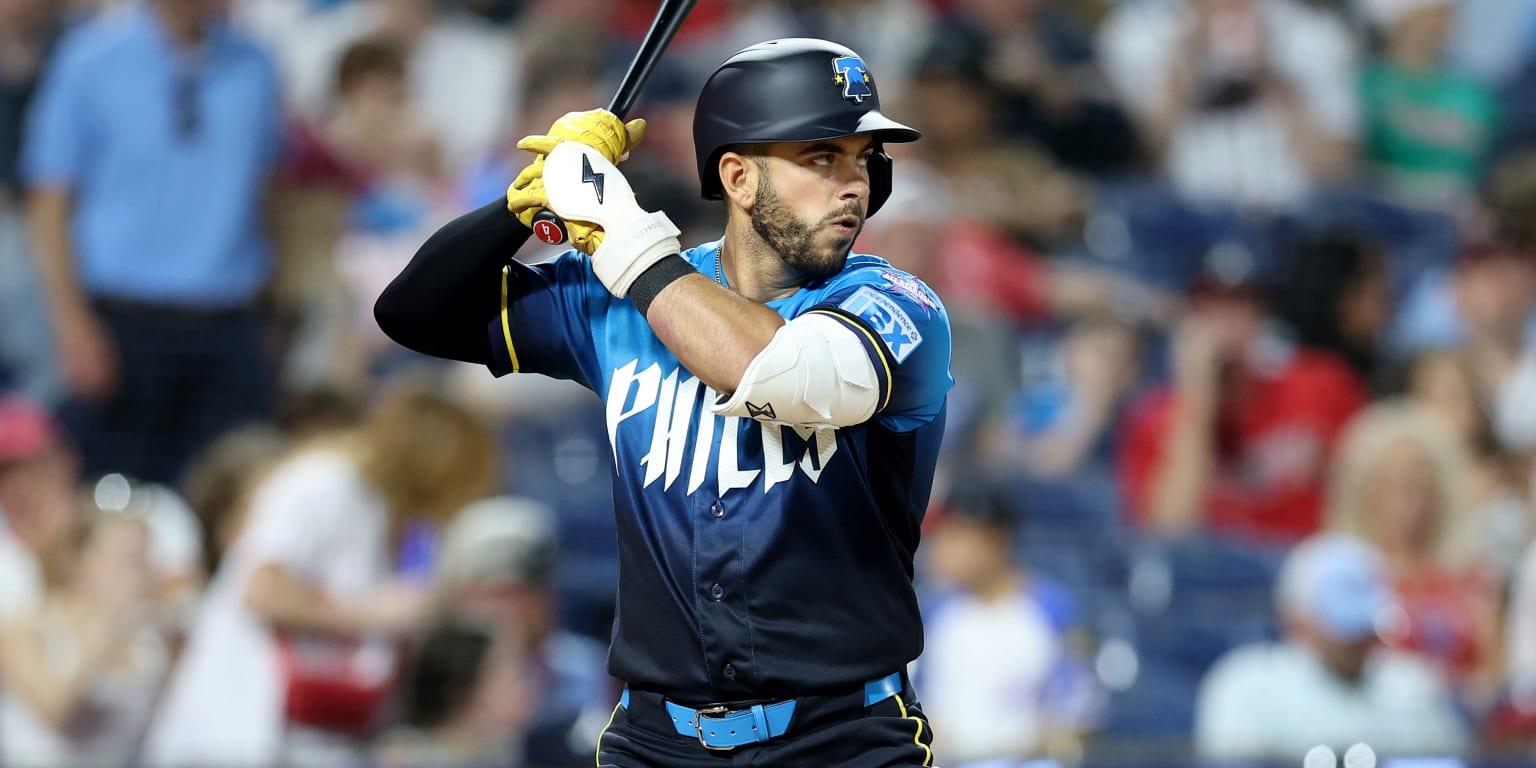
Otto Kemp is back in a Phillies uniform exactly one month after being sent to Lehigh Valley to reset his approach. The 26-year-old converted outfielder, who opened the season 2-for-20 with nine strikeouts in 10 games, spent his minor-league stint rediscovering his swing at the plate and getting reps in left field—a position he's still learning. At Triple-A, he hit .262 with three homers, 21 RBIs, and a .792 OPS across 24 games while getting daily at-bats. The recall came ahead of Monday's series opener against Cincinnati, and Kemp started in the lineup against lefty Nick Lodolo, batting ninth in left field.
The structural problem hasn't changed, though. Kemp was brought in last offseason as the right-handed half of a left-field platoon, a rooming-mate arrangement designed to maximize matchup advantages. Instead, the Phillies' bench construction has become a three-way traffic jam. Brandon Marsh has been logging more plate appearances against southpaws. Edmundo Sosa and even rookie Justin Crawford have cycled through left field and corner positions. With interim manager Don Mattingly managing absences (Kyle Schwarber was out Monday), the deployment matrix shifts daily. Kemp himself acknowledged this in his postgame comments: he knows the at-bats will dry up again, and he's bracing for inconsistent playing time. That mental posture—"treating every day like I'm going to be out there, regardless of what the lineup says"—is professional wisdom, but it's also an implicit admission that the Phillies haven't solved the roster congestion.
For betting purposes, this matters because Kemp's fantasy output was crippled by his early season appearance share, not his raw ability at the plate. When he played every day in the minors, his production normalized. But back in Philadelphia, he's competing for a slice of left-field innings against players like Marsh, who has been getting first looks against lefties. The Phillies' decision to option Felix Reyes—who homered in his debut but then went 5-for-35 with a .314 OPS—reflects a broader philosophy: young players need volume to develop. The inverse is also true: young players with limited volume can't accrue enough plate appearances to sustain prop bets or meaningful fantasy value.
Kemp's batting average, RBI, and hit props will be underpriced relative to his raw talent because the market will price in his actual lineup appearances, not his ceiling in a full-time role. A .260 hitter with 300 plate appearances per season hits about 20 doubles. Kemp might get 250 plate appearances if Marsh stays healthy and the left-field rotation stabilizes. That's roughly 17 doubles for the season. The market will likely overestimate his opportunity share early—treating his Triple-A performance as a signal that he's "back"—before adjusting downward as the Phillies cycle him in and out. The sustainable edge is a fade on Kemp season-long props until the bench depth sorts itself out, and a lean toward platoon-specific unders on nights when he's facing a righty starter and doesn't crack the lineup at all.