Phillies Commit $1.2M to Korean Arm Park, Signal Long-Term Pitching Depth Strategy
By PropBetEdge Editorial Team ·
Philadelphia's aggressive international spending on a 17-year-old starter reveals an organizational conviction that young foreign talent can compress development timelines—and reshape farm-system leverage for future trades.
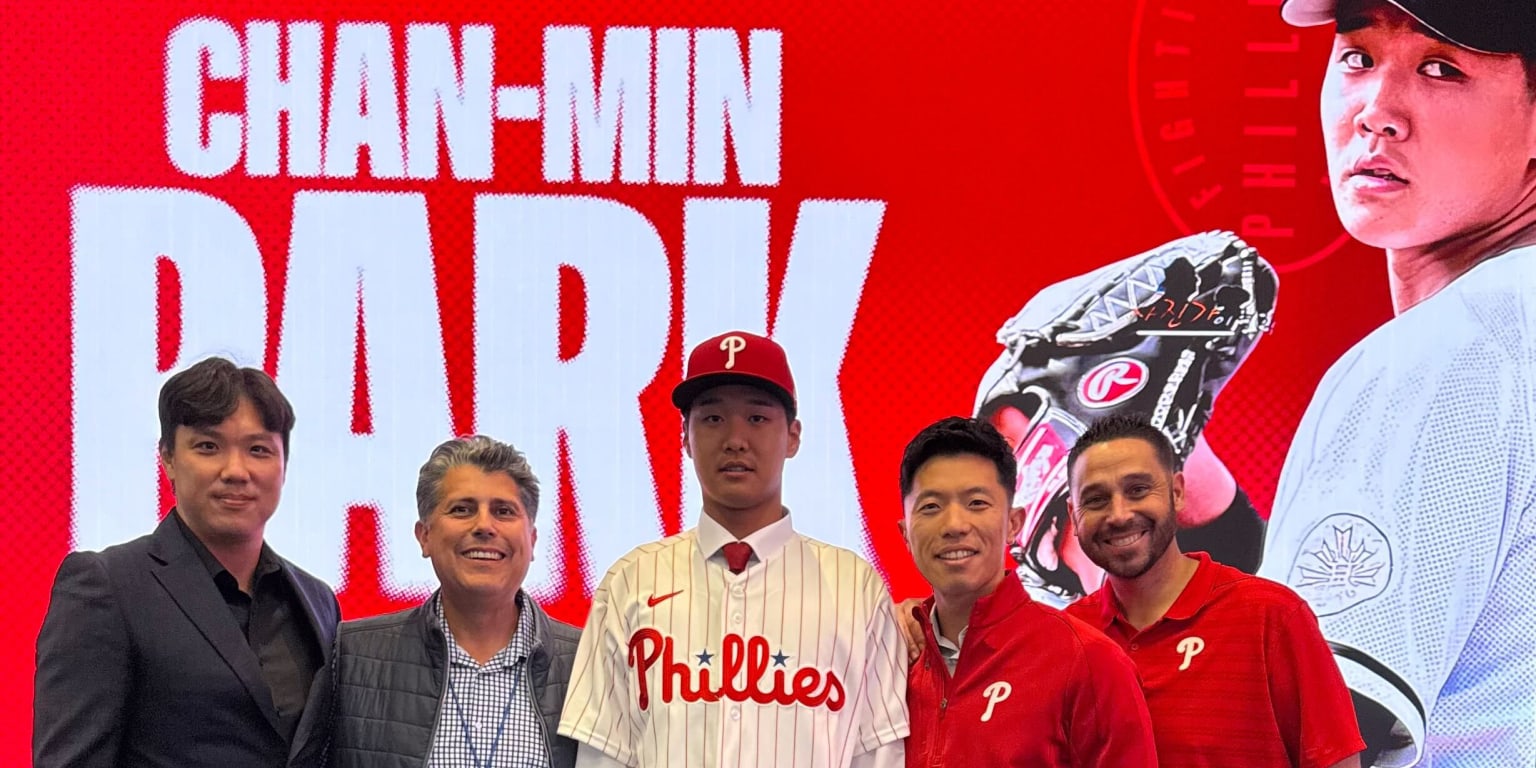
The Phillies signed Korean right-hander Chan-Min Park on a $1.2 million bonus Saturday, the largest signing amount for any pitcher in the 2026 international class. Park, a 6-foot-4, 200-pound prospect from Gwangju Ilgo High School, enters the system as the No. 18 prospect on Philadelphia's Top 30 list. The club engineered the move by trading Minor League arms Griff McGarry and Andrew Baker to acquire $750,000 in additional international bonus pool money from the Dodgers and Rockies—a calculated resource shuffle that signals the organization's confidence in Park's ceiling.
Park carries a 91-93 mph fastball with late ride and demonstrated ability to work down in the zone, particularly against right-handed hitters. His breaking-ball pair—a slider spinning above 2800 RPM and a developing curveball—projects as future plus offerings. The changeup profiles as a potential third quality pitch. What separates Park from the typical high-school international prospect is his feel for pitching and repeatable delivery from a three-quarters slot, qualities that evaluators describe as advanced for his age. Unlike many Korean prospects who choose domestic professional baseball, Park opted for an immediate stateside development path, likely because the Phillies' financial commitment and infrastructure reduced the KBO's appeal.
This signing extends a broader Phillies Pacific Rim strategy. The organization added Japanese right-hander Alexandre Moreti in January, and assistant director of international scouting Blake Crosby outlined the club's logic: building a scout database on teenage talent now ensures institutional advantage later, whether that prospect emerges as a free agent, international signee, or trade target. Early video and evaluation create a compounding knowledge edge. For a franchise already holding productive young arms in Mick Abel and several low-minors starters, Park represents organizational optionality—a cost-controlled pipeline arm who may accelerate through the system or become tradeable depth if Philadelphia pivots toward win-now resources.
From a betting perspective, Park's arrival doesn't move the needle on 2026 or 2027 Phillies win-total lines because he remains years away from Major League relevance. However, his signing does reinforce Philadelphia's construction philosophy: the front office is confident enough in its offensive foundation (Trea Turner, Kyle Schwarber, Bryce Harper) that it can allocate international capital toward pitching depth rather than chasing established free-agent arms. This budget allocation preference matters for understanding how aggressive the Phillies will be in the trade market this season. If Park represents the organization's belief in homegrown starter development, expect the club to pursue mid-rotation veterans via trade—not mega-contracts—to fill immediate rotation gaps. That constraint reduces the likelihood of splashy deadline moves that would inflate team payroll and compress future spending flexibility.
For prop bettors, the real signal is in the methodology: the Phillies didn't simply pay for Park; they rerouted existing minor-league assets to do it. That discipline suggests a front office that prioritizes long-term roster construction over short-term flexibility. In seasons where the Phillies' pitching depth is tested by injury, Park's presence in the system will contribute to call-up probability for other prospects—flattening over/under expectations on team ERA lines and reducing the volatility of mid-season rotation turnover.