Peterson's Mechanical Fix Signals Cubs' Rotation Competence—and a Path to Deadline Adds
By Erik Schwartz ·
David Peterson has gone from 6.09-ERA liability in Queens to a sub-2 ERA starter in Chicago, and the Cubs' coaching adjustment reveals what type of pitcher upgrade actually moves the needle in October.
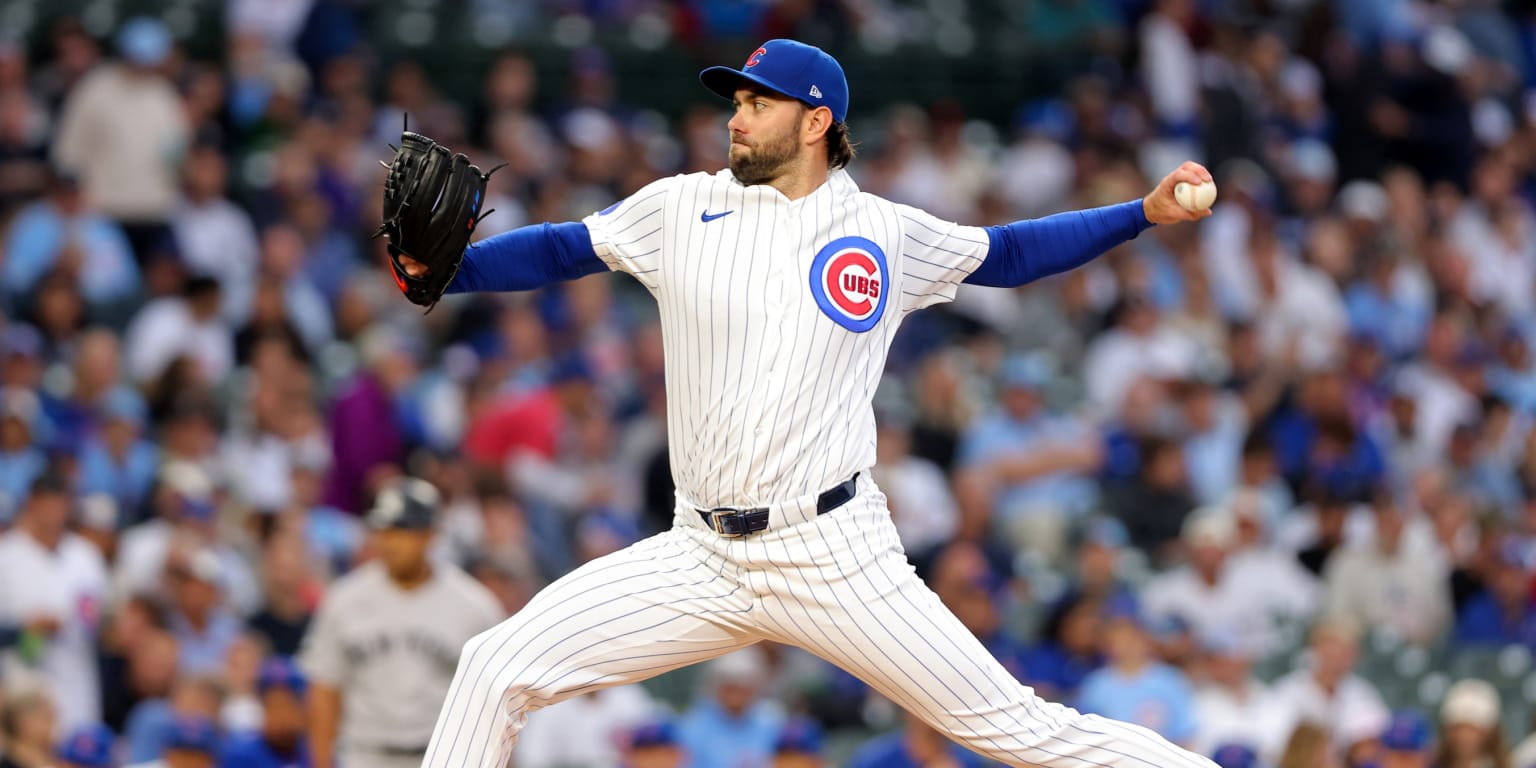
David Peterson arrived in Chicago carrying a 6.09 ERA across 16 appearances for the Mets—a trade-deadline acquisition designed to patch an injury-ravaged rotation that lost Ben Brown and Edward Cabrera in late June. Against the Yankees on Saturday night, the lefty pitched 6 1/3 innings of two-run ball, struck out eight, and induced nine ground balls in a 5-2 Cubs win. That performance wasn't a one-off. Peterson has worked into the sixth inning in four of his six starts since the trade, carrying a 1.84 ERA in five of those six outings (the sole blowup came July 3 against St. Louis). The mechanical shift is the story: Cubs pitching coach Fergie Mullin and the coaching staff identified lower-half mechanics issues and gradually rebuilt Peterson's delivery after his first few Chicago starts. That's not luck or small-sample noise. That's organizational competence translating into pitcher recovery.
The Peterson trade arrived as the Cubs' rotation imploded. Tarik Skubal, the target ace, went to Los Angeles in a blockbuster before the deadline. With Monday's 5 p.m. CT cutoff looming, Chicago's front office is hunting alternatives—Reid Detmers and José Soriano from the Angels, Kevin Gausman from Toronto, Casey Mize from Detroit, and from the Mets, Clay Holmes and Freddy Peralta. Peralta carries a 7.34 ERA in his last nine starts and a bloated 4.99 overall mark, but the Mets scratched him from Friday's start "out of prudence" with the deadline approaching. Cubs manager Craig Counsell spent years with Peralta in Milwaukee; history matters in these spots. The pitch is simple: if the Cubs can resurrect Peterson from 6.09 to 1.84, Peralta—a top-rotation talent who finished fifth in NL Cy Young voting just last season—carries similar ingredients for reclamation.
The limitation is real. Peralta is damaged goods right now, and a mid-rotation starter with a sub-2 ERA across five starts does not guarantee October reliability. Peterson's strikeout rate sits at 8.2 per nine innings since joining Chicago; that's workable but not elite. Ground-ball rate has climbed, which helps against stronger contact, but the sample is still small—six starts, roughly 35 innings of work. One catastrophic outing (10 earned runs in 3⅔ innings on July 3) remains a reminder that mechanical fixes don't erase volatility overnight.
For bettors, Peterson's velocity and strikeout floor matter as the Cubs pursue deadline arms. His K/9 since the trade handcuffs him to the 7-8 K range on most nights; at standard -130 juice, an unders play on Peterson strikeouts props at 8.5+ carries value when the Cubs face strikeout-resistant lineups (contact-heavy teams like Arizona or Kansas City). The flip: if the Cubs acquire a workhorse like Gausman or a high-velocity arm like Mize, Peterson likely shifts to a backend role, which compresses his innings and flattens his strikeout ceiling. Watch usage patterns. A starter who pitched into the seventh inning Saturday could slide to the fifth-inning mark if the rotation fills. That's the hidden angle—the Cubs' mechanically sound coaching staff can repair a pitcher's form, but volume and leverage determine whether that repair translates to prop value.
The organizational signal is more durable. Teams that identify and correct mechanical defects on deadline pickups tend to continue that work through October. If Counsell and Mullin turn Peterson into a league-average starter and replicate that process with another acquisition, the Cubs' pitching infrastructure becomes a playoff asset independent of any single ace. That's not a one-start edge or a momentum play—it's a repeatable process worth tracking across all Cubs pitcher lines for the rest of August and September.